• Laser Cladding Market Expansion Fueled by Increasing Industrial Automation

    Market Estimation & Definition

    The global Laser Cladding Market is gaining momentum as industries increasingly adopt advanced surface-treatment technologies to improve component durability, repair worn parts, and extend equipment operating life. According to Stellar Market Research, the market was valued at USD 763.81 million in 2025 and is projected to reach USD 1,450.97 million by 2032, expanding at a CAGR of 9.6% during 2026–2032. The report uses 2025 as the base year and covers historical data from 2020 to 2025.

    Download Free PDF Brochure: https://www.stellarmr.com/report/req_sample/Laser-Cladding-Market/1171

    Market Growth Drivers & Opportunity

    The automotive and machinery industries are important contributors to laser cladding demand. Manufacturers increasingly require technologies capable of treating high-strength materials while improving component performance and controlling production costs. Laser cladding can also be used to repair and refurbish expensive components, creating opportunities to extend asset life rather than replace complete parts.

    Get More Report Details: https://www.stellarmr.com/report/Laser-Cladding-Market/1171

    Segmentation Analysis

    According to Stellar Market Research, the Laser Cladding Market is segmented by Type, Revenue, End-User Industry, and Region. By Type, the market includes Fiber Laser, Diode Laser, YAG Laser, CO2 Laser, and Others. The Diode Laser segment is expected to hold the largest market share during the forecast period, supported by the energy-saving characteristics of high-power diode lasers compared with conventional CO2 and YAG technologies.

    By Revenue, the market is divided into Laser Revenue and System Revenue. Laser Revenue is expected to develop at the fastest CAGR during the forecast period, supported by demand for different laser technologies used across aerospace and defense, automotive, and mining applications.

    By End-User Industry, the market covers Oil & Gas, Aerospace & Defense, Automotive, Power Generation, and Mining. Aerospace & Defense is expected to be the fastest-growing segment, supported by the use of laser cladding for critical aircraft-engine components and the industry's adoption of advanced manufacturing technologies.

    Country-Level Analysis: USA and Germany

    The United States is included within North America and is expected to lead the regional country-level market, supported by demand for laser cladding in automotive, security and defense, and semiconductor-related applications. The report also identifies the need for laser cladding to improve, repair, and strengthen metal-component surfaces as an important application area.

    Germany is a particularly important market within Europe. Stellar Market Research expects Germany to be among Europe's leading markets due to demand from the automotive, machinery, and semiconductor-equipment industries. Germany also has a strong presence in the competitive landscape through companies such as TRUMPF, Jenoptik, Laserline, and NUTECH.

    Competitive Analysis

    The competitive landscape comprises global laser technology manufacturers and specialized surface-engineering companies. Key players identified by Stellar Market Research include TRUMPF, OC Oerlikon Management AG, Coherent, Inc., IPG Photonics Corporation, Han's Laser Technology Industry Group, Höganäs AB, Lumibird, Lumentum Operations, Curtiss-Wright Corporation, Jenoptik, Laserline GmbH, NUTECH Gesellschaft für Lasertechnik und Materialprüfung mbH, Titanova Inc., Hardchrome Engineering, LaserBond Ltd, Praxair S.T. Technology, Alabama Specialty Products, and YANMAR HOLDINGS.

    Competition is increasingly shaped by laser-source development, process efficiency, application expertise, advanced manufacturing capabilities, and expansion into industrial end-use sectors.

    Download Free PDF Brochure: https://www.stellarmr.com/report/req_sample/Laser-Cladding-Market/1171

    Contact Stellar Market Research:

    3rd Floor, Navale IT Park, Phase 2

    Pune Banglore Highway, Narhe,

    Pune, Maharashtra 411041, India

    sales@maximizemarketresearch.com

    +91 20 6630 3320 | +91 9607365656
    Laser Cladding Market Expansion Fueled by Increasing Industrial Automation Market Estimation & Definition The global Laser Cladding Market is gaining momentum as industries increasingly adopt advanced surface-treatment technologies to improve component durability, repair worn parts, and extend equipment operating life. According to Stellar Market Research, the market was valued at USD 763.81 million in 2025 and is projected to reach USD 1,450.97 million by 2032, expanding at a CAGR of 9.6% during 2026–2032. The report uses 2025 as the base year and covers historical data from 2020 to 2025. Download Free PDF Brochure: https://www.stellarmr.com/report/req_sample/Laser-Cladding-Market/1171 Market Growth Drivers & Opportunity The automotive and machinery industries are important contributors to laser cladding demand. Manufacturers increasingly require technologies capable of treating high-strength materials while improving component performance and controlling production costs. Laser cladding can also be used to repair and refurbish expensive components, creating opportunities to extend asset life rather than replace complete parts. Get More Report Details: https://www.stellarmr.com/report/Laser-Cladding-Market/1171 Segmentation Analysis According to Stellar Market Research, the Laser Cladding Market is segmented by Type, Revenue, End-User Industry, and Region. By Type, the market includes Fiber Laser, Diode Laser, YAG Laser, CO2 Laser, and Others. The Diode Laser segment is expected to hold the largest market share during the forecast period, supported by the energy-saving characteristics of high-power diode lasers compared with conventional CO2 and YAG technologies. By Revenue, the market is divided into Laser Revenue and System Revenue. Laser Revenue is expected to develop at the fastest CAGR during the forecast period, supported by demand for different laser technologies used across aerospace and defense, automotive, and mining applications. By End-User Industry, the market covers Oil & Gas, Aerospace & Defense, Automotive, Power Generation, and Mining. Aerospace & Defense is expected to be the fastest-growing segment, supported by the use of laser cladding for critical aircraft-engine components and the industry's adoption of advanced manufacturing technologies. Country-Level Analysis: USA and Germany The United States is included within North America and is expected to lead the regional country-level market, supported by demand for laser cladding in automotive, security and defense, and semiconductor-related applications. The report also identifies the need for laser cladding to improve, repair, and strengthen metal-component surfaces as an important application area. Germany is a particularly important market within Europe. Stellar Market Research expects Germany to be among Europe's leading markets due to demand from the automotive, machinery, and semiconductor-equipment industries. Germany also has a strong presence in the competitive landscape through companies such as TRUMPF, Jenoptik, Laserline, and NUTECH. Competitive Analysis The competitive landscape comprises global laser technology manufacturers and specialized surface-engineering companies. Key players identified by Stellar Market Research include TRUMPF, OC Oerlikon Management AG, Coherent, Inc., IPG Photonics Corporation, Han's Laser Technology Industry Group, Höganäs AB, Lumibird, Lumentum Operations, Curtiss-Wright Corporation, Jenoptik, Laserline GmbH, NUTECH Gesellschaft für Lasertechnik und Materialprüfung mbH, Titanova Inc., Hardchrome Engineering, LaserBond Ltd, Praxair S.T. Technology, Alabama Specialty Products, and YANMAR HOLDINGS. Competition is increasingly shaped by laser-source development, process efficiency, application expertise, advanced manufacturing capabilities, and expansion into industrial end-use sectors. Download Free PDF Brochure: https://www.stellarmr.com/report/req_sample/Laser-Cladding-Market/1171 Contact Stellar Market Research: 3rd Floor, Navale IT Park, Phase 2 Pune Banglore Highway, Narhe, Pune, Maharashtra 411041, India sales@maximizemarketresearch.com +91 20 6630 3320 | +91 9607365656
    0 Comments 0 Shares

  • Reliable CAN I/O Modules & GPS NTP Time Servers | Bueno Electric

    Bueno Electric – USA provides reliable communication and synchronization solutions for industrial networks. Our CAN I/O modules make it easier to connect sensors and actuators for efficient data collection and control.

    Our GPS NTP time servers provide accurate network time synchronization using GPS technology, making them suitable for industrial automation, telecommunications, and other time-sensitive applications.

    Looking for reliable industrial communication products? Visit Bueno Electric or request a Quick Quote to discuss your requirements.

    Visit : https://buenoelectric.com/
    Reliable CAN I/O Modules & GPS NTP Time Servers | Bueno Electric Bueno Electric – USA provides reliable communication and synchronization solutions for industrial networks. Our CAN I/O modules make it easier to connect sensors and actuators for efficient data collection and control. Our GPS NTP time servers provide accurate network time synchronization using GPS technology, making them suitable for industrial automation, telecommunications, and other time-sensitive applications. Looking for reliable industrial communication products? Visit Bueno Electric or request a Quick Quote to discuss your requirements. Visit : https://buenoelectric.com/
    Home
    0 Comments 0 Shares
  • How Can the Allen Bradley 1734-EPAC Increase Automation System Reliability?

    Industrial automation depends on reliable communication, fast processing, and uninterrupted system performance. Even a brief interruption in an automation network can lead to production delays, unexpected downtime, and increased maintenance costs. That is why industries continue to invest in dependable hardware that supports consistent operations.
    The Allen Bradley 1734-EPAC is one such solution designed to strengthen distributed I/O systems. As part of the POINT I/O platform, it delivers dependable communication while simplifying system architecture. Whether used in manufacturing plants, food processing facilities, packaging lines, or water treatment applications, the Allen Bradley 1734-EPAC helps improve network reliability and overall automation efficiency........

    Read more: https://www.asteamtechno.com/allen-bradley-1734-epac/
    How Can the Allen Bradley 1734-EPAC Increase Automation System Reliability? Industrial automation depends on reliable communication, fast processing, and uninterrupted system performance. Even a brief interruption in an automation network can lead to production delays, unexpected downtime, and increased maintenance costs. That is why industries continue to invest in dependable hardware that supports consistent operations. The Allen Bradley 1734-EPAC is one such solution designed to strengthen distributed I/O systems. As part of the POINT I/O platform, it delivers dependable communication while simplifying system architecture. Whether used in manufacturing plants, food processing facilities, packaging lines, or water treatment applications, the Allen Bradley 1734-EPAC helps improve network reliability and overall automation efficiency........ Read more: https://www.asteamtechno.com/allen-bradley-1734-epac/
    0 Comments 0 Shares
  • SPARK Matrix™: 4G and 5G Private Mobile Network Services

    The global 4G and 5G Private Mobile Network Services market is rapidly transforming enterprise connectivity, enabling organizations to deploy secure, high-performance, and scalable communication infrastructures. According to insights from QKS Group, enterprises are increasingly adopting private networks to support mission-critical applications, industrial automation, and digital transformation initiatives.

    Click here for more information : https://qksgroup.com/market-research/spark-matrix-4g-and-5g-private-mobile-network-services-q4-2025-9844

    Market Overview and Growth Outlook
    The adoption of private 5G networks and private LTE solutions is gaining momentum across industries such as manufacturing, logistics, healthcare, and smart cities. Enterprises are seeking low-latency connectivity, enhanced security, and complete control over network performance—benefits that traditional public networks often cannot fully provide.

    QKS Group’s market research highlights key growth drivers, including:
    • Rising demand for Industry 4.0 and smart manufacturing
    • Increased deployment of IoT (Internet of Things) devices
    • Growing need for secure enterprise connectivity

    Key Technology Trends in Private Mobile Networks
    The evolution of 4G and 5G private mobile network services is shaped by several emerging technology trends:
    • Network Slicing: Enables customized network segments tailored to specific enterprise needs
    • Edge Computing Integration: Reduces latency and enhances real-time processing capabilities
    • AI-Driven Network Automation: Improves network performance and predictive maintenance

    Download Sample Report : https://qksgroup.com/download-sample-form/spark-matrix-4g-and-5g-private-mobile-network-services-q4-2025-9844

    Competitive Landscape and SPARK Matrix Analysis
    A key highlight of the research is the proprietary SPARK Matrix analysis, which provides a comprehensive evaluation of leading vendors in the market. The SPARK Matrix ranks vendors based on their technology excellence and customer impact, offering valuable insights for both buyers and technology providers.

    Leading vendors featured in the SPARK Matrix include: AT&T, Boldyn Networks, BT Group, Deutsche Telekom, Ericsson, HPE, Infosys, Kyndryl, Nokia, NTT DATA, Orange Business, Tech Mahindra, Telefonica, T-Mobile, Verizon, and Vodafone.

    This competitive benchmarking helps enterprises evaluate vendor capabilities, compare service offerings, and identify the best-fit partners for their private network deployments.

    Strategic Insights for Vendors and Enterprises
    The research provides actionable insights for both technology vendors and enterprise buyers:
    For Vendors:
    • Enhance service portfolios with end-to-end private network solutions
    • Focus on AI, automation, and edge integration
    • Strengthen partnerships within the ecosystem

    Expert Perspective
    According to an principal analyst ,"4G and 5G Private Mobile Network Services offer a complete end-to-end framework—from consulting and deployment to ongoing operational management. This empowers enterprises to build robust and resilient connectivity infrastructures, enhancing communication across devices, industrial systems, and mission-critical applications."

    Conclusion
    The 4G and 5G Private Mobile Network Services market is poised for significant growth as enterprises prioritize secure, reliable, and high-performance connectivity. With the support of QKS Group’s SPARK Matrix analysis, organizations can make informed decisions, identify leading vendors, and accelerate their journey toward digital transformation.

    #5GPrivateNetwork #4GNetwork #PrivateLTE #TelecomTrends #EnterpriseConnectivity #IoT #EdgeComputing #DigitalTransformation #SPARKMatrix #QKSGroup
    SPARK Matrix™: 4G and 5G Private Mobile Network Services The global 4G and 5G Private Mobile Network Services market is rapidly transforming enterprise connectivity, enabling organizations to deploy secure, high-performance, and scalable communication infrastructures. According to insights from QKS Group, enterprises are increasingly adopting private networks to support mission-critical applications, industrial automation, and digital transformation initiatives. Click here for more information : https://qksgroup.com/market-research/spark-matrix-4g-and-5g-private-mobile-network-services-q4-2025-9844 Market Overview and Growth Outlook The adoption of private 5G networks and private LTE solutions is gaining momentum across industries such as manufacturing, logistics, healthcare, and smart cities. Enterprises are seeking low-latency connectivity, enhanced security, and complete control over network performance—benefits that traditional public networks often cannot fully provide. QKS Group’s market research highlights key growth drivers, including: • Rising demand for Industry 4.0 and smart manufacturing • Increased deployment of IoT (Internet of Things) devices • Growing need for secure enterprise connectivity Key Technology Trends in Private Mobile Networks The evolution of 4G and 5G private mobile network services is shaped by several emerging technology trends: • Network Slicing: Enables customized network segments tailored to specific enterprise needs • Edge Computing Integration: Reduces latency and enhances real-time processing capabilities • AI-Driven Network Automation: Improves network performance and predictive maintenance Download Sample Report : https://qksgroup.com/download-sample-form/spark-matrix-4g-and-5g-private-mobile-network-services-q4-2025-9844 Competitive Landscape and SPARK Matrix Analysis A key highlight of the research is the proprietary SPARK Matrix analysis, which provides a comprehensive evaluation of leading vendors in the market. The SPARK Matrix ranks vendors based on their technology excellence and customer impact, offering valuable insights for both buyers and technology providers. Leading vendors featured in the SPARK Matrix include: AT&T, Boldyn Networks, BT Group, Deutsche Telekom, Ericsson, HPE, Infosys, Kyndryl, Nokia, NTT DATA, Orange Business, Tech Mahindra, Telefonica, T-Mobile, Verizon, and Vodafone. This competitive benchmarking helps enterprises evaluate vendor capabilities, compare service offerings, and identify the best-fit partners for their private network deployments. Strategic Insights for Vendors and Enterprises The research provides actionable insights for both technology vendors and enterprise buyers: For Vendors: • Enhance service portfolios with end-to-end private network solutions • Focus on AI, automation, and edge integration • Strengthen partnerships within the ecosystem Expert Perspective According to an principal analyst ,"4G and 5G Private Mobile Network Services offer a complete end-to-end framework—from consulting and deployment to ongoing operational management. This empowers enterprises to build robust and resilient connectivity infrastructures, enhancing communication across devices, industrial systems, and mission-critical applications." Conclusion The 4G and 5G Private Mobile Network Services market is poised for significant growth as enterprises prioritize secure, reliable, and high-performance connectivity. With the support of QKS Group’s SPARK Matrix analysis, organizations can make informed decisions, identify leading vendors, and accelerate their journey toward digital transformation. #5GPrivateNetwork #4GNetwork #PrivateLTE #TelecomTrends #EnterpriseConnectivity #IoT #EdgeComputing #DigitalTransformation #SPARKMatrix #QKSGroup
    QKSGROUP.COM
    SPARK Matrix?: 4G and 5G Private Mobile Network Services, Q4 2025
    QKS Group's 4G and 5G Private Mobile Network Services market research includes a comprehensive analy...
    1
    0 Comments 0 Shares
  • Take your industrial automation to the next level with AutomateXLab's Allen Bradley PLC Programming expertise. From new system development to modernization and support, we deliver scalable automation solutions for every industry.

    🔗 https://automatexlab.com/allen-bradley-plc-programming/

    #PLCProgrammingServices #AllenBradleyControl #AutomationExperts #IndustrialSystems #FactoryControl #SmartFactory #IndustryAutomation #PLCIntegration #EngineeringSolutions #IndustrialInnovation #AutomateXLab
    Take your industrial automation to the next level with AutomateXLab's Allen Bradley PLC Programming expertise. From new system development to modernization and support, we deliver scalable automation solutions for every industry. 🔗 https://automatexlab.com/allen-bradley-plc-programming/ #PLCProgrammingServices #AllenBradleyControl #AutomationExperts #IndustrialSystems #FactoryControl #SmartFactory #IndustryAutomation #PLCIntegration #EngineeringSolutions #IndustrialInnovation #AutomateXLab
    0 Comments 0 Shares
  • HIL software enables real-time simulation of embedded systems by connecting physical hardware with virtual models. It helps engineers test, validate, and optimize control systems under realistic conditions, improving reliability, reducing development risks, and accelerating product development across automotive, aerospace, and industrial automation applications.
    Website: https://www.servotechinc.com/hil-software-testing
    HIL software enables real-time simulation of embedded systems by connecting physical hardware with virtual models. It helps engineers test, validate, and optimize control systems under realistic conditions, improving reliability, reducing development risks, and accelerating product development across automotive, aerospace, and industrial automation applications. Website: https://www.servotechinc.com/hil-software-testing
    0 Comments 0 Shares
  • Market Forecast: IoT Identity and Access Management (IoT IAM)

    As the Internet of Things (IoT) continues to transform industries worldwide, the need for robust security frameworks has become more critical than ever. From smart homes and healthcare systems to industrial automation and connected vehicles, billions of IoT devices are exchanging sensitive data every second. This rapid expansion has created new cybersecurity challenges, making IoT Identity and Access Management (IAM) an essential solution for modern enterprises.

    Innovation and collaboration are now driving the growth of the global IoT IAM market. Organizations are investing significantly in advanced technologies such as Artificial Intelligence (AI), Machine Learning (ML), and automation to strengthen access controls and improve threat detection.

    Click here for more information : https://qksgroup.com/market-research/market-forecast-iot-identity-and-access-management-iot-iam-2026-2030-worldwide-2733

    What is IoT Identity and Access Management?
    IoT Identity and Access Management (IAM) refers to the framework of policies, technologies, and processes used to manage digital identities and control access for IoT devices, users, applications, and systems. Unlike traditional IAM systems designed primarily for human users, IoT IAM focuses on securing machine identities and enabling trusted communication between connected devices.

    Why IoT IAM is Essential for Modern Businesses
    As organizations increasingly adopt IoT technologies, the attack surface expands significantly. Every connected device represents a potential entry point for cybercriminals. Without a strong IoT IAM strategy, businesses face risks such as:
    • Unauthorized device access
    • Data leakage and privacy breaches
    • Device tampering and manipulation
    Implementing a robust IAM solution helps organizations reduce these risks while maintaining operational efficiency and customer trust.

    Key Features of IoT IAM Solutions
    1. Device Identity Management
    Each IoT device requires a unique digital identity to verify authenticity and establish trust. IAM solutions provide secure onboarding, identity provisioning, and lifecycle management for connected devices.
    2. Authentication and Authorization
    Strong authentication mechanisms ensure that only verified users and devices can access systems. Multi-factor authentication (MFA), certificate-based authentication, and Zero Trust security models are becoming standard practices.
    3. Role-Based Access Control (RBAC)
    RBAC helps organizations define and enforce access permissions based on user roles, device functions, and operational requirements. This minimizes unnecessary access and strengthens security.

    The Role of AI and Machine Learning in IoT Identity and Access Management (IAM)
    Artificial Intelligence and Machine Learning are revolutionizing the IAM landscape by introducing predictive security capabilities. Traditional security systems often rely on reactive measures, but AI-driven IAM solutions can proactively identify anomalies before they escalate into major threats.

    Click here for market share report : https://qksgroup.com/market-research/market-share-iot-identity-and-access-management-iot-iam-2025-worldwide-2804

    Importance of Interoperability and Scalability
    The global IoT market is growing rapidly, with organizations deploying thousands—even millions—of connected devices across multiple environments. This makes interoperability and scalability critical success factors for IAM solutions.

    Interoperability
    IoT ecosystems often involve devices from multiple vendors operating across cloud, on-premises, and hybrid infrastructures. IAM solutions must seamlessly integrate with existing systems to ensure consistent security across all platforms.

    Scalability
    As businesses expand, IAM systems must be capable of managing increasing volumes of identities, devices, and access requests without compromising performance or security.

    Future Trends in the Global IoT IAM Market
    The future of IoT Identity and Access Management will be shaped by several emerging trends:
    • Zero Trust Architecture adoption
    • Passwordless authentication
    • Decentralized identity management
    • Blockchain-based identity verification
    These innovations will further strengthen IoT security while improving operational efficiency and user experience.

    Conclusion
    Innovation and collaboration remain central to the advancement of the global IoT Identity and Access Management (IAM) market. As cyber threats become more sophisticated, businesses must adopt intelligent, scalable, and compliant IAM solutions to protect their connected ecosystems.

    The integration of AI and machine learning is transforming IAM from a reactive security measure into a proactive defense strategy. By focusing on interoperability, scalability, and compliance, organizations can ensure sustainable growth while safeguarding critical assets.
    Market Forecast: IoT Identity and Access Management (IoT IAM) As the Internet of Things (IoT) continues to transform industries worldwide, the need for robust security frameworks has become more critical than ever. From smart homes and healthcare systems to industrial automation and connected vehicles, billions of IoT devices are exchanging sensitive data every second. This rapid expansion has created new cybersecurity challenges, making IoT Identity and Access Management (IAM) an essential solution for modern enterprises. Innovation and collaboration are now driving the growth of the global IoT IAM market. Organizations are investing significantly in advanced technologies such as Artificial Intelligence (AI), Machine Learning (ML), and automation to strengthen access controls and improve threat detection. Click here for more information : https://qksgroup.com/market-research/market-forecast-iot-identity-and-access-management-iot-iam-2026-2030-worldwide-2733 What is IoT Identity and Access Management? IoT Identity and Access Management (IAM) refers to the framework of policies, technologies, and processes used to manage digital identities and control access for IoT devices, users, applications, and systems. Unlike traditional IAM systems designed primarily for human users, IoT IAM focuses on securing machine identities and enabling trusted communication between connected devices. Why IoT IAM is Essential for Modern Businesses As organizations increasingly adopt IoT technologies, the attack surface expands significantly. Every connected device represents a potential entry point for cybercriminals. Without a strong IoT IAM strategy, businesses face risks such as: • Unauthorized device access • Data leakage and privacy breaches • Device tampering and manipulation Implementing a robust IAM solution helps organizations reduce these risks while maintaining operational efficiency and customer trust. Key Features of IoT IAM Solutions 1. Device Identity Management Each IoT device requires a unique digital identity to verify authenticity and establish trust. IAM solutions provide secure onboarding, identity provisioning, and lifecycle management for connected devices. 2. Authentication and Authorization Strong authentication mechanisms ensure that only verified users and devices can access systems. Multi-factor authentication (MFA), certificate-based authentication, and Zero Trust security models are becoming standard practices. 3. Role-Based Access Control (RBAC) RBAC helps organizations define and enforce access permissions based on user roles, device functions, and operational requirements. This minimizes unnecessary access and strengthens security. The Role of AI and Machine Learning in IoT Identity and Access Management (IAM) Artificial Intelligence and Machine Learning are revolutionizing the IAM landscape by introducing predictive security capabilities. Traditional security systems often rely on reactive measures, but AI-driven IAM solutions can proactively identify anomalies before they escalate into major threats. Click here for market share report : https://qksgroup.com/market-research/market-share-iot-identity-and-access-management-iot-iam-2025-worldwide-2804 Importance of Interoperability and Scalability The global IoT market is growing rapidly, with organizations deploying thousands—even millions—of connected devices across multiple environments. This makes interoperability and scalability critical success factors for IAM solutions. Interoperability IoT ecosystems often involve devices from multiple vendors operating across cloud, on-premises, and hybrid infrastructures. IAM solutions must seamlessly integrate with existing systems to ensure consistent security across all platforms. Scalability As businesses expand, IAM systems must be capable of managing increasing volumes of identities, devices, and access requests without compromising performance or security. Future Trends in the Global IoT IAM Market The future of IoT Identity and Access Management will be shaped by several emerging trends: • Zero Trust Architecture adoption • Passwordless authentication • Decentralized identity management • Blockchain-based identity verification These innovations will further strengthen IoT security while improving operational efficiency and user experience. Conclusion Innovation and collaboration remain central to the advancement of the global IoT Identity and Access Management (IAM) market. As cyber threats become more sophisticated, businesses must adopt intelligent, scalable, and compliant IAM solutions to protect their connected ecosystems. The integration of AI and machine learning is transforming IAM from a reactive security measure into a proactive defense strategy. By focusing on interoperability, scalability, and compliance, organizations can ensure sustainable growth while safeguarding critical assets.
    QKSGROUP.COM
    Market Forecast: IoT Identity and Access Management (IoT IAM), 2026-2030, Worldwide
    Quadrant Knowledge Solutions Reveals That IoT Identity and Access Management (IoT IAM) Projected to ...
    1
    0 Comments 0 Shares
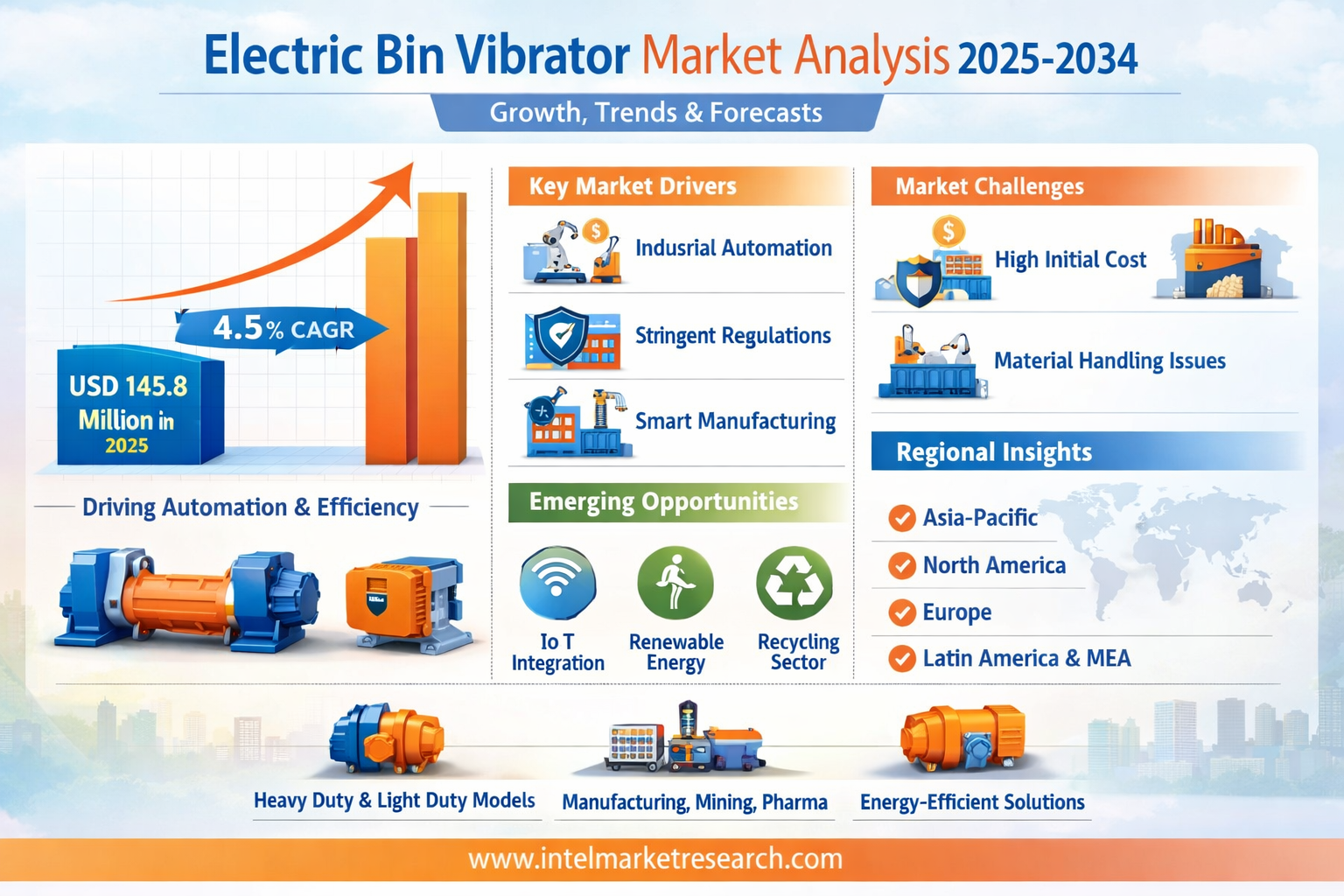
  • Electric Bin Vibrator Market Growth Driven by Industrial Automation and Efficient Material Handling Solutions
    Full Report link
    https://www.intelmarketresearch.com/electric-bin-vibrator-market-39225
    Electric Bin Vibrator Market Growth Driven by Industrial Automation and Efficient Material Handling Solutions Full Report link https://www.intelmarketresearch.com/electric-bin-vibrator-market-39225
    0 Comments 0 Shares
  • Model Based Design Service

    Model Based Design (MBD) Service streamlines product development by using simulation models to design, test, and validate complex systems. It reduces development costs, minimizes errors, and accelerates time-to-market by enabling early verification and virtual prototyping. With MBD, engineers can evaluate system behavior under real-world conditions before physical implementation. This approach enhances collaboration, ensures higher accuracy, and supports continuous improvements. Ideal for industries like automotive, aerospace, and industrial automation, MBD services deliver efficient, reliable, and innovative engineering solutions.

    website : https://www.servotechinc.com/hil-software-testing
    Model Based Design Service Model Based Design (MBD) Service streamlines product development by using simulation models to design, test, and validate complex systems. It reduces development costs, minimizes errors, and accelerates time-to-market by enabling early verification and virtual prototyping. With MBD, engineers can evaluate system behavior under real-world conditions before physical implementation. This approach enhances collaboration, ensures higher accuracy, and supports continuous improvements. Ideal for industries like automotive, aerospace, and industrial automation, MBD services deliver efficient, reliable, and innovative engineering solutions. website : https://www.servotechinc.com/hil-software-testing
    HIL Software Testing
    0 Comments 0 Shares
  • https://univdatos.com/reports/industrial-automation-market
    https://univdatos.com/reports/industrial-automation-market
    UNIVDATOS.COM
    Industrial Automation Market Size, Trends, Share & Forecast - 2032
    The Industrial Automation Market was valued at USD 224 billion in 2023 and is expected to grow at a CAGR of 9% during the forecast period (2024-2032)....
    0 Comments 0 Shares
No data to show
No data to show
No data to show
No data to show