
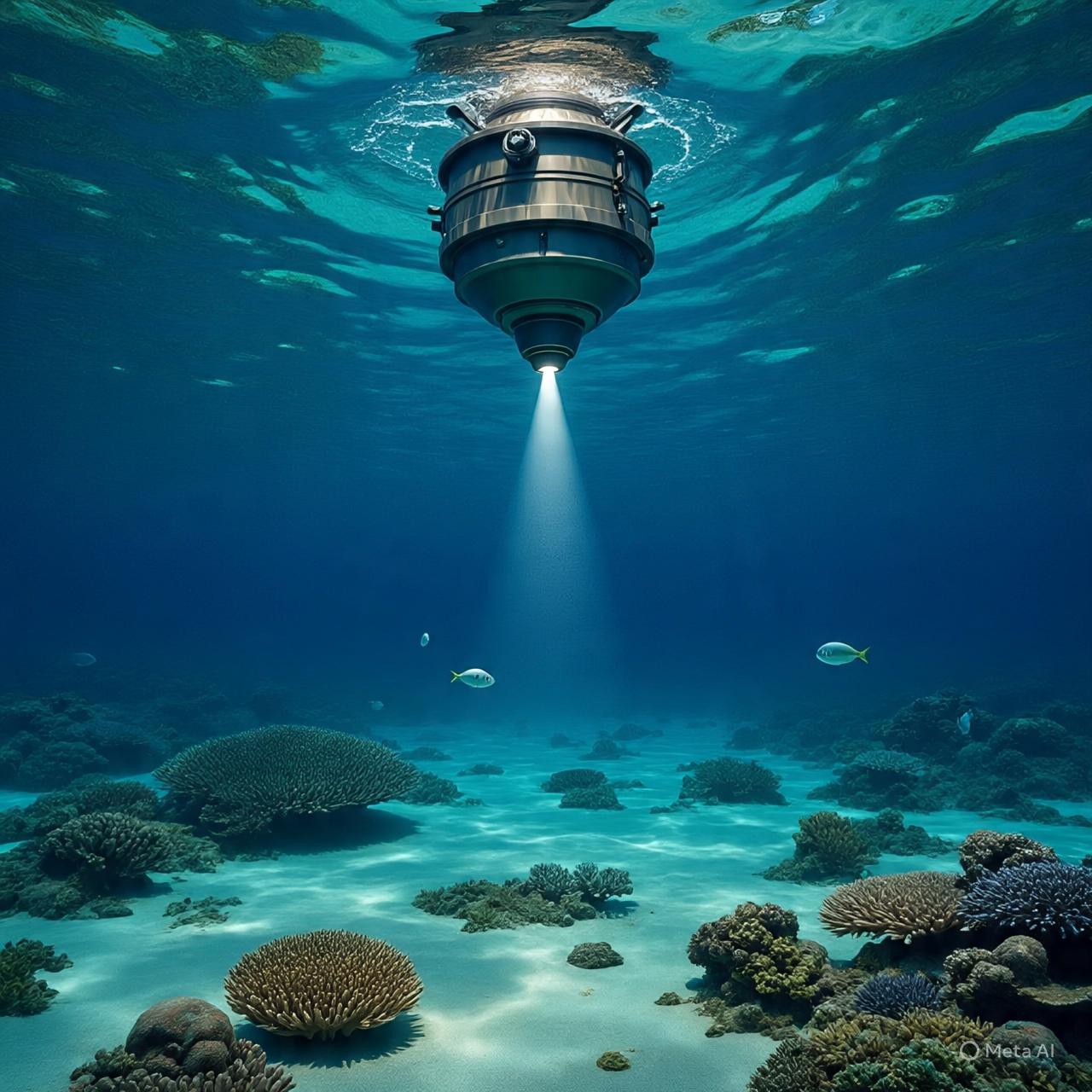
The ocean is one of the last frontiers on Earth. Covering over 70% of our planet, it holds countless mysteries, from hidden shipwrecks to unknown marine species. To explore this vast and challenging environment, humans rely on innovative technology, and one of the most important tools is the Underwater Sonar Pod. This device uses sound waves to “see” underwater, helping scientists, explorers, and naval forces navigate and understand what lies beneath the waves.
The Underwater Sonar Pod is designed to detect, map, and analyze underwater objects, providing critical information in areas where cameras and human vision cannot operate. Its applications range from scientific research to defense, fishing, and underwater construction. By sending out sound pulses and analyzing their echoes, the pod creates images of the underwater world, revealing what is hidden beneath the surface.
In this article, we will explore the Underwater Sonar Pod in detail. We will explain how it works, its types, key applications, benefits, technological advancements, and future potential. Each headline will focus on a crucial aspect of sonar pods, explained in simple, clear language suitable for anyone.
Understanding the Concept of Sonar Pods
An Underwater Sonar Pod is a device that uses sound to detect objects and structures underwater. The word “SONAR” stands for Sound Navigation and Ranging, which refers to the method of sending sound waves through water and analyzing the returning echoes. These echoes help determine the distance, size, and shape of underwater objects.
Sonar pods are widely used in marine research, naval operations, fishing, and underwater construction. They are generally waterproof, pressure-resistant, and designed to function in extreme underwater environments. The device is usually mounted on a submarine, a research vessel, or an underwater drone, though smaller, portable versions exist for divers.
There are two main types of sonar technologies used in pods: active sonar and passive sonar. Active sonar sends out sound pulses and listens for the echo, while passive sonar only listens to sounds emitted by objects or marine animals. The data collected is then processed to create visual maps or charts of the underwater environment.
Overall, the Underwater Sonar Pod acts as both the eyes and ears of the underwater explorer. It allows humans to study areas that are too deep, dark, or dangerous to access manually. By understanding the concept of sonar pods, we can appreciate how crucial this technology is for marine exploration and safety.
How Underwater Sonar Pods Function
The Underwater Sonar Pod works on the principle of sound wave reflection. The device emits sound pulses, also called “pings,” into the water. When these sound waves hit an object like a rock, fish, or submarine, they bounce back toward the pod. The pod measures the time taken for the echo to return and calculates the distance to the object.
The core component of every sonar pod is the transducer, which generates sound waves and receives echoes. The pod also contains a processor that converts these sound signals into readable data or visual images. Depending on the technology used, the sonar pod can produce 2D, 3D, or even 4D images of the underwater environment.
High-frequency sound waves provide sharper images but cover shorter distances, while low-frequency waves travel farther but with less detail. This versatility allows sonar pods to operate effectively in various scenarios, from shallow coastal waters to deep-sea exploration.
Modern sonar pods are also equipped with GPS integration, digital data storage, and real-time data transfer capabilities. This allows scientists and operators to analyze information instantly and make accurate decisions. In essence, the Underwater Sonar Pod functions as an advanced detection and mapping system, providing critical insights for research, navigation, and safety in underwater operations.
Key Applications of Underwater Sonar Pods
The Underwater Sonar Pod is widely used in multiple industries and fields. One of the most prominent uses is in marine research, where scientists map the ocean floor, study coral reefs, and monitor marine life. Sonar data helps researchers track the movement of animals and analyze underwater ecosystems.
In the fishing industry, sonar pods are valuable tools for locating schools of fish. By providing accurate information on the location, size, and depth of fish populations, sonar pods increase efficiency, reduce fuel consumption, and promote sustainable fishing practices.
Naval and defense operations rely heavily on sonar pods for detecting submarines, mines, and other potential threats. The technology ensures safe navigation and helps military personnel avoid underwater hazards.
Additionally, sonar pods are used in underwater construction, such as inspecting pipelines, cables, and bridge foundations. They are also critical for search and rescue missions, assisting in locating sunken ships, aircraft, or lost cargo.
The wide-ranging applications of the Underwater Sonar Pod demonstrate its versatility. Whether used for scientific research, industrial purposes, or safety operations, sonar pods have proven to be indispensable tools in understanding and navigating underwater environments.
Benefits of Using Underwater Sonar Pods
The Underwater Sonar Pod offers numerous benefits that make it a vital technology. One of its main advantages is accuracy. It provides precise data about underwater objects, even in dark, deep, or murky waters where cameras cannot function.
Another significant benefit is efficiency. A sonar pod can scan vast areas quickly, saving time and reducing the need for extensive human intervention. It is also cost-effective, as it minimizes repeated diving missions and helps optimize operational resources.
Safety is another key benefit. By detecting underwater obstacles or threats, the sonar pod protects divers, ships, and submarines from accidents. Environmental monitoring is another important advantage. Scientists can track endangered species, observe their habitats, and study ocean conditions using sonar technology.
Finally, sonar pods are highly versatile. They can be deployed in shallow waters, deep oceans, and even in extreme environments like under ice caps. Their ability to provide real-time, accurate, and detailed information makes the Underwater Sonar Pod an indispensable tool in marine exploration and safety.
Latest Innovations in Underwater Sonar PodsRecent years have seen significant advancements in sonar pod technology. Modern Underwater Sonar Pods are now equipped with AI-assisted analysis, allowing the device to automatically identify underwater objects and generate real-time reports.
Advanced 3D and 4D imaging technologies provide highly detailed visualizations of underwater terrains. These features are particularly useful for scientific research, naval missions, and underwater construction.
Wireless data transmission and cloud integration have also transformed sonar pods. Data can now be shared instantly with remote teams, allowing for collaborative analysis and faster decision-making. Portable and lightweight designs make it easier to deploy sonar pods on drones, small boats, or even by divers themselves.
Eco-friendly sonar technologies are being developed to minimize the impact of sound waves on marine life. Future sonar pods may use solar energy, improved batteries, and noise-reducing technologies, making them more sustainable and environmentally safe.
These innovations ensure that the Underwater Sonar Pod remains a cutting-edge tool, helping humans explore, understand, and protect the underwater world.
Future Scope and Environmental Importance
The Underwater Sonar Pod has a promising future. As oceans face increasing environmental challenges and human activities expand, sonar technology will be crucial in monitoring and protecting marine ecosystems. Scientists can track changes in coral reefs, monitor endangered species, and detect underwater pollution using sonar data.
The integration of sonar pods with autonomous underwater vehicles (AUVs) and drones will allow unmanned exploration of deep-sea environments that are currently unreachable. AI-powered sonar pods will provide faster, more accurate analysis of underwater data, helping in research, rescue operations, and naval missions.
Environmental protection is also a major focus. Future sonar pods are being designed to reduce noise pollution, ensuring minimal disturbance to marine life while maintaining their high functionality. The technology will also assist in studying the effects of climate change, such as melting glaciers and rising sea levels, by monitoring underwater conditions over time.
In conclusion, the Underwater Sonar Pod will continue to play an essential role in scientific discovery, environmental protection, and safe navigation in the future.
Conclusion
The Underwater Sonar Pod has revolutionized the way humans explore and understand the ocean. Its ability to detect, map, and analyze underwater objects has made it an essential tool for researchers, naval forces, fishermen, and construction engineers. With ongoing technological improvements, sonar pods are becoming smarter, more efficient, and environmentally friendly.
By providing real-time insights and high-precision data, sonar pods help protect marine life, support sustainable development, and enhance safety in underwater missions. As technology advances, the Underwater Sonar Pod will remain a cornerstone of ocean exploration and conservation.
Frequently Asked Questions (FAQs)
1. What is an Underwater Sonar Pod?
An Underwater Sonar Pod is a device that uses sound waves to detect, map, and study underwater objects and terrain.
2. How does the Underwater Sonar Pod work?
It sends out sound waves that bounce off objects and return to the pod, which measures the echoes to create images and maps.
3. What industries use sonar pods?
They are used in marine research, naval defense, fishing, underwater construction, and search-and-rescue operations.