
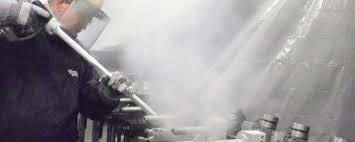
How Dry Ice Blasting Is Revolutionizing Industrial Cleaning Practices
Traditional industrial cleaning methods often come with challenges — messy waste, potential equipment damage, and long downtime. Dry Ice Blasting has transformed this process by offering a cleaner, faster, and more sustainable alternative. Using compressed air and solid carbon dioxide (CO₂) pellets, this innovative method effectively removes dirt, grease, and coatings without water, solvents, or abrasive materials. It’s rapidly becoming the preferred choice for industries that value efficiency, precision, and environmental responsibility.
The Science Behind Dry Ice Blasting
Dry ice blasting relies on the unique physical properties of carbon dioxide. The process involves shooting dry ice pellets through a high-pressure air stream directed at the surface being cleaned. Upon impact, the pellets cause contaminants to shrink and crack due to the extreme cold (−78.5°C). Then, they instantly sublimate — turning from solid to gas — and lift away the loosened material.
This powerful cleaning action is driven by three main factors:
-
Thermal Shock: The rapid cooling weakens the bond between the contaminant and the surface.
-
Impact Force: The high-velocity impact helps break up and remove debris.
-
Gas Expansion: As the dry ice vaporizes, it expands up to 800 times its volume, pushing away loosened particles.
The result is a deep, residue-free clean that doesn’t harm the underlying surface.
Where Dry Ice Blasting Excels
Dry ice blasting’s versatility makes it suitable for a wide range of industries and applications.
-
Manufacturing: Cleans molds, tools, and production lines without dismantling equipment.
-
Food Processing: Removes baked-on residues and grease while maintaining sanitary conditions.
-
Automotive: Cleans engines, transmissions, and paint surfaces safely and efficiently.
-
Aerospace: Removes sealants and contaminants from aircraft components without abrasion.
-
Energy and Utilities: Cleans turbines, boilers, and generators while minimizing operational downtime.
Because the process is non-abrasive, it’s safe for both heavy-duty machinery and delicate electrical components.
Sustainability and Environmental Responsibility
One of the biggest advantages of dry ice blasting is its environmentally friendly nature. The CO₂ used in the process is sourced from recycled industrial emissions, so no new carbon dioxide is produced. Unlike water-based or chemical cleaning, there’s no secondary waste to manage — the dry ice simply vaporizes, leaving behind only the removed contaminants.
This means businesses can clean equipment effectively without generating hazardous waste or polluting runoff. In addition, it eliminates the need for solvents and harsh chemicals, promoting a safer workspace and reducing the company’s environmental footprint.
Efficiency That Boosts Productivity
Dry ice blasting not only provides superior cleaning results but also saves valuable production time. Because equipment often doesn’t need to be disassembled, cleaning can be performed on-site and completed quickly. With no drying time required, machines can return to service almost immediately after cleaning.
Other operational advantages include:
-
Reduced Downtime: Cleaning in place keeps production moving.
-
Extended Equipment Life: The process is gentle on surfaces, reducing wear and corrosion.
-
Lower Maintenance Costs: Faster cleaning and no waste disposal save time and money.
-
Improved Safety: Eliminating chemicals minimizes health risks to workers.
These benefits make dry ice blasting an efficient, cost-effective solution for industries where uptime and reliability are critical.
Safety Practices for Optimal Results
Although dry ice blasting is generally safe, proper handling is essential. Operators should wear protective gloves, goggles, and hearing protection to guard against cold burns and noise exposure. Adequate ventilation is also important, as CO₂ gas can displace oxygen in confined spaces. Following these precautions ensures that the process remains both safe and effective.
The Future of Industrial Cleaning
As industries continue to adopt greener and more efficient practices, dry ice blasting is emerging as a leading technology for industrial maintenance. Ongoing advancements in equipment design are making systems more portable, powerful, and adaptable, further expanding their use in different sectors.
The method’s ability to clean thoroughly without damage, waste, or chemicals positions it as the future standard for responsible industrial cleaning. It supports sustainability goals while ensuring that production remains uninterrupted and machinery stays in optimal condition.
Conclusion
Dry ice blasting is more than just a cleaning technique — it’s a modern industrial solution that blends power, precision, and sustainability. By eliminating secondary waste, reducing downtime, and avoiding harmful chemicals, it helps industries achieve cleaner operations with minimal environmental impact. To learn how professional dry ice cleaning can benefit your business, visit Top Dry Ice for expert advice and specialized services.