
Muscle and joint discomfort can appear suddenly—after a long day of work, an intense workout, or even without a clear reason. For many people, this dull, nagging feeling becomes a part of everyday life. But understanding why muscle joint pain happens is the first step toward real, sustainable relief.
Ayurveda offers a grounded, body-wise approach to healing — simple principles, mindful routines, and herbs that nurture deeper balance. Let’s explore the causes, natural solutions, and traditional remedies that support long-term well-being.
Understanding Muscle Joint Pain Causes Through an Ayurvedic Lens
Most people think pain comes only from strain or injury. But Ayurveda explains muscle joint pain causes through imbalances in the three doshas — Vata, Pitta, and Kapha.
1. Vata Imbalance: The Most Common Reason
When Vata increases, dryness, stiffness, cracking sensations, and shooting pain become common. Hours of sitting, irregular meals, stress, and cold weather aggravate Vata, leading to muscle joint pain.
2. Pitta Imbalance
Excess Pitta creates warmth, inflammation, or burning sensations in muscles and joints. Overexertion, spicy food, and anger can worsen this.
3. Kapha Imbalance
Kapha-driven pain feels heavy, swollen, and sluggish. It often worsens in cold or damp conditions.
The good news? These patterns can be corrected with diet, daily habits, Ayurveda-based herbal support, and gentle lifestyle shifts.
Why You Get Muscle & Joint Pain: Modern Everyday Triggers
Even without an obvious injury, several habits contribute to persistent discomfort:
1. Sedentary Lifestyle
Long sitting reduces circulation and compresses muscles and joints, causing stiffness.
2. Nutrient Deficiency
Lack of magnesium, healthy fats, or collagen-supporting foods weakens connective tissues.
3. Overuse and Strain
Repeating the same movements or sudden intense activity leads to micro-tears.
4. Poor Sleep
Deep sleep allows the body to repair tissue. Inadequate rest slows recovery.
5. Dehydration
Dry tissues = tight muscles + stiff joints.
6. Aging
Natural wear and tear reduce flexibility and lubrication.
Understanding these factors helps you build a healing routine instead of masking pain temporarily.
Natural Solutions for Muscle Joint Pain Relief (Ayurveda-Approved)
Ayurveda focuses on long-term balance, not quick fixes. These foundational practices work with your body rather than against it.
1. Warm Oil Massage (Abhyanga) – A Vata-Calming Essential
Daily or alternate-day massage using warm herbal oil deeply supports muscle joint pain relief. Warm oil brings lubrication, boosts circulation, relaxes tight tissues, and improves flexibility.
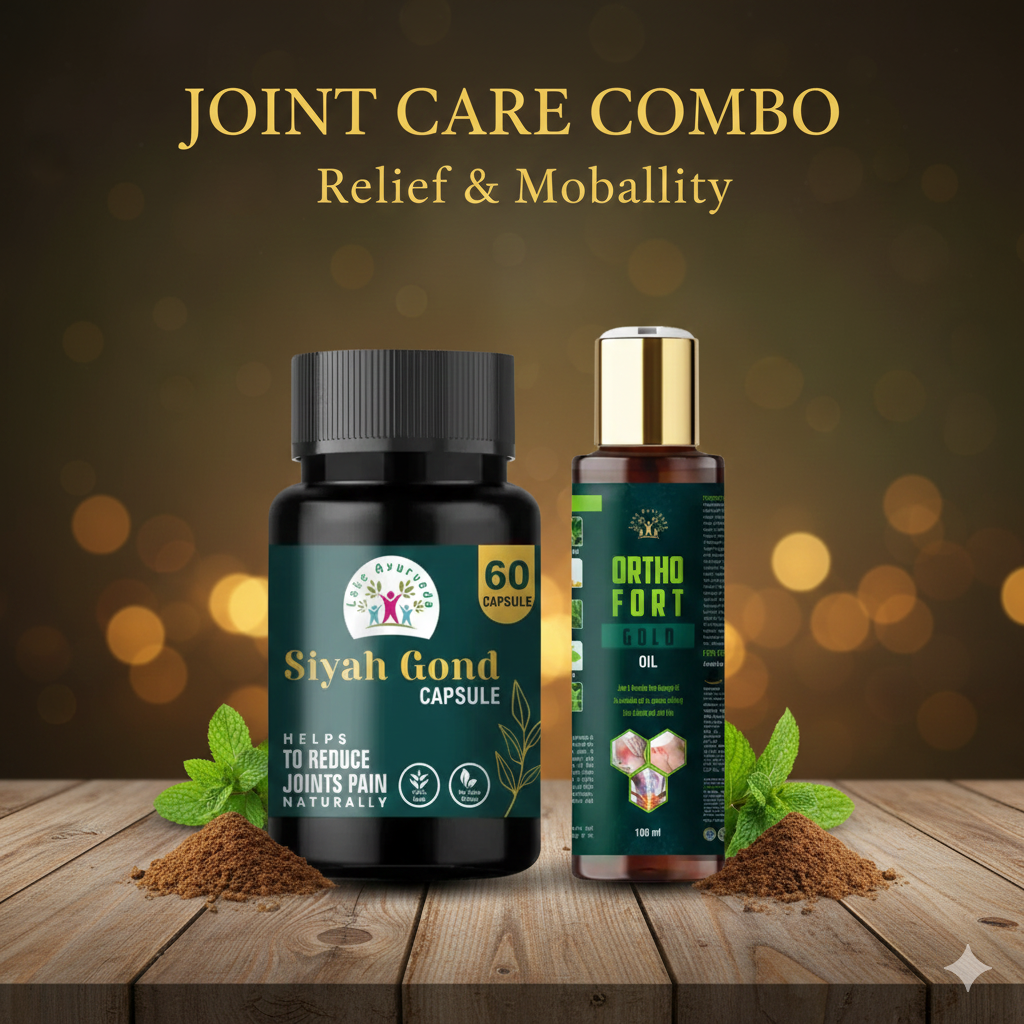
A popular option many wellness seekers choose is Ortho Fort Gold Oil. Many prefer to Order Ortho Fort Gold Oil online because of its easy availability and herbal formulation, and some platforms offer Ortho Fort Gold Oil with free shipping which makes it convenient to Shop Ortho Fort Gold Oil online for regular use.
2. Internal Nourishment With Herbal Resins (Like Siyah Gond)
Ayurveda emphasizes feeding tissues from the inside. This is where natural resins like Siyah Gond (Kala Gond) play a crucial role.
Benefits of Siyah Gond Capsules
These capsules are known for their grounding, strengthening, and rejuvenating nature. They support tissue repair, nourish joints, and enhance resilience.
People often search for kala gond capsule benefits because these traditional resins help restore strength naturally — especially in those with Vata-related pain or weakness.
The kala gond capsule price is usually affordable compared to modern supplements, making it easy to include in a daily wellness plan.
3. Gentle Daily Movement & Stretching
A combination of yoga, slow stretches, and mindful walking keeps the joints lubricated.
Try these simple routines:
- Cat-cow for spine fluidity
- Hip-opening poses to release tension
- Shoulder rotations for upper body mobility
- Slow Surya Namaskar rounds to warm stiff areas
Even 10 minutes daily can change how your body feels.
4. Warm, Nourishing Foods
To calm Vata and support joint tissue, include:
- Ghee
- Warm soups
- Ginger-turmeric tea
- Almonds and sesame
- Steamed vegetables
Cold salads or iced drinks should be limited — they aggravate dryness and stiffness.
5. Sleep Repair Ritual
A simple nighttime routine helps muscles recover naturally:
- Warm bath
- Oil massage on feet
- Herbal tea
- No screen in the last 30 minutes
Deep sleep = faster tissue repair = reduced pain.
Ayurvedic Herbs & Formulations to Support Joint Strength
Along with lifestyle changes, many people integrate herbal support for consistent improvement.
Siyah Gond Capsules for Internal Strength
Regular use of Siyah Gond Capsules supports connective tissues, nourishes the spine, and helps the body deal with daily strain. These herbs are rooted in centuries-old Ayurvedic practices.
Ortho Fort Gold Oil for External Ease
This herbal oil blends traditional herbs processed in Ayurvedic methods. Ideal for:
- Stiffness
- Morning immobility
- Fatigue-related pain
- Overused muscles
A warm application followed by mild stretching works exceptionally well.
How to Build a Simple Daily Pain-Relief Routine
Here’s an easy plan you can follow:
Morning
- Warm sesame oil massage
- Gentle stretching
- Warm water with ginger
Afternoon
- Short walk every 60 minutes
- Hydration with warm liquids
Evening
- Apply warm Ortho Fort Gold Oil on affected areas
- Light Yoga Nidra or meditation
- Early dinner, warm foods
Before Bed
- Take Siyah Gond Capsules if part of your routine
- Foot oil massage
- Digital detox for 30 minutes
This combination aligns with the Ayurvedic approach of internal nourishment + external ease.
What Experts Say
Herbal nourishment and warm oil therapies remain central in traditional pain-relief practices. And many such insights, as highlighted by Ayurvedic experts at Lake Ayurveda, emphasize balancing Vata, strengthening tissues, and supporting daily movement as the foundation of long-term joint wellness.
Conclusion: Healing Muscle & Joint Pain Starts With Balance
You don’t need extreme treatments to manage ongoing muscle and joint discomfort. Sometimes, the most effective solutions are found in consistency—warm oils, nutrient-rich herbal resins, mindful movement, and balanced routines.
Ayurveda teaches that when the body is supported holistically, pain naturally recedes.
If you’re exploring authentic Ayurvedic products or wellness resources, you can learn more at Lake Ayurveda, where traditional knowledge meets mindful living.