
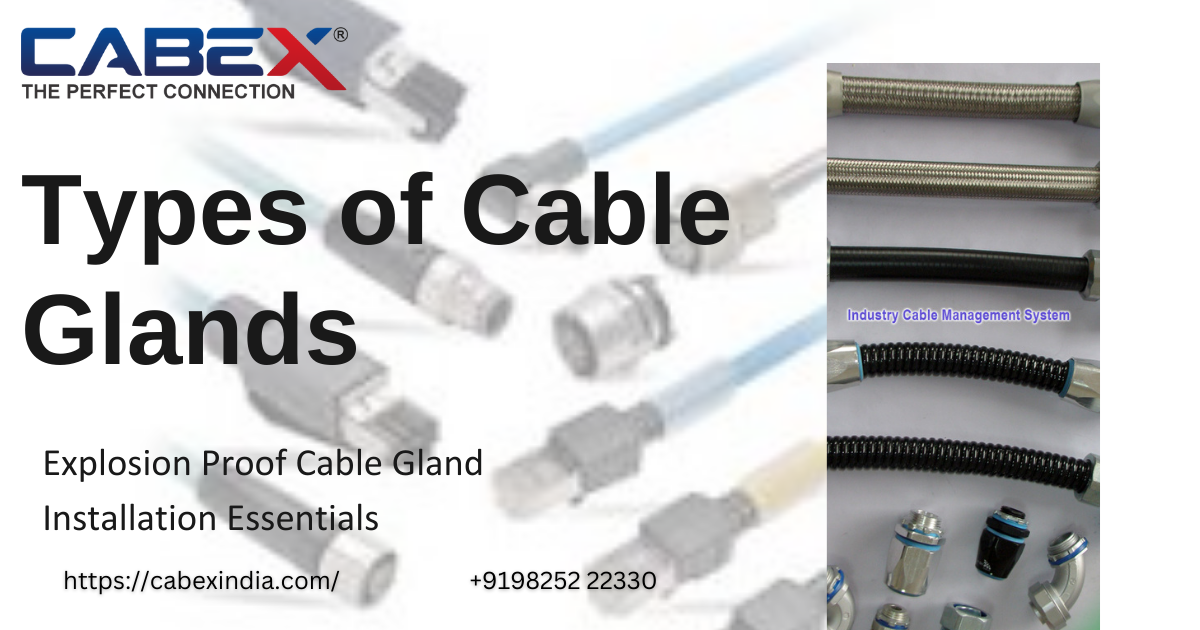
Cable glands are essential components used to secure, seal, and protect cables entering electrical panels, machines, and enclosures. They play a vital role in maintaining cable integrity, preventing environmental damage, and ensuring safety in industrial, commercial, and outdoor installations. Understanding the Types of Cable Glands is crucial for selecting the right solution that aligns with environmental conditions, cable specifications, and industry standards.
Cable glands are manufactured in various sizes, materials, and designs to accommodate different cable types such as armoured, unarmoured, flexible, instrumentation, and power cables. They help maintain ingress protection (IP), strain relief, grounding, and mechanical support in wiring systems. Their importance grows with environments that demand superior sealing, corrosion resistance, and vibration protection.
1. BW Cable Glands
BW cable glands are widely used for indoor applications with armoured cables. They provide mechanical retention and ensure proper armouring termination. These glands are suitable for dry environments where additional sealing is not required.
2. CW Cable Glands
CW glands are ideal for outdoor armoured cable installations. They provide both mechanical support and environmental sealing at the cable entry. With a superior IP rating, they protect against dust, moisture, and external elements.
3. A2 Cable Glands
A2 cable glands are specially designed for unarmoured cables. They offer strong clamping and sealing without the need for armouring locks. These glands are suitable for general-purpose indoor and outdoor installations.
4. E1W Cable Glands
E1W glands provide robust mechanical strength and weatherproof sealing. They are used in harsh outdoor environments, ensuring the cable remains sealed and protected against moisture and chemicals.
5. Flameproof / Explosion-Proof Cable Glands (Exd)
Used in hazardous areas such as oil & gas plants, chemical industries, and refineries, flameproof (Exd) glands prevent flames or sparks from entering the environment. They are essential for ATEX and IECEx-certified installations.
6. Increased Safety Glands (Exe)
These glands avoid sparking and provide additional protection without containing explosions. They are often used in Zone 2 hazardous areas where electrical safety requirements are strict.
7. PVC Shrouded Glands
These glands come with a PVC shroud for extra environmental protection. They are commonly used in coastal regions, outdoor installations, and corrosive environments.
8. Threaded Cable Glands
Threaded glands allow direct installation into threaded holes or hubs. They come in metric, PG, NPT, and BSP thread standards, depending on system requirements.
9. Nylon Cable Glands
Nylon or polyamide glands are lightweight, corrosion-free, and suitable for indoor electrical and automation panels. They provide excellent strain relief and are commonly used in instrumentation wiring.
10. Stainless Steel Cable Glands
Stainless steel glands are used in highly corrosive or high-temperature environments. Their superior strength and durability make them ideal for chemical plants, marine applications, and heavy industries.
11. EMC Cable Glands
EMC (Electromagnetic Compatibility) glands are designed to prevent electromagnetic interference. They ensure shield continuity, making them essential for data cables, control panels, and sensitive instrumentation.
12. Multi-Cable Glands
These glands allow multiple cables to pass through a single gland body while maintaining sealing and protection. They save space and simplify wiring in compact enclosures.
Why Understanding the Types of Cable Glands Matters
Selecting the right type of cable gland improves system safety, prevents water or dust ingress, protects against explosions, maintains grounding, and ensures long service life. Factors such as cable type, environment, temperature, chemical exposure, and certification requirements must be considered.
The right cable gland guarantees:
-
Superior sealing performance
-
Mechanical strength
-
Environmental protection (IP & NEMA)
-
Vibration resistance
-
Regulatory compliance
-
Safe and reliable installations
From general-purpose electrical work to hazardous area applications, understanding the types of cable glands is crucial for safe cable management. For industries seeking reliable and certified Types of Cable Glands, trusted solutions are available from Cabexindia.