
As the electrical and polymer industries rapidly expand, quality control has transitioned from an operational requirement to a strategic requirement. Manufacturers are always searching for accurate, reliable, and automated tools that allow them to manufacture defect-free cables and polymer-based products.
Two technologies that have positively influenced accuracy in inspection measurements are slicing machines designed for cross-linked cables and microscopes intended for high-resolution dispersion measurements. When used together, these technologies build a strong testing ecosystem that enhances safety, performance, and durability across a range of industrial uses.
Why Inspection of Cross-Linked Cables Matters
Cross-linked cables are widely used across power transmission, industrial automation, telecommunications, and heavy engineering. Their strength, heat resistance, and insulation quality make them suitable for high-load applications. However, the performance of these cables largely depends on the uniformity of the cross-linking process, the quality of raw materials, and the structural integrity of the insulation layer.
Even small inconsistencies can cause electrical failures, overheating, premature aging, and safety hazards. For this reason, manufacturers rely on advanced inspection techniques to analyze cable samples before mass production or quality certification. This is where slicing and microscopic dispersion analysis become extremely important.
The Role of Slicing in Cable Inspection
Slicing is a critical method used to study the internal structure of cables. By preparing thin and smooth slices, quality engineers can examine the cross-sectional details of insulation and conductor arrangements. Traditional slicing methods were often manual and time-consuming. They also increased the risk of sample damage, leading to inaccurate test results.
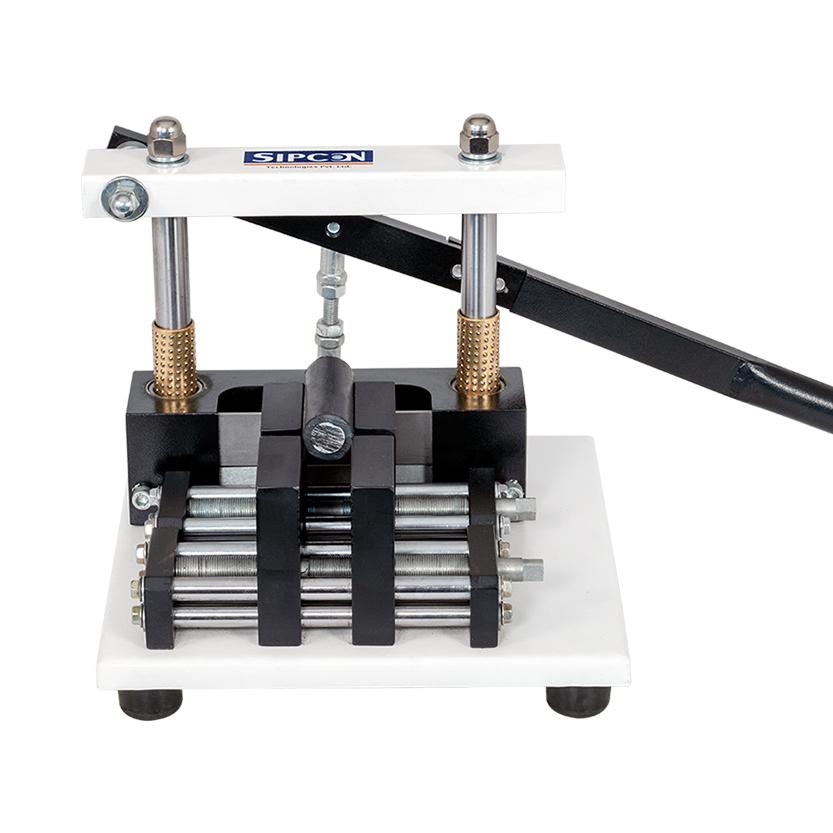
This changed with the introduction of the cross-linked cable slicing machine, which allows for uniform, clean, and precise cuts. These machines use controlled pressure, precision blades, and stable clamping systems to produce high-quality samples ideal for laboratory analysis. Automated slicing not only speeds up the inspection workflow but also eliminates operator errors. As a result, every slice offers consistent thickness, smoothness, and clarity—features necessary for accurate microscopic examination.
Understanding Dispersion Analysis in Polymers
Cables, especially those used in power systems, often contain carbon black as an additive. Carbon black improves UV resistance, increases insulation strength, enhances conductivity where needed, and provides better mechanical durability. However, these benefits are only realized when carbon black is uniformly dispersed throughout the polymer.
Poor dispersion leads to weak spots, crack formation, and reduced aging performance. To assess dispersion quality, manufacturers rely on microscopic inspection. The Carbon black expression Measurement microscope allows technicians to observe how evenly carbon black particles are distributed within the polymer matrix. It offers magnified views of clusters, agglomeration, and dispersion patterns that cannot be detected through visual inspection alone.
How Slicing Enhances Microscopic Dispersion Measurement
While both slicing machines and microscopic tools are powerful on their own, their combination provides unmatched accuracy in polymer and cable quality assessment. Here’s how they work together:
-
Perfect Sample Preparation
Microscopes require smooth, undistorted samples for meaningful observations. A slicing machine prepares such samples by producing defect-free cuts with optimal thickness. This ensures that the microscope can capture accurate dispersion images without artifacts caused by poor slicing.
-
Enhanced Accuracy and Repeatability
Manual slicing often leads to inconsistency from one sample to another. Automated slicing ensures uniformity across all samples, making it easier to compare different batches or materials. This increases the repeatability of dispersion measurements.
-
Faster Quality Control Cycles
Together, these tools reduce the time needed for sample preparation and analysis. In industries where fast throughput is essential, this combination dramatically improves productivity without compromising precision.
-
Better Identification of Material Defects
A high-quality slice reveals detailed internal structures under the microscope. Engineers can see dispersion issues, insulation defects, voids, cracks, and inconsistencies more clearly. Early identification leads to faster corrective actions and minimizes large-scale product failures.
-
Supports Compliance with Global Standards
Many industries follow international standards such as IEC, ASTM, and ISO. These standards require precise dispersion evaluation and structural examination. Automated slicing and advanced microscopy make compliance easier and more reliable.
Applications Across Industries
- Power cable manufacturing – Ensures insulation reliability and long-term performance
- Automotive wiring and components – Checks heat resistance and mechanical strength
- Telecommunication cables – Ensures stable signal transmission
- Polymer research labs – Helps study material behavior, additives, and processing parameters
Conclusion
The combination of automated slicing systems and advanced dispersion measurement technology has revolutionized cable and polymer inspection. Manufacturers now have access to faster, more accurate, and more reliable testing methods that significantly enhance product quality.
As technology continues to evolve, tools like these will become essential in ensuring safe, durable, and high-performance materials. With the growing demand for precision in every stage of production, solutions from cablemeasurement further strengthen the quality assurance process and support industries in achieving global standards.