
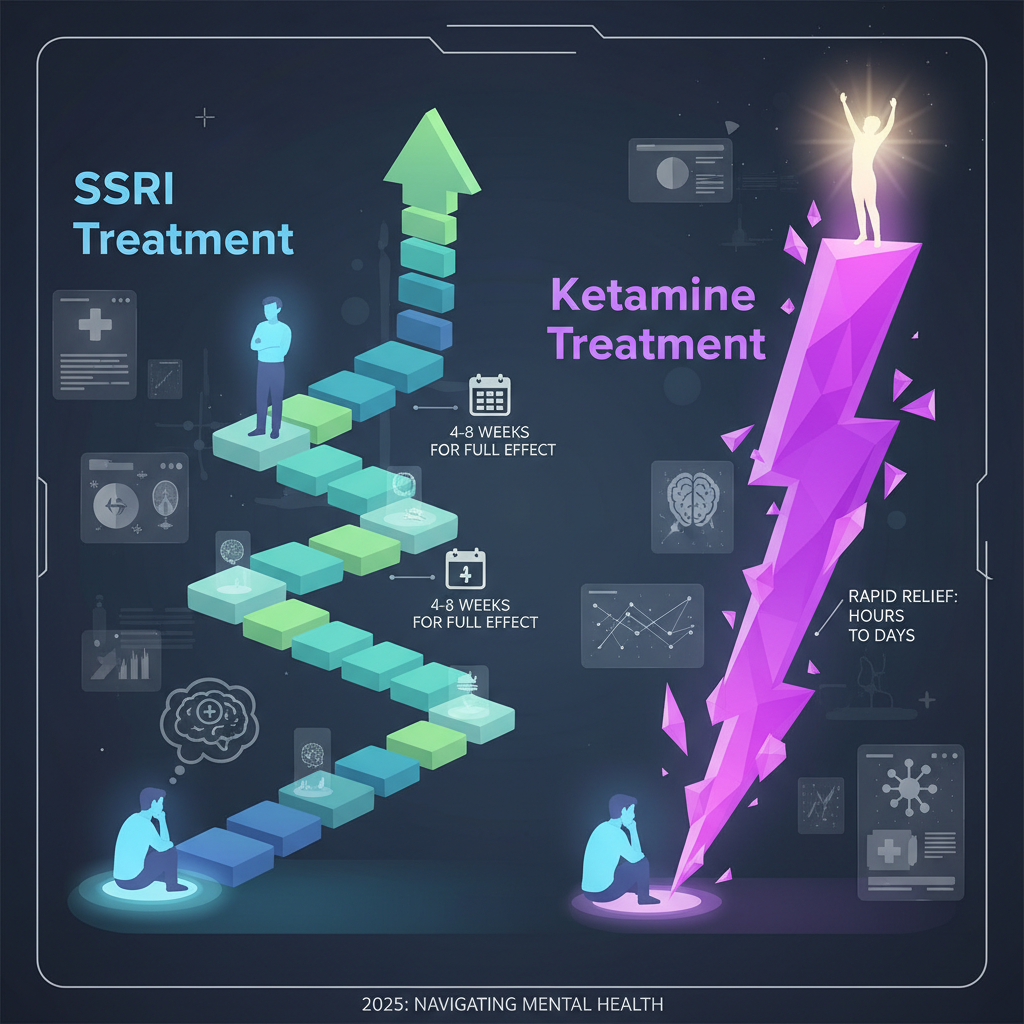
In 2025, when it comes to tackling mental health challenges like depression and anxiety, the options available are more varied than ever. The debate of Ketamine vs SSRI has sparked widespread discussions among mental health professionals and patients alike. This article explores both treatments, comparing their effectiveness, side effects, and how to choose the right one for you.
What Sets Ketamine Apart from Traditional Antidepressants?
Originally used as an anesthetic, ketamine has emerged as a promising treatment for treatment-resistant depression. Unlike conventional medications like SSRIs, ketamine provides rapid relief by interacting with NMDA receptors in the brain, which influence mood and stress response. This makes it a game-changer for those who have not found success with other treatments.
Ketamine is unique in its ability to provide immediate symptom relief, often within hours, making it an invaluable option for individuals experiencing acute depression or suicidal ideation. This rapid action has garnered it a spot as a critical option for people in immediate need of intervention.
How Do SSRIs Work for Depression and Anxiety?
On the other hand, Selective serotonin reuptake inhibitors (SSRIs) have long been the first line of defense for depression and anxiety disorders. By boosting serotonin levels in the brain, SSRIs like fluoxetine (Prozac) and sertraline (Zoloft) help regulate mood and emotional stability.
While SSRIs take weeks to show full effects, they are highly effective for long-term treatment. SSRIs are typically used for individuals seeking a steady and consistent approach to managing depression or anxiety, providing a maintenance solution once the medication reaches therapeutic levels.
Ketamine vs SSRI: How These Treatments Differ in Speed and Impact
When it comes to treatment speed, the Ketamine vs SSRI debate is clear:
- Ketamine: Known for its fast-acting nature, ketamine can provide relief from depression within hours or days of administration. This makes it highly effective for individuals who need quick action.
- SSRIs: These medications typically take 4 to 6 weeks to show significant results, as they work by gradually increasing serotonin levels in the brain.
Ketamine’s speed of action is particularly useful in emergency situations, while SSRIs provide consistent, long-term benefits over time.
Side Effects and Risks: A Closer Look at Ketamine and SSRIs
Both treatments come with side effects that should be considered when deciding between Ketamine vs SSRI:
Potential Side Effects of Ketamine
- Short-Term Effects: Dizziness, nausea, and dissociation (feeling detached from reality) are common, especially immediately after treatment. These effects usually subside after the session.
- Long-Term Risks: Prolonged use of ketamine, particularly in non-clinical settings, can lead to bladder problems and cognitive issues. However, these risks are minimized when ketamine is administered under medical supervision.
Side Effects of SSRIs
- Short-Term Effects: SSRIs can cause nausea, sexual dysfunction, and insomnia. These side effects often dissipate after the first few weeks of use.
- Long-Term Considerations: While SSRIs are generally considered safe for long-term use, they can cause weight gain and emotional blunting in some individuals.
Which Treatment is Most Effective for Long-Term Mental Health?
While ketamine provides immediate relief, SSRIs excel in offering long-term management of mood disorders:
- Ketamine: Best suited for individuals who need immediate intervention, especially for severe, acute depression or when other treatments have failed. However, ketamine’s effectiveness may require repeat treatments, and its effects may not last long without ongoing sessions.
- SSRIs: Ideal for people seeking sustained control over their mental health, particularly those with chronic anxiety or long-term depression. SSRIs provide a gradual but steady impact, maintaining mood stability over time.
Who Should Consider Ketamine Treatment?
Ketamine is a great option for those who:
- Are struggling with severe, treatment-resistant depression and need rapid relief.
- Have suicidal thoughts and require immediate intervention.
- Have tried traditional antidepressants without success.
If you're looking for a quick fix or emergency intervention, ketamine might be the right treatment for you, but it’s important to weigh its temporary effects and potential risks.
When SSRIs Are the Right Choice for You
SSRIs are most beneficial for individuals who:
- Have generalized anxiety or chronic depression and need consistent, long-term care.
- Can tolerate the gradual onset of relief, which can take weeks.
- Prefer a self-managed treatment option that doesn’t require regular clinical visits.
SSRIs are ideal for ongoing treatment, offering long-term solutions without the need for frequent clinic visits.
Conclusion:
In 2025, Ketamine vs SSRI remains a crucial decision point for many individuals seeking mental health treatment. Ketamine offers a rapid solution, making it ideal for those who need immediate relief or have treatment-resistant depression. On the other hand, SSRIs provide sustained relief and are better suited for long-term management of depression, anxiety, and other mood disorders.
Ultimately, the choice between Ketamine vs SSRI depends on your specific needs, treatment goals, and the severity of your symptoms. Consult with a healthcare provider to discuss the benefits and risks of both treatments and determine the best course of action for your mental health in 2025.