
Introduction
India is one of the world’s fastest-growing and most regulated markets, especially when it comes to product quality and consumer safety. To ensure that only safe, reliable, and high-quality products enter the Indian market, the Bureau of Indian Standards (BIS) has established strict certification systems. When foreign manufacturers want to export regulated products to India, they must obtain approval under the BIS FMCS—a mandatory certification scheme for numerous product categories.
Additionally, BIS Registration for Foreign Manufacturer is a critical process that ensures imported products follow the same safety and quality standards as those manufactured in India. Without these certifications, products cannot be legally sold, distributed, or cleared through customs.
What Is BIS FMCS?
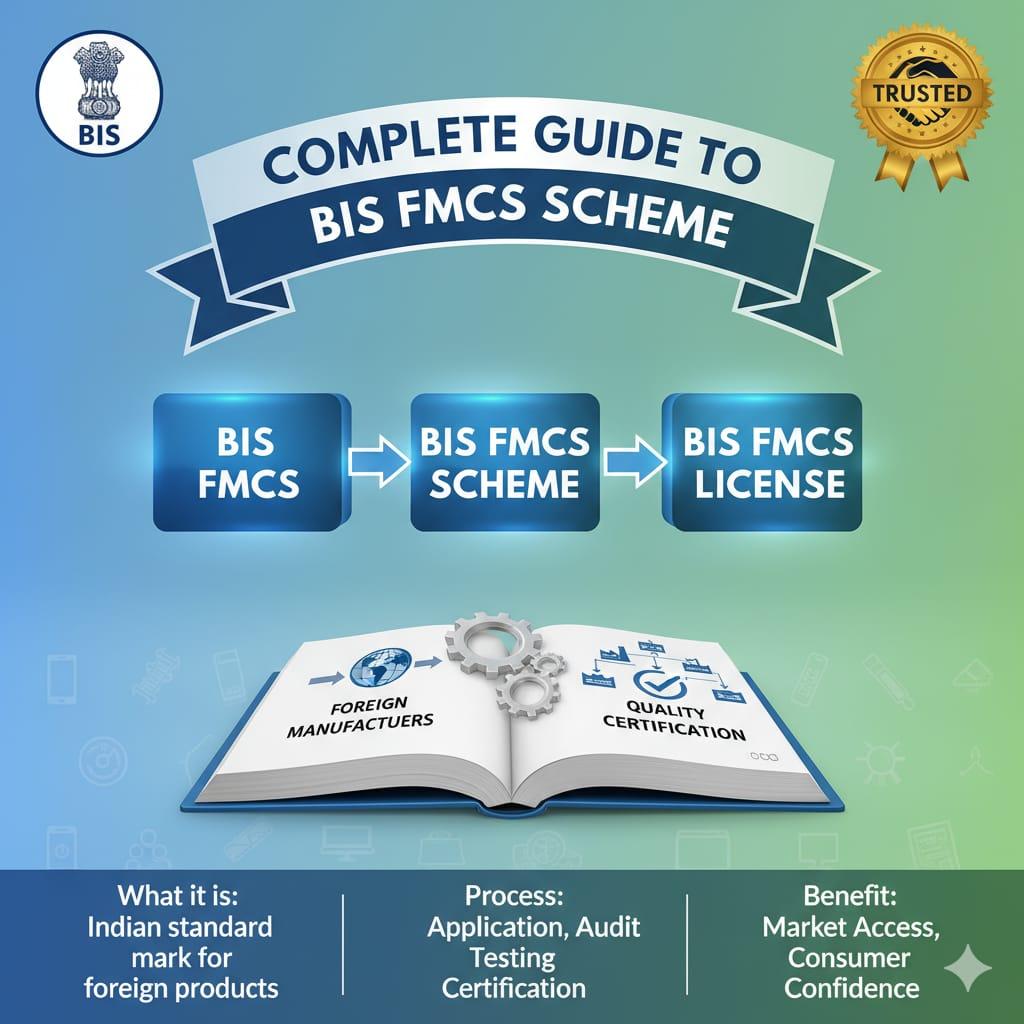
BIS FMCS (Foreign Manufacturers Certification Scheme) is a licensing scheme that enables foreign manufacturers to obtain the BIS ISI license for products that fall under mandatory Indian Standards. This scheme includes strict testing, factory audits, documentation checks, and continuous surveillance to ensure compliance.
Products approved under BIS FMCS carry the ISI Mark, proving that they meet Indian Standards for performance, quality, durability, and safety. Without an ISI license, such products cannot enter the Indian market.
Key highlights of BIS FMCS:
- Mandatory for foreign manufacturers of regulated products
- Requires BIS officer factory inspection
- Only BIS-approved labs can be used for testing
- Ensures product quality is consistent with Indian Standards
Understanding BIS Registration for Foreign Manufacturer
BIS Registration for Foreign Manufacturer is the official approval process that foreign manufacturers must follow to receive a BIS License and legally export mandatory ISI-regulated products to India.
Whether the manufacturer deals in electrical appliances, steel, chemicals, household products, or industrial equipment, BIS registration ensures compliance with Indian rules and safe entry into the Indian market.
This registration is also crucial for importers in India, as customs authorities require valid BIS documentation for clearance. Any product arriving without proper certification may face detention, rejection, or penalties.
Why BIS FMCS Is Mandatory for Foreign Manufacturers
There are several reasons why foreign manufacturers must obtain BIS FMCS:
1. Legal Compliance
The Indian government mandates BIS Licensing for many product categories under Quality Control Orders (QCOs).
2. Consumer Safety
It ensures imported products pose no risk to Indian users.
3. Market Credibility
Products with ISI marks are trusted more by buyers, distributors, and retailers.
4. Smooth Customs Clearance
Customs authorities strictly check for BIS Certification for regulated products.
5. Better Market Penetration
Compliance boosts brand value, acceptance, and long-term sustainability.
Products That Require BIS FMCS Certification
BIS FMCS covers a wide range of products, such as:
- Steel bars, rods, coils, and sheets
- Cement
- Household electrical appliances
- Kitchenware
- Batteries
- Helmets and safety gear
- Pressure cookers
Manufacturers must confirm whether their product falls under the ISI scheme before exporting to India.
Step-by-Step Process of BIS FMCS Certification
A successful BIS FMCS application requires careful planning and accurate execution. Here is a clear breakdown:
1. Identify Correct Indian Standards (IS Code)
Every product category is governed by a specific IS standard. The first step is determining the correct IS code that applies to the product.
2. Documentation Preparation
Foreign manufacturers must prepare an extensive list of documents, including:
- Manufacturing license or registration
- Factory layout plan
- Quality control procedures
- Raw material details
- Product specifications
- Internal testing capabilities
- Machine and equipment list
- ISO certificates
- Authorization letters
Proper documentation is essential to avoid delays.
3. Product Testing in BIS-Approved Laboratory
Product samples must be tested only in BIS-recognized labs. The test report must show full compliance with the applicable Indian Standard.
4. Submission of Application
The manufacturer must submit the BIS application online along with documents, test reports, and applicable fees. BIS reviews the application before scheduling a factory inspection.
5. Factory Inspection by BIS Officer
A BIS officer visits the foreign manufacturing facility to verify:
- Production processes
- Machinery and infrastructure
- Quality control systems
- Testing equipment accuracy
- Product consistency
This step is mandatory for all FMCS certifications.
6. Grant of BIS License
Once satisfied with inspection results and testing reports, BIS grants the ISI License under FMCS.
7. Post-License Surveillance
BIS conducts ongoing surveillance through audits, market sampling, and product testing to ensure continued compliance.
Common Challenges Faced by Foreign Manufacturers
Foreign companies often encounter challenges such as:
- Understanding Indian regulatory standards
- Complex documentation requirements
- Difficulty coordinating international sample testing
- Preparing facilities for audits
- Language and communication barriers
- Longer timelines due to errors or delays
Because of these issues, many manufacturers rely on expert BIS consultants for smooth approval.
Benefits of BIS FMCS Certification
Obtaining BIS FMCS offers significant advantages:
- Legal entry into the Indian market
- Strong credibility with importers and distributors
- Enhanced product acceptance
- Reduced customs detention risks
- Improved global reputation
- Long-term market opportunities
With BIS compliance, foreign manufacturers gain a powerful advantage in India’s competitive marketplace.
Final Words
For foreign manufacturers aiming to enter India, understanding BIS FMCS and BIS Registration for Foreign Manufacturer is essential. Proper certification ensures safe product distribution, smooth customs clearance, and complete compliance with Indian regulatory standards. With the right guidance and support, the BIS approval process becomes easy, efficient, and reliable.
For expert assistance and smooth BIS FMCS registration support, visit sunconsultants.co.in