
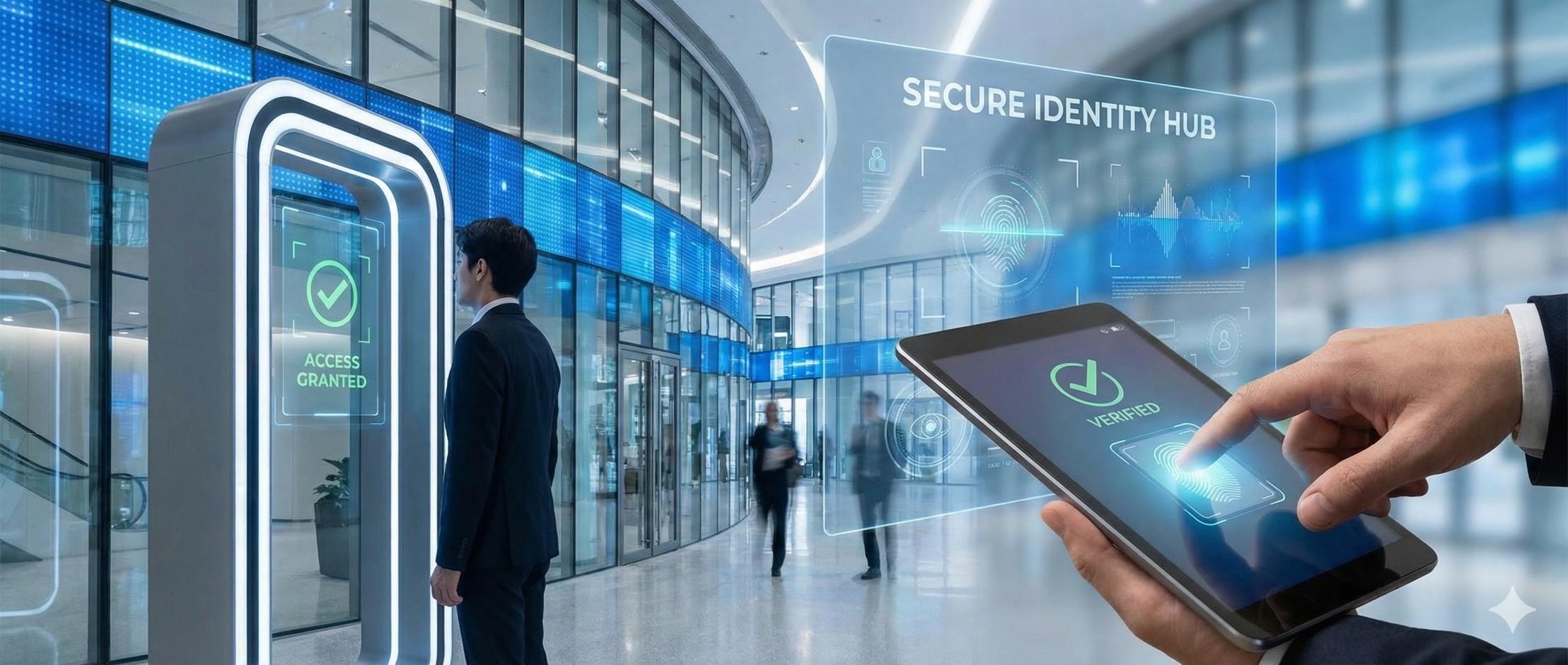
The Global Biometric Technology Market is undergoing a profound transformation as organizations, governments, and consumers increasingly rely on advanced identity authentication systems to secure digital interactions and physical environments.
In an era defined by rapid digitization, escalating cybersecurity threats, and growing concerns over identity fraud, biometric technologies have emerged as a cornerstone of secure access control and authentication. By leveraging unique physiological and behavioral characteristics such as fingerprints, facial features, iris patterns, voice recognition, and behavioral biometrics, the market is reshaping how identity is verified across industries and use cases.
Market Overview
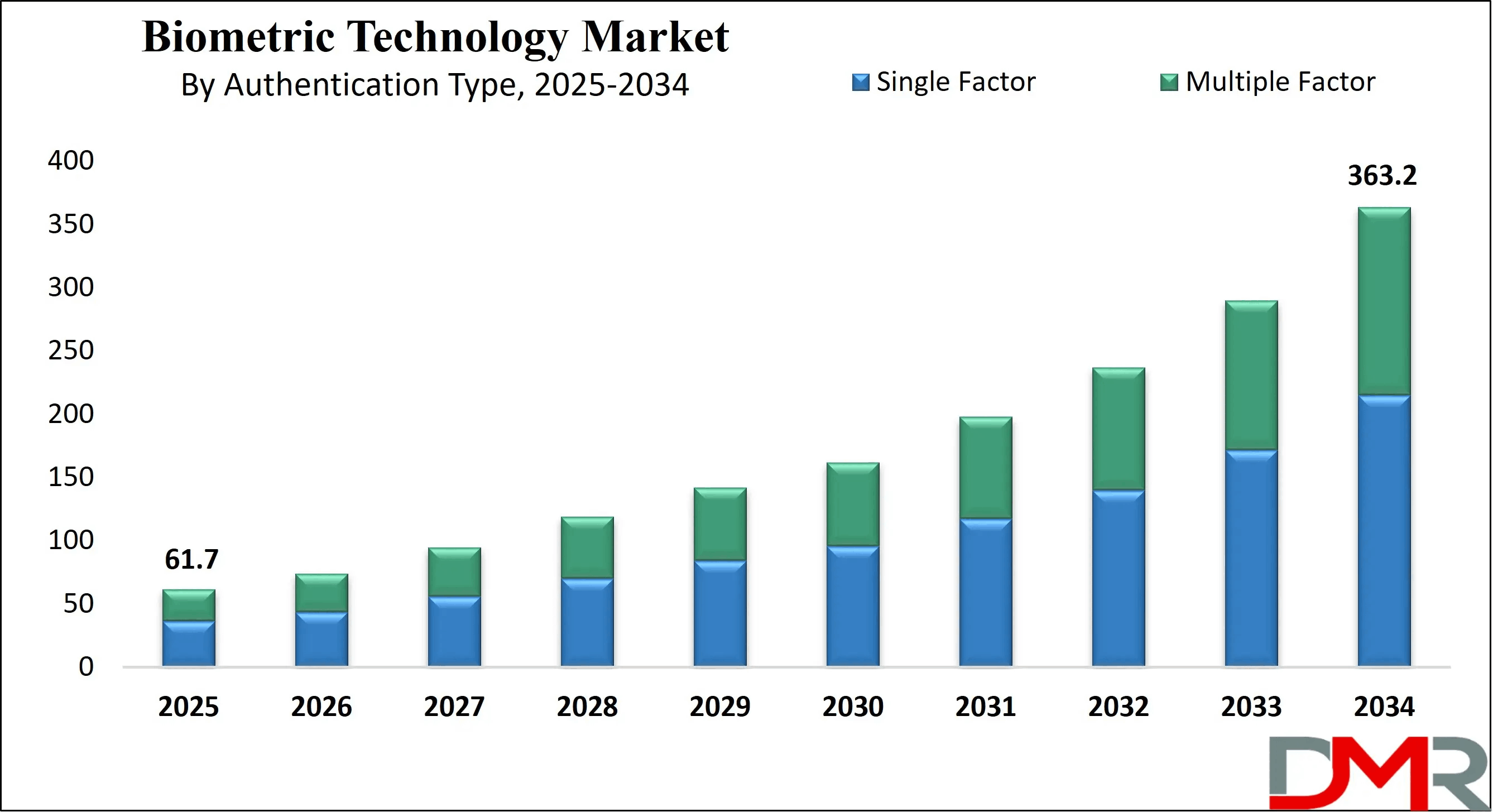
The biometric technology market has evolved from niche security applications into a mainstream technology embedded across consumer electronics, financial services, healthcare, transportation, and government systems. The Global Biometric Technology Market is projected to reach USD 61.7 billion in 2025 and grow at a compound annual growth rate of 21.8% from there until 2034 to reach a value of USD 363.2 billion. This exceptional growth reflects the increasing need for robust, user-friendly, and fraud-resistant authentication solutions in both digital and physical domains.
Traditional authentication methods such as passwords, PINs, and access cards are increasingly viewed as inadequate due to their vulnerability to theft, duplication, and social engineering attacks. Biometric systems address these shortcomings by providing a higher level of security based on inherent human characteristics that are difficult to replicate. As digital ecosystems expand and remote interactions become more prevalent, biometric authentication is becoming an essential enabler of trust, convenience, and compliance.
Evolution of Biometric Technologies
Biometric technology has progressed significantly over the past two decades. Early systems were limited by accuracy issues, high costs, and user resistance. Modern biometric solutions, however, benefit from advances in artificial intelligence, machine learning, sensor technology, and computing power. These advancements have improved recognition accuracy, reduced false acceptance and rejection rates, and enabled real-time authentication across diverse environments.
Facial recognition systems now operate effectively in varying lighting conditions, fingerprint sensors are embedded seamlessly into smartphones and payment terminals, and voice recognition algorithms can distinguish users even in noisy environments. Behavioral biometrics, which analyze patterns such as typing rhythm, gait, or touchscreen interactions, are gaining traction as continuous and passive authentication methods that enhance security without disrupting user experience.
Key Market Drivers
One of the primary drivers of the biometric technology market is the rapid expansion of digital services. Online banking, e-commerce, digital payments, and remote work platforms require secure yet frictionless authentication mechanisms. Biometric solutions meet this need by balancing strong security with ease of use, driving widespread adoption across consumer and enterprise applications.
Rising incidents of identity theft and cybercrime are also accelerating market growth. As cyber threats become more sophisticated, organizations are investing in multi-factor and biometric authentication to protect sensitive data and critical systems. Regulatory pressures related to data protection and identity verification further reinforce demand, particularly in sectors such as finance, healthcare, and government services.
The proliferation of smart devices and connected infrastructure is another significant driver. Smartphones, smart homes, and Internet of Things ecosystems increasingly incorporate biometric sensors to enhance security and personalization. This integration not only expands the addressable market but also familiarizes consumers with biometric technologies, fostering acceptance and trust.
Market Restraints and Challenges
Despite strong growth prospects, the biometric technology market faces several challenges. Privacy and data protection concerns remain a major issue, particularly regarding the collection, storage, and use of biometric data. Unlike passwords, biometric identifiers cannot be changed if compromised, making secure data management critical. Addressing these concerns requires robust encryption, decentralized storage models, and transparent governance frameworks.
Accuracy and bias issues also present challenges, especially in facial recognition systems. Variations in performance across different demographic groups have raised ethical and regulatory concerns. Vendors and policymakers are increasingly focused on improving algorithmic fairness and establishing standards to ensure responsible deployment.
Cost considerations can be a barrier for smaller organizations, particularly when implementing advanced biometric systems that require specialized hardware and integration with existing infrastructure. However, declining sensor costs and cloud-based biometric services are gradually improving affordability and accessibility.
Opportunities and Emerging Trends
The biometric technology market offers substantial opportunities driven by innovation and expanding application areas. Contactless biometrics, such as facial and iris recognition, have gained prominence due to heightened hygiene awareness and the need for touch-free interactions. This trend is particularly evident in public transportation, airports, and healthcare facilities.
Multimodal biometric systems, which combine multiple biometric identifiers, are emerging as a powerful approach to enhance accuracy and security. By leveraging complementary modalities, these systems reduce the risk of spoofing and improve reliability in diverse conditions.
Integration with artificial intelligence and analytics is another key opportunity. AI-driven biometrics enable adaptive learning, continuous authentication, and predictive security insights. These capabilities are particularly valuable in high-risk environments such as financial services and critical infrastructure.
Segmentation by Technology Type
The biometric technology market encompasses several technology types, including fingerprint recognition, facial recognition, iris recognition, voice recognition, hand geometry, and behavioral biometrics. Fingerprint recognition remains one of the most widely adopted technologies due to its maturity, cost-effectiveness, and ease of integration. It is extensively used in smartphones, access control systems, and payment authentication.
Facial recognition is experiencing rapid growth, driven by advancements in computer vision and widespread adoption in surveillance, identity verification, and consumer devices. Iris recognition, known for its high accuracy, is increasingly used in border control, national identity programs, and secure access environments. Voice recognition and behavioral biometrics are gaining traction in call centers, mobile banking, and continuous authentication scenarios.
Segmentation by Application
Biometric technologies are applied across a broad range of use cases, including identity verification, access control, time and attendance, surveillance, and digital payments. Identity verification applications are particularly significant in financial services, where biometric authentication helps prevent fraud and comply with regulatory requirements.
Access control applications span corporate offices, residential buildings, and critical infrastructure, providing secure and convenient entry management. Surveillance and public safety applications leverage biometrics to enhance situational awareness and support law enforcement operations, while digital payment applications benefit from fast and secure user authentication.
Segmentation by End-Use Industry
The market serves diverse end-use industries, including government, banking and financial services, healthcare, consumer electronics, transportation, and retail. Government applications encompass national identity programs, border control, and public safety initiatives. The banking and financial services sector is a major adopter, using biometrics to secure transactions, onboarding, and customer authentication.
Healthcare organizations utilize biometric systems to protect patient data, streamline access to medical records, and ensure accurate patient identification. Consumer electronics manufacturers integrate biometric sensors into devices to enhance security and personalization, while transportation and retail sectors adopt biometrics to improve efficiency and customer experience.
Regulatory and Ethical Considerations
Regulation plays a critical role in shaping the biometric technology market. Governments are developing frameworks to govern biometric data collection, consent, storage, and usage. Compliance with data protection regulations is essential for market participants, influencing system design and deployment strategies.
Ethical considerations, including transparency, accountability, and non-discrimination, are increasingly central to biometric adoption. Organizations are expected to implement safeguards that protect individual rights while delivering security benefits. These considerations are driving innovation in privacy-preserving technologies such as on-device processing and anonymization techniques.
Regional Analysis
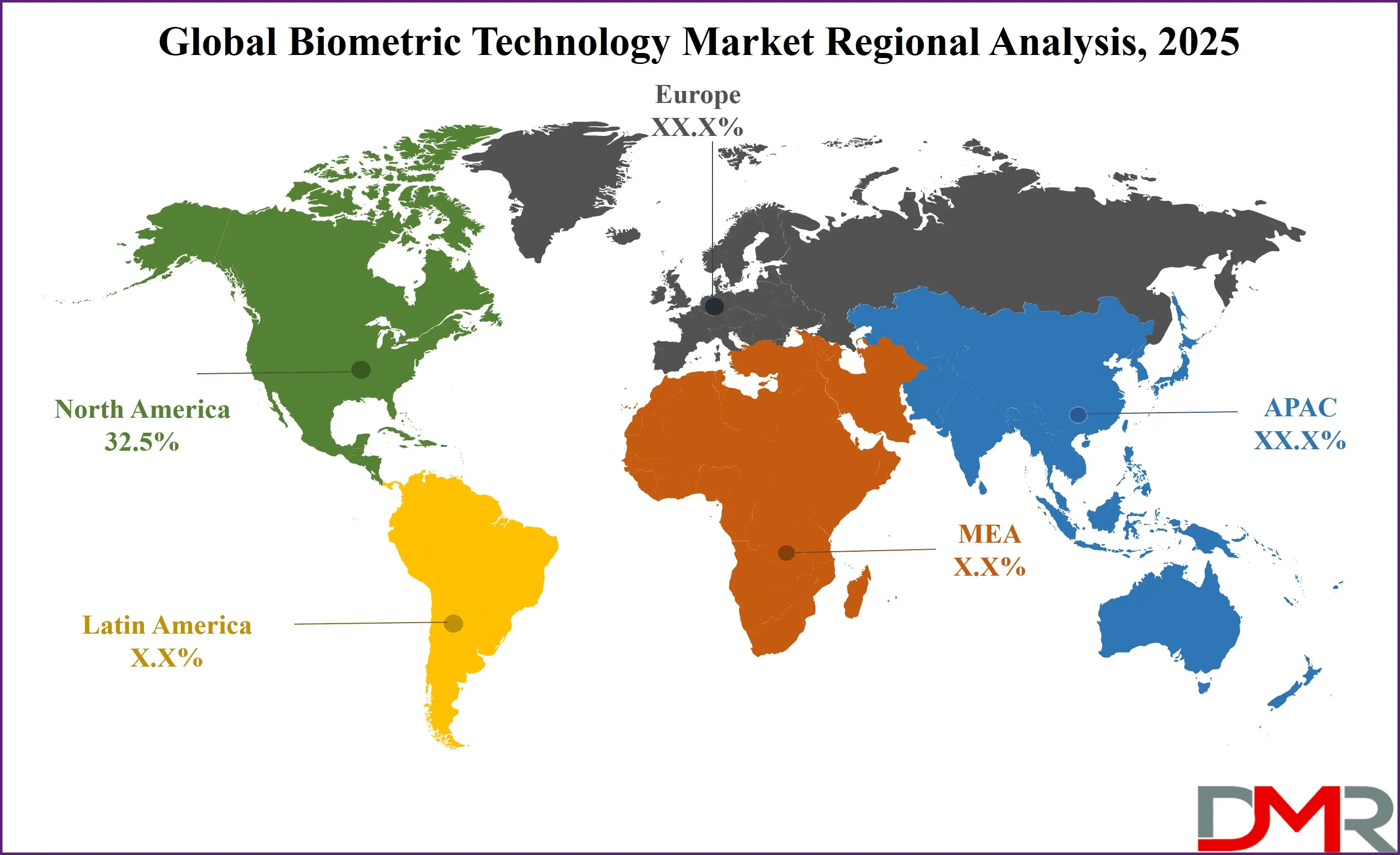
North America is projected to lead the biometric technology market by 2025, holding a share of 32.5%. The region’s strong position is driven by rapid adoption of advanced technologies across both public and private sectors. Biometric authentication methods such as fingerprint scanning, facial recognition, and iris recognition have become integral to digital payments, enterprise security, and personal data protection, significantly expanding market growth.
Government initiatives aimed at strengthening national security and integrating biometric systems into critical infrastructure have further solidified North America’s leadership. Increased investments in biometric solutions by financial institutions, technology companies, and healthcare providers reflect growing concerns regarding cybersecurity and identity fraud. The region’s robust innovation ecosystem and early adoption of emerging technologies continue to support market expansion.
Europe represents a mature and regulation-driven market, with strong emphasis on data protection and ethical deployment. Asia Pacific is experiencing rapid growth due to large-scale digitalization, expanding consumer electronics markets, and government-led identity programs. Latin America and the Middle East & Africa are emerging regions with growing adoption driven by financial inclusion initiatives and infrastructure development.
Download a Complimentary PDF Sample Report :https://dimensionmarketresearch.com/report/biometric-technology-market/request-sample/
Competitive Landscape and Industry Dynamics
The biometric technology market is characterized by intense competition and continuous innovation. Market participants focus on enhancing accuracy, reducing latency, and improving user experience to differentiate their offerings. Strategic partnerships, product launches, and technology integration initiatives are common as companies seek to expand their market presence and address evolving customer needs.
Investment in research and development remains a key competitive factor, particularly in areas such as AI-driven recognition, liveness detection, and multimodal systems. As customer expectations evolve, vendors are increasingly offering customizable and scalable solutions tailored to specific industry requirements.
Role of Biometrics in Digital Transformation
Biometric technologies are playing a pivotal role in digital transformation initiatives across industries. By enabling secure and seamless authentication, biometrics support the transition to digital-first service models. This is particularly relevant in banking, healthcare, and government services, where secure digital access is essential for efficiency and inclusivity.
The convergence of biometrics with cloud computing, mobile platforms, and Internet of Things ecosystems is further expanding application possibilities. These integrations enable centralized management, real-time analytics, and scalable deployment, enhancing the overall value proposition of biometric solutions.
Future Outlook
The future of the biometric technology market is defined by rapid growth, technological convergence, and increasing societal reliance on digital identity systems. As organizations prioritize security, convenience, and compliance, biometric authentication is expected to become a standard component of digital interactions. Continued innovation, responsible governance, and user-centric design will be critical to sustaining market momentum and public trust.
Frequently Asked Questions
What is biometric technology?
Biometric technology refers to systems that identify or authenticate individuals based on unique physiological or behavioral characteristics such as fingerprints, facial features, iris patterns, or voice.
Why is the biometric technology market growing rapidly?
Growth is driven by increasing digitalization, rising cybersecurity threats, demand for secure authentication, and widespread adoption across consumer, enterprise, and government applications.
Which region leads the biometric technology market?
North America leads the market due to strong technology adoption, government initiatives, and high investments in security and identity solutions.
What are the main applications of biometric technology?
Key applications include identity verification, access control, digital payments, surveillance, and secure data access across multiple industries.
What challenges does the biometric technology market face?
Major challenges include privacy concerns, data security risks, accuracy and bias issues, and the cost of advanced biometric systems.
Summary of Key Insights
The biometric technology market is experiencing exceptional growth, driven by the global need for secure, efficient, and user-friendly authentication solutions. With strong adoption across industries and regions, the market is set to expand significantly through 2034. North America’s leadership highlights the role of innovation and policy support, while emerging regions offer substantial growth potential. As digital ecosystems continue to evolve, biometric technologies will remain central to building trust, enhancing security, and enabling seamless digital experiences.
Purchase the report for comprehensive details : https://dimensionmarketresearch.com/checkout/biometric-technology-market/