
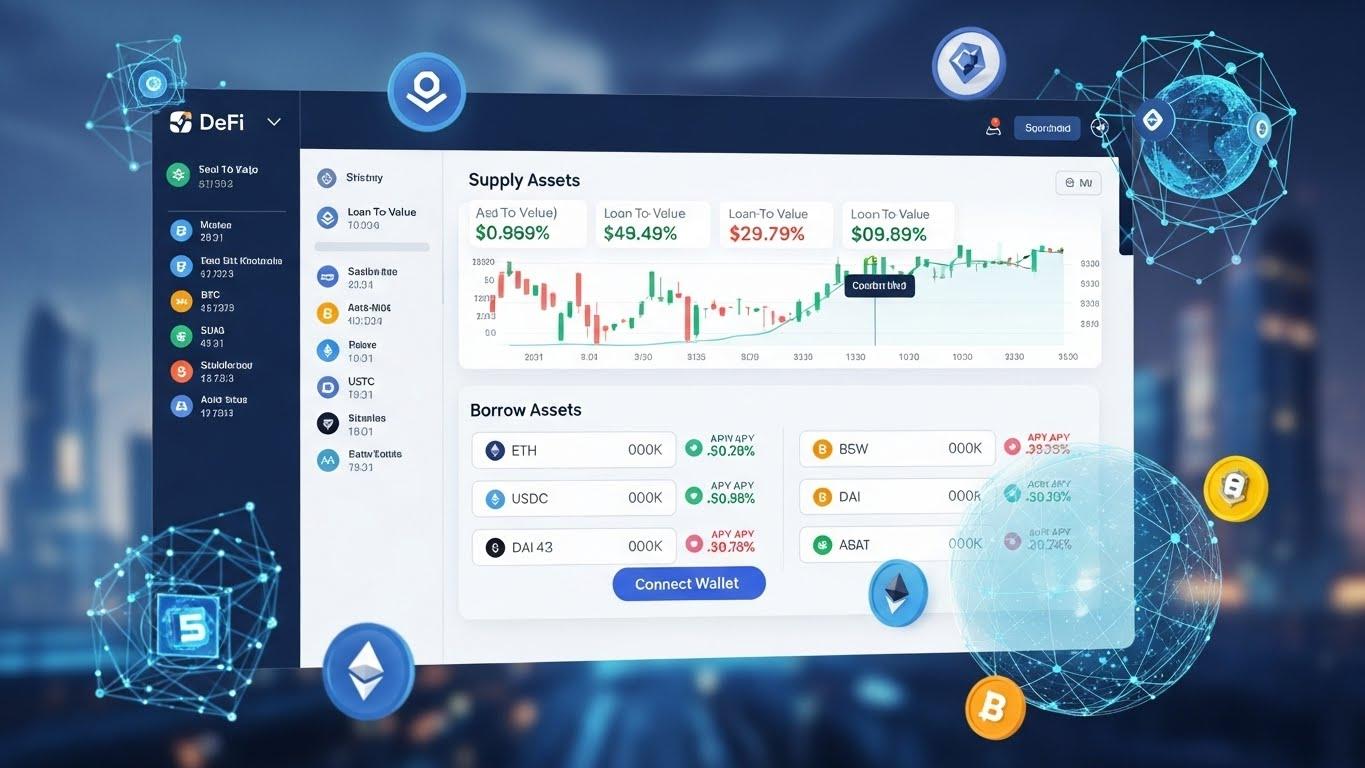
Decentralized finance has emerged as a powerful alternative to traditional financial systems by removing intermediaries and giving users direct control over their assets. DeFi lending and borrowing platforms enable users to lend crypto assets to earn interest or borrow funds by providing collateral, all managed through automated smart contracts. This blog provides an in-depth overview of the essential components involved in building such platforms, covering functionality, technical architecture, security, development costs, and strategic considerations for creating a reliable and scalable DeFi solution.
Understanding DeFi Lending and Borrowing Platforms
DeFi lending and borrowing platforms operate on blockchain networks, allowing users to interact with financial services without centralized institutions. These platforms rely on decentralized protocols to manage liquidity, calculate interest, and enforce loan conditions transparently. A strong foundation is required to ensure reliability, user trust, and efficient capital utilization. For organizations exploring defi lending and borrowing platform development, understanding how decentralized liquidity pools, collateralization models, and protocol governance work together is essential for building sustainable and competitive financial products.
-
Peer-to-Peer Financial Model
Users lend assets directly into liquidity pools rather than to individuals. Borrowers access these pooled funds, ensuring continuous liquidity and eliminating the need for manual matching. -
Trustless Transactions
All operations are governed by smart contracts, removing reliance on third parties. This structure ensures predictable execution and transparent financial rules. -
Global Accessibility
Anyone with a compatible wallet can participate, expanding financial inclusion beyond geographical and institutional limitations.
Core Features That Define Platform Functionality
The success of a DeFi lending and borrowing platform depends heavily on its feature set. These features must support secure transactions, efficient asset management, and a smooth user experience. Each function plays a role in maintaining platform stability while encouraging user participation. Well-designed features also help reduce risk, automate processes, and create trust within the ecosystem, which is crucial for long-term adoption and liquidity growth.
-
Smart Contract-Based Lending Logic
Smart contracts automate lending, borrowing, repayments, and interest accrual. This removes manual processing and ensures consistent execution of financial rules. -
Collateral Management System
Assets locked as collateral are continuously evaluated using price data. This protects lenders by ensuring loans remain sufficiently backed. -
Dynamic Interest Rate Models
Interest rates adjust automatically based on market activity. This balances borrowing demand and liquidity provider incentives efficiently. -
User Dashboard and Wallet Integration
Dashboards provide real-time insights into assets, loans, and earnings. Wallet integrations ensure secure, non-custodial access to funds.
Security Architecture and Risk Mitigation
Security is a critical pillar of decentralized finance, as vulnerabilities can lead to irreversible losses. DeFi platforms must be designed with multiple layers of protection to safeguard smart contracts, user assets, and protocol integrity. A proactive security approach not only prevents exploits but also builds credibility and user confidence. Strong security practices are fundamental to responsible defi lending and borrowing platform development and long-term ecosystem trust.
-
Smart Contract Audits
Independent audits detect vulnerabilities and logic errors before deployment. Regular audits reduce the risk of exploitation. -
Decentralized Price Oracles
Oracles provide accurate asset prices used for collateral valuation. Decentralization minimizes manipulation and data inaccuracies. -
Insurance and Risk Pools
Risk mitigation funds help compensate users in case of protocol failure. This adds an extra layer of financial protection.
Technology Stack for DeFi Platform Development
The technology stack determines how efficiently a DeFi platform operates and scales. Selecting the right blockchain, development tools, and frontend technologies impacts performance, security, and user experience. A well-structured stack enables seamless integration between smart contracts and interfaces while supporting future upgrades. Careful technical planning ensures the platform remains adaptable to evolving blockchain ecosystems and user expectations.
-
Blockchain Networks
Ethereum is widely used for its ecosystem maturity. Other networks offer scalability and cost advantages depending on project goals. -
Smart Contract Frameworks
Solidity is the primary language for DeFi protocols. Development frameworks simplify testing and deployment workflows. -
Frontend and Backend Technologies
React.js enables responsive interfaces, while backend services manage off-chain data. Web3 libraries connect users to blockchain functions.
Cost Factors Influencing Development Budget
The cost of building a DeFi lending and borrowing platform varies depending on complexity, security requirements, and long-term vision. Budget planning should account not only for initial development but also for ongoing maintenance and upgrades. Understanding cost drivers helps businesses allocate resources efficiently while ensuring platform quality and compliance with best practices.
-
Feature Scope and Customization
Advanced functionalities increase development time and cost. Custom protocols require deeper testing and optimization. -
Security and Compliance Expenses
Audits, penetration testing, and monitoring tools represent a significant investment but are essential for platform safety. -
Ongoing Maintenance and Upgrades
Continuous improvements ensure compatibility with network updates and evolving user needs.
Conclusion
DeFi lending and borrowing platforms are redefining how financial services are accessed and managed through decentralized technologies. By combining secure smart contracts, scalable infrastructure, and user-centric features, businesses can build platforms that deliver transparency and efficiency. Thoughtful planning around security, costs, and long-term sustainability ensures success in an increasingly competitive market. With the right strategy and execution, defi lending and borrowing platform development offers significant opportunities for innovation within the decentralized finance ecosystem.