
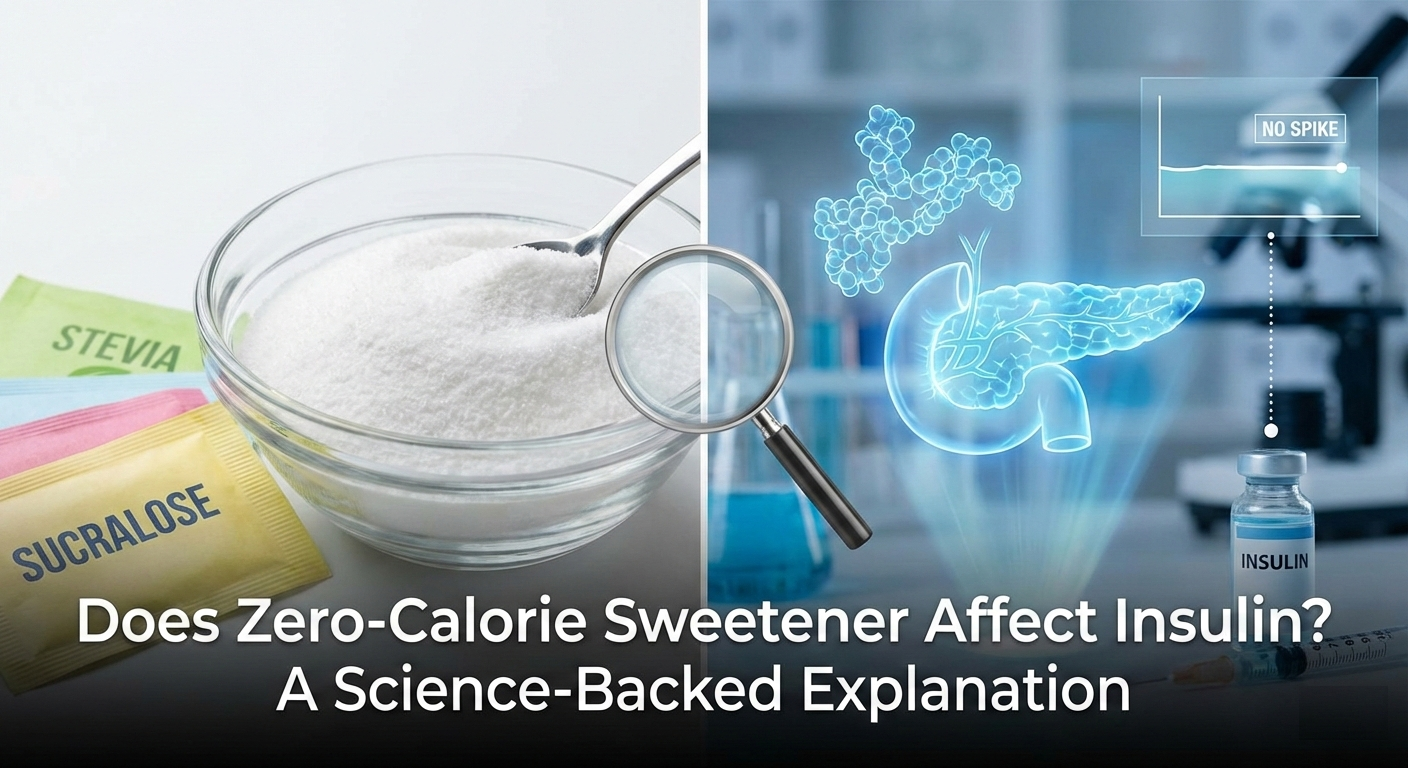
Does Zero-Calorie Sweetener Affect Insulin? A Science-Backed Explanation
David loved his morning coffee.
Before diabetes, he added two spoons of sugar without thinking. It made his day feel warm and calm. But after his diagnosis, everything changed.
The doctor said, “Sugar raises blood sugar and insulin. You need to avoid it.”
David nodded. But a question stayed in his mind.
“If sugar is bad, what about zero-calorie sweeteners?”
“Do they also affect insulin?”
David wanted answers—not fear, not guesses, but facts.
Why Insulin Matters So Much
Insulin is a hormone. It helps sugar move from the blood into the body’s cells so we can use it for energy.
For people without diabetes, the body makes insulin easily.
For people with diabetes, insulin does not work well or is not made enough.
When insulin goes up too much or too often, it can cause:
-
Blood sugar swings
-
Fat storage
-
Hunger
-
Energy crashes
That’s why David was worried. If zero-calorie sweeteners raised insulin, were they really safe?
What Are Zero-Calorie Sweeteners?
Zero-calorie sweeteners are substances that taste sweet but add little or no calories.
They are often used instead of sugar to help:
-
Control blood sugar
-
Reduce calories
-
Manage weight
Common examples include plant-based sweeteners like stevia and monk fruit, as well as other sugar substitutes.
But tasting sweet without eating sugar feels confusing. David wondered,
“Can my body tell the difference?”
The Big Question: Does Sweet Taste Alone Raise Insulin?
David learned that insulin is mainly released when glucose (sugar) enters the blood.
Sweet taste by itself does not automatically raise insulin.
Science shows that insulin response depends on:
-
Calories
-
Carbohydrates
-
Blood glucose levels
If a sweetener does not turn into glucose in the body, insulin usually stays stable.
This was the first good news David heard.
What Science Says About Insulin Response
Researchers have studied how the body reacts to different sweeteners.
They found:
-
Sweeteners that do not raise blood sugar usually do not raise insulin
-
Sweeteners with hidden carbs or fillers can raise insulin
-
The body responds more to what enters the blood, not just taste
This helped David understand why some sweeteners work better than others.
Why Some People Feel Confused
David read online comments saying,
“Sweeteners spike insulin!”
“Sweeteners confuse the brain!”
This made him nervous.
But doctors explained something important:
Not all sweeteners are the same.
Some products labeled “zero-calorie” still contain ingredients that act like sugar in the body.
This is why ingredient labels matter.
Understanding the Brain and Sweet Taste
David also learned about the brain.
When we taste something sweet, the brain expects energy. If no sugar arrives, some people worry this might confuse the body.
But research shows:
-
The body quickly learns patterns
-
Sweet taste alone does not force insulin release
-
The digestive system checks what actually enters the blood
In simple words:
The body reacts to sugar, not tricks.
When Zero-Calorie Sweeteners Can Cause Problems
David also learned that problems happen when:
-
Sweeteners are overused
-
Products contain fillers like maltodextrin
-
Sweeteners are taken on an empty stomach repeatedly
In these cases, some people may notice hunger or cravings—not because of insulin spikes, but because of habits and expectations.
Balance matters.
Choosing Better Sweet Options
David wanted sweet taste without harming his health.
He learned that many people use natural sugar alternatives for diabetics that do not raise blood sugar or insulin when used correctly.
These options help people enjoy sweet flavors while staying in control.
How David Tested It Himself
David decided to test things carefully.
He checked his blood sugar:
-
Before coffee
-
After coffee with sugar
-
After coffee with a zero-calorie sweetener
The result surprised him.
With sugar, his blood sugar went up fast.
With the zero-calorie sweetener, it stayed stable.
His insulin wasn’t being pushed unnecessarily.
This gave him confidence.
Insulin, Habits, and Timing
David learned that insulin response also depends on:
-
Eating regular meals
-
Pairing sweet taste with food
-
Avoiding constant sipping of sweet drinks
When sweeteners were used wisely, his body stayed calm.
Emotional Fear vs Real Science
David realized that fear came from confusion, not facts.
Many people fear sweeteners because:
-
They sound unnatural
-
They taste “too good to be true”
-
Online advice is confusing
But science is clear:
If a sweetener does not raise blood glucose, it usually does not raise insulin.
The Role of Moderation
David also learned an important rule:
Even good things can become a problem if overused.
Zero-calorie sweeteners are tools, not magic.
Used in moderation, they:
-
Help control cravings
-
Reduce sugar intake
-
Support diabetes management
Used too much, they may keep taste expectations high.
Taste Buds Can Learn
Over time, David noticed:
-
He needed less sweetness
-
Fruit tasted sweeter
-
Cravings became weaker
His taste buds were changing.
This helped him rely less on sweetness overall.
Life Became Less Stressful
Once David understood the science, fear disappeared.
He stopped worrying about every sip of coffee.
He stopped feeling guilty for enjoying sweetness.
He focused on balance, not perfection.
Diabetes became manageable, not scary.
A Simple Answer to a Big Question
So, does zero-calorie sweetener affect insulin?
For most people:
-
If it does not raise blood sugar
-
If it has no hidden carbs
-
If it is used in moderation
Then insulin response stays minimal or unchanged.
Science supports this.
A Message for You
If you are worried about sweeteners and insulin, remember:
-
Fear grows when knowledge is missing
-
Science brings clarity
-
Your body responds to glucose, not taste alone
-
Balance works better than strict rules
Managing diabetes does not mean giving up everything you enjoy.
With the right information, you can make calm, confident choices.
Just like David did.
Author Bio
Muhammad Adnan is a health and wellness writer who focuses on simple, science-based guidance for people living with diabetes. He believes understanding removes fear and supports long-term health.