
The United Arab Emirates is a global case study in architectural ambition. Nowhere else on Earth does the construction industry push the boundaries of physics and engineering with such regularity. From the gravity-defying cantilever of "The Link" to the sprawling infrastructure of the Etihad Rail, the scale of development here is staggering. However, this ambition comes with a price. The sheer complexity of construction projects in UAE creates a logistical and financial minefield.
In the past, managing these mega-projects relied on fragmented 2D drawings and isolated teams. This traditional approach is no longer sustainable. It leads to information silos, costly on-site clashes, and schedule overruns that bleed profitability. To maintain the pace of development that the region demands, the industry has turned to a digital savior: Building Information Modeling (BIM).
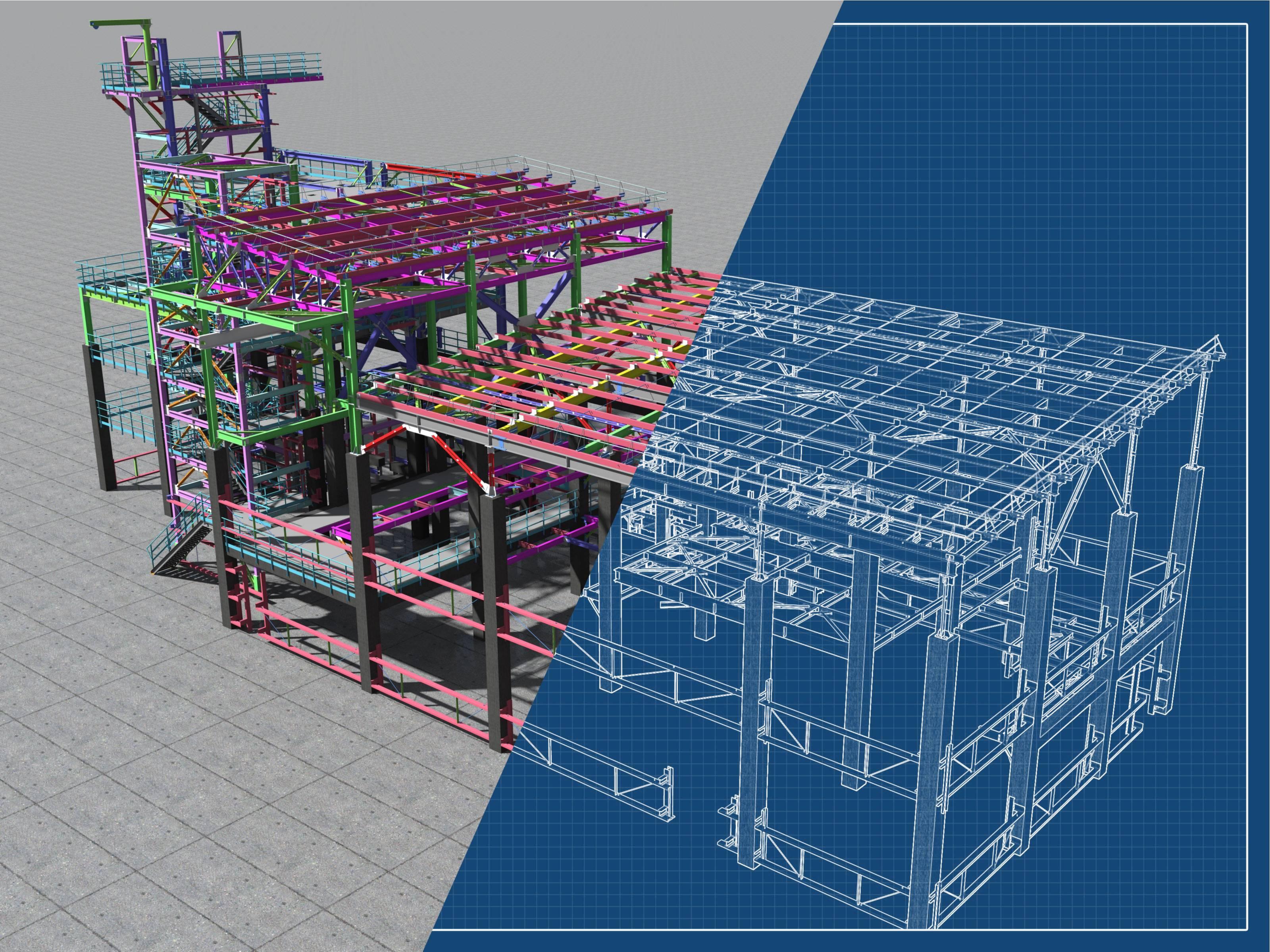
BIM is not merely software. It is a methodology that allows for the creation of a multidimensional digital representation of a facility. It changes the fundamental way we build. It moves the struggle from the chaotic construction site to the controlled digital environment. This article explores specifically how BIM is cutting the fat from the process, enforcing efficiency, and streamlining the delivery of the most complex construction projects in UAE today.
The End of the Information Silo
The primary cause of inefficiency in construction is poor communication. In a typical project, the architect, structural engineer, MEP (Mechanical, Electrical, and Plumbing) consultant, and contractor all work in separate offices using separate files. When these isolated designs are brought together on site, they often fail to fit.
BIM destroys these silos. It forces all disciplines to work within a Common Data Environment (CDE). This is a shared digital space where the latest information is stored and accessible to everyone. When the structural engineer changes the size of a column, that change is instantly visible to the architect and the mechanical engineer.
This transparency is vital. It means that the team is always building from a "Single Source of Truth." There are no outdated drawings circulating on site. Everyone is on the same page. For construction projects in UAE, where teams are often multinational and spread across different time zones, this unified data environment is the only way to ensure coherent collaboration.
Visualizing the Invisible: Clash Detection
The most tangible benefit of BIM is its ability to predict the future through clash detection. In a complex tower, the ceiling void is a battleground. Thousands of ducts, pipes, and cable trays fight for limited space. In 2D drawings, it is nearly impossible to visualize if a pipe intersects a beam.
BIM automates this check. The software runs an analysis of the federated model and identifies every single instance where two objects occupy the same space. It generates a report of these "clashes.
The team then resolves these issues in the virtual model. They reroute the pipe or resize the duct on the screen. This is known as "virtual construction." By resolving these thousands of conflicts digitally, they prevent them from becoming expensive problems on the physical site. Every clash resolved in the model is a Request for Information (RFI) that does not need to be written and a Change Order that does not need to be paid. This process alone saves millions of dirhams on large-scale developments.
4D BIM: mastering Time and Logistics
In the dense urban fabric of cities like Dubai and Abu Dhabi, logistics are a nightmare. Building a skyscraper in a crowded district requires military precision. There is no space to store materials, and traffic flow cannot be disrupted.
BIM introduces the fourth dimension: Time. By linking the 3D model to the project schedule, project managers create a 4D simulation. This allows them to watch the construction sequence play out like a movie.
They can visualize exactly where the crane will be in Month 6. They can see if the steel delivery truck can actually make the turn into the site entrance. They can plan the installation of the facade panels to ensure it does not interfere with the concrete pouring cycle.
For construction projects in UAE, this logistical foresight is critical. It prevents the site from becoming a bottleneck. It ensures that materials arrive Just-In-Time (JIT), reducing storage costs and minimizing the risk of damage. 4D BIM transforms scheduling from a static Gantt chart into a dynamic visual strategy.
5D BIM: precision Cost Management
Budget overruns are the silent killer of profitability. Traditional cost estimation involves manual quantity take-offs, where a surveyor measures lengths and areas from paper drawings. This human-centric process is slow and prone to error.
BIM adds the fifth dimension: Cost. Every element in the BIM model carries data. The wall knows its volume; the floor knows its area; the light fixture knows its unit price. The software can generate exact Bills of Quantities (BOQ) in seconds.
This means that as the design evolves, the budget updates automatically. If the client decides to change the flooring material from ceramic to marble, the cost impact is calculated instantly. This dynamic feedback loop allows developers to make informed financial decisions. It prevents the "sticker shock" that often happens when a design goes out to tender. With 5D BIM, the financial health of the project is monitored in real-time, keeping the budget aligned with the design intent.
Enabling Modular Construction and Prefabrication
Speed is the currency of the UAE market. To build faster, the industry is shifting toward modular construction and prefabrication. This involves building components of the building in a factory and shipping them to the site for assembly.
You cannot prefabricate based on guesses. Factory production requires tolerance levels of less than a millimeter. If a prefabricated bathroom pod arrives on site and does not fit into the structural bay, the entire schedule collapses.
BIM provides the geometric certainty required for this manufacturing approach. The model serves as the blueprint for the factory machines. It ensures that what is built off-site matches the site conditions perfectly. This integration of BIM and manufacturing is revolutionizing construction projects in UAE by allowing parallel processing. The bathrooms are built in a factory while the foundation is poured on site, slashing months off the total program.
Sustainability and Energy Analysis (6D)
The UAE has committed to ambitious sustainability goals, with regulations like Dubai’s Al Safat and Abu Dhabi’s Estidama setting high standards for green building. Achieving these ratings requires complex engineering analysis.
BIM facilitates this through 6D modeling. Because the model contains data about the thermal properties of materials, engineers can simulate the building’s energy performance. They can test the orientation of the tower to minimize solar heat gain. They can analyze the airflow in the lobby to reduce air conditioning loads.
This analysis happens early in the design phase, where it has the most impact. Instead of trying to add "green" features to a finished design, sustainability is baked into the DNA of the building. This leads to structures that are not only compliant with local codes but are also cheaper to operate in the long term.
Digital Twins and Asset Management (7D)
The value of BIM does not end when the construction crew leaves. The final phase, 7D BIM, focuses on facility management. When the project is handed over, the client receives a "Digital Twin" of the building.
This is a data-rich replica of the physical asset. For a facility manager, this is a goldmine. Instead of searching through dusty boxes of paper manuals to find the maintenance schedule for an AC unit, they simply click on the unit in the digital model. They can see the model number, the installation date, the warranty information, and the service history.
For the massive infrastructure and commercial construction projects in UAE, this asset data is invaluable. It transforms maintenance from a reactive task to a predictive strategy. It extends the lifespan of the building and reduces operational costs significantly.
Reducing Risk and Enhancing Safety
Safety is paramount. Construction sites are dangerous places, and the complexity of modern designs increases the risk of accidents. BIM is increasingly used to improve site safety.
Safety managers can use the model to identify hazards before they occur. They can plan the placement of safety nets and guardrails in the virtual model. They can visualize the swing radius of cranes to ensure they do not cross over pedestrian zones.
Furthermore, BIM is used for safety inductions. Workers can explore the site in Virtual Reality (VR) before they step foot on the real ground. They can familiarize themselves with the escape routes and high-risk areas. This digital rehearsal saves lives and protects the project from the delays associated with safety incidents.
Standardization and Quality Control
One of the challenges in a booming market is maintaining consistent quality. BIM enforces standardization. By using standardized families and templates, firms ensure that every project follows the same protocols.
This consistency reduces errors. A door detail that works perfectly in one project is saved in the library and reused in the next. It prevents the team from reinventing the wheel every time. For large developers managing a portfolio of construction projects in UAE, this standardization ensures a consistent brand quality across all assets.
Conclusion: The Non-Negotiable Standard
The adoption of BIM is no longer an option; it is an imperative. The complexity of the projects being envisioned in the UAE simply exceeds the capacity of traditional management methods. To build higher, faster, and smarter, the industry must embrace the digital backbone that BIM provides.
It streamlines the chaos. It turns data into decision-making power. It connects the architect’s vision with the contractor’s reality. From the first conceptual massing model to the final handover of the Digital Twin, BIM is the thread that holds the project together.
However, software alone builds nothing. It takes skilled engineers to wield these tools effectively. You need a partner who understands the technology and the local construction landscape.
Your BIM Partner is that expert resource.
We specialize in providing high-level BIM engineering and staffing solutions tailored to the UAE market. We help you navigate the complexities of digital construction, ensuring your models are accurate, your clashes are resolved, and your data is secure. Whether you need to outsource your modeling requirements or find the perfect BIM Manager for your site team, Your BIM Partner delivers the expertise that streamlines success. Do not let complexity slow you down; let us engineer your efficiency.