
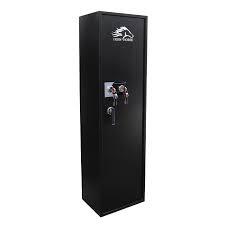
Gun ownership comes with significant responsibility, and understanding the legal requirements for firearm storage is essential for every gun owner. While the Second Amendment protects your right to own firearms, federal and state laws impose various storage requirements to prevent unauthorized access, particularly by children and prohibited persons. This guide will help you navigate the complex landscape of gun storage laws and ensure you remain compliant while keeping your household safe.
Federal Gun Storage Laws
At the federal level, the United States does not mandate specific storage requirements for firearms in private homes. However, federal law does hold gun owners accountable when minors gain access to improperly stored firearms. The primary federal consideration involves the safe storage of firearms to prevent access by prohibited persons, including convicted felons, individuals with restraining orders, and those adjudicated as mentally incompetent.
Federal regulations become more stringent for federally licensed firearms dealers. The ATF requires these dealers to store firearms securely when their businesses are closed, typically in locked containers or vault rooms. While these requirements don't directly apply to private citizens, they establish best practices that responsible gun owners should consider.
State-Level Storage Requirements
State laws vary dramatically across the country, making it crucial for gun owners to understand their specific jurisdiction's requirements. Several states have enacted mandatory storage laws that carry serious penalties for non-compliance.
California maintains some of the strictest gun storage laws in the nation. The state requires gun owners to store firearms in a locked container or disable them with a trigger lock when not in immediate possession. If someone knows or reasonably should know that a child could access an unsecured firearm, they face criminal liability if that child gains access to the weapon.
Massachusetts requires gun owners to store firearms in a locked container or equipped with a tamper-resistant mechanical lock when not under their direct control. The state enforces these requirements aggressively and imposes substantial penalties for violations.
Connecticut mandates that gun owners store loaded firearms in a securely locked container if they reside with someone under 18 years old. The law applies specifically to loaded weapons, though storing all firearms securely represents the best practice.
New York requires trigger locks on all firearms sold in the state and mandates secure storage when the owner lives with someone prohibited from possessing firearms. Several cities within New York have additional requirements that gun owners must follow.
Child Access Prevention Laws
Twenty-seven states have enacted Child Access Prevention (CAP) laws that hold adults criminally liable if children gain access to negligently stored firearms. These laws typically fall into two categories: those that impose liability after a child accesses a gun, and those that criminalize the act of negligent storage itself.
CAP laws vary in their specific requirements and penalties. Some states impose criminal liability only if a child actually uses the firearm and causes injury or death. Others criminalize the mere act of leaving a firearm accessible to a child, regardless of whether the child actually accesses it.
Penalties under CAP laws range from misdemeanors to felonies, depending on the circumstances and whether the child's access results in injury or death. Gun owners in states with CAP laws must exercise extreme caution in storing their firearms.
Local Ordinances
Beyond state laws, many cities and counties have enacted their own gun storage requirements. San Francisco, for example, requires gun owners to store firearms in a locked container or disable them with a trigger lock when not carrying them. Seattle has similar requirements, and numerous other municipalities have followed suit.
Gun owners must research local ordinances in addition to state and federal requirements. Municipal laws often impose stricter standards than state statutes, and violations can result in fines, criminal charges, or both.
Best Practices for Compliance
Regardless of where you live, following best practices for gun storage keeps you compliant with most laws and protects your household. Invest in a quality gun safe that meets industry security standards. Store ammunition separately from firearms when possible. Install trigger locks on all firearms not intended for immediate defensive use. Keep detailed records of your firearms and their storage locations.
Understanding and complying with gun storage laws protects you from criminal liability while preventing tragic accidents and unauthorized access. Stay informed about changes in federal, state, and local regulations, and prioritize safe storage practices in your home. Responsible gun ownership demands nothing less than complete attention to proper storage requirements.