

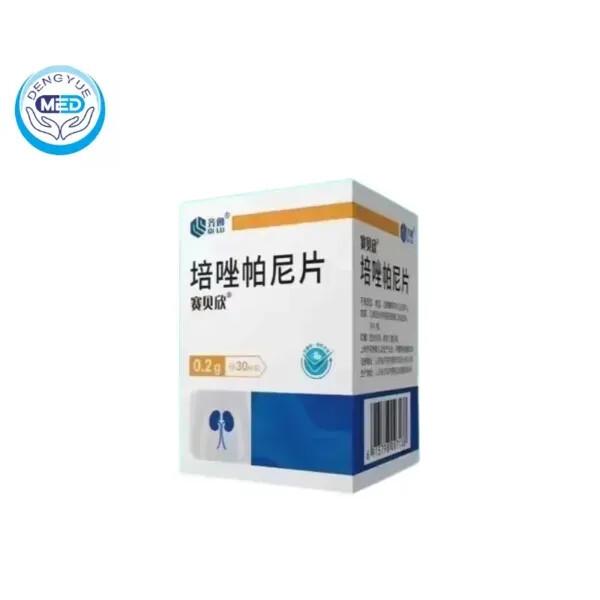
As oncology treatment enters the era of targeted therapy, precision medicines for renal cell carcinoma (RCC) continue to emerge, offering patients longer survival and improved quality of life. Saibeixin® Pazopanib Tablets, a domestically developed first generic of pazopanib manufactured by Qilu Pharmaceutical, have become an important treatment option for advanced RCC. With proven efficacy, a manageable safety profile, and broad reimbursement coverage, Saibeixin® has received a Grade I recommendation in the CSCO Guidelines for the Diagnosis and Treatment of Renal Cell Carcinoma (2024), providing Chinese patients with a high-quality and accessible therapeutic choice.
Unique Mechanism of Action: Multi-Target Inhibition to Block Tumor Progression
The clinical efficacy of Saibeixin® Pazopanib Tablets is driven by their precise multi-target mechanism of action. As an orally administered multi-target tyrosine kinase inhibitor (TKI), pazopanib selectively inhibits several key kinases, including vascular endothelial growth factor receptors (VEGFR-1, -2, and -3), platelet-derived growth factor receptors (PDGFR-α and PDGFR-β), and stem cell factor receptor (c-Kit).
This multi-target inhibition delivers a dual antitumor effect. On one hand, blockade of the VEGFR and PDGFR pathways suppresses tumor angiogenesis, effectively cutting off the blood supply required for tumor growth. On the other hand, inhibition of the c-Kit pathway directly restrains tumor cell proliferation and survival, preventing tumor progression and metastasis at the source. This mechanism is highly aligned with the pathological characteristics of renal cell carcinoma.
Clinical Efficacy: Evidence-Based Therapeutic Value
The clinical benefits of Saibeixin® Pazopanib Tablets have been well established through multiple phase III clinical trials and real-world studies, demonstrating significant advantages in the treatment of advanced RCC. The indication is clearly defined: it can be used as first-line therapy for advanced RCC, as well as for patients who have previously received cytokine-based treatment, covering both treatment-naïve and previously treated populations.
In the landmark VEG105192 phase III trial, pazopanib significantly prolonged median progression-free survival (PFS) to 9.2 months in the overall population, compared with 4.2 months in the control group. Outcomes were even more favorable in treatment-naïve patients, with a median PFS of 11.1 months and an objective response rate (ORR) of 30%, versus only 3% in the placebo group. Subsequent studies further reported an ORR of up to 37.5% and a median overall survival (OS) of 23.5 months, highlighting both robust tumor shrinkage and durable survival benefits.
The COMPARZ study further confirmed pazopanib’s clinical competitiveness. In both global and Chinese populations, pazopanib achieved a higher ORR than sunitinib, with a significantly greater proportion of patients experiencing early tumor shrinkage at 90 days (75.0% vs. 53.8%). Early tumor shrinkage was strongly associated with improved overall survival, helping patients gain rapid confidence in treatment and enhancing adherence.
Real-world evidence is equally compelling. The French APOLON study, which enrolled 217 anti-VEGF–naïve patients with metastatic RCC, reported a median PFS of 10.6 months, an ORR of 48.3%, and a median OS of 29.1 months, with nearly half of patients surviving longer than 2.5 years. Notably, patients aged ≥65 years achieved PFS outcomes comparable to those of younger patients, supporting pazopanib as a safe and effective option for elderly or frail populations.
Clinical case reports further support these findings. At the Affiliated Hospital of Qingdao University, a 55-year-old male patient with pulmonary metastases following surgery for clear cell RCC achieved complete disappearance of lung lesions after just four months of pazopanib treatment. The response was maintained for over 15 months with good overall tolerability, underscoring the strong real-world clinical value of this therapy.
Summary and Clinical Significance
DengyueMed believes that Saibeixin® Pazopanib Tablets, as a domestically developed first generic targeted therapy, deliver efficacy and safety comparable to the originator drug while significantly improving accessibility through Class B reimbursement coverage. With its multi-target mechanism of action, well-established clinical efficacy, manageable adverse event profile, and broad applicability across patient populations, Saibeixin® has become a vital option in the treatment of advanced renal cell carcinoma.
Looking ahead, as clinical experience continues to accumulate, Saibeixin® Pazopanib Tablets are expected to play an increasingly important role in precision therapy for kidney cancer—helping more patients achieve prolonged survival and a better quality of life.