
Lifeguard recertification is a critical part of aquatic safety and professional responsibility. While earning lifeguard certification is an important achievement, maintaining that certification through regular renewal ensures lifeguards remain skilled, confident, and prepared to respond to emergencies. Aquatic environments are dynamic, and safety standards evolve over time, making recertification essential for protecting lives.
Water emergencies can happen suddenly and without warning. Even experienced lifeguards can experience skill fade if they do not practice regularly. Lifeguard recertification refreshes lifesaving techniques, reinforces muscle memory, and updates lifeguards on current CPR, first aid, and rescue standards. It ensures that every certified lifeguard is capable of responding effectively when seconds matter.
Whether working at a swimming pool, water park, lake, or beach, lifeguards are trusted to act quickly and professionally. This guide explains what lifeguard recertification is, why it matters, what skills are reviewed, how the renewal process works, and how recertification supports long-term safety and career growth.
Summary
Lifeguard recertification ensures lifeguards maintain current lifesaving skills and meet professional safety standards. Renewal programs refresh CPR/AED, first aid, water rescue techniques, surveillance skills, emergency communication, and teamwork. This article covers recertification requirements, timelines, skill evaluations, what happens if certification expires, and why ongoing recertification is essential for employment and public safety.
What Is Lifeguard Recertification?
Lifeguard recertification is the official process of renewing an existing lifeguard credential to confirm continued competence in aquatic safety skills. Unlike initial certification, which introduces skills for the first time, recertification focuses on refreshing and re-evaluating abilities that lifeguards already possess.
Recertification verifies that a lifeguard can still perform rescues, administer CPR and first aid, recognize hazards, and follow emergency action plans. It also ensures lifeguards stay aligned with updated safety protocols and medical guidelines.
Most employers require a valid, current certification. Without recertification, lifeguards may not be permitted to work, regardless of experience level.
Why Lifeguard Recertification Is Essential
Skill Retention and Confidence
Lifeguarding is a hands-on profession. CPR compressions, rescue entries, victim support, and spinal management require precision and confidence. Without regular practice, these skills can weaken. Recertification reinforces muscle memory and restores confidence.
Updated Safety and Medical Standards
CPR ratios, AED procedures, and first aid recommendations are periodically updated based on medical research. Recertification ensures lifeguards follow the most current and effective practices.
Emergency Preparedness
Emergencies are unpredictable and high-stress. Recertification places lifeguards back into scenario-based training, strengthening decision-making, communication, and teamwork under pressure.
Employment and Legal Compliance
Many facilities and insurance providers require current certification. Recertification protects a lifeguard’s job eligibility and ensures facilities remain compliant with safety regulations.
When Should Lifeguards Renew Their Certification?
Lifeguard certifications are valid for a limited period. Lifeguards should always track their expiration dates and plan renewal ahead of time.
Best practices include:
-
Checking certification cards regularly
-
Renewing before expiration
-
Scheduling recertification early during peak seasons
Allowing certification to expire can lead to removal from work schedules or the requirement to complete full certification again.
What’s Included in Lifeguard Recertification Training?
Recertification programs focus on refreshing core lifesaving skills. While details vary by provider, most programs include the following components.
CPR and AED Skill Refresh
CPR is one of the most critical skills for lifeguards. Recertification requires demonstrating correct technique, including:
-
Proper hand placement and compression depth
-
Correct compression rate
-
Rescue breathing techniques
-
Safe and effective AED operation
Both single-rescuer and multi-rescuer CPR scenarios may be practiced to reinforce teamwork.
First Aid Review and Updates
First aid refreshers ensure lifeguards can handle injuries and medical emergencies confidently. Training commonly includes:
-
Bleeding control and wound care
-
Shock recognition and response
-
Heat exhaustion and heat stroke
-
Breathing emergencies and choking
-
Injury and illness assessment
This review reinforces calm, organized care until emergency services arrive.
Water Rescue Skill Re-Evaluation
Rescue techniques are re-tested to ensure accuracy and safety. Lifeguards may be evaluated on:
-
Active victim rescues
-
Passive victim rescues
-
Safe entries and approaches
-
Victim support using rescue tubes
-
Exits and extrication techniques
Correct rescue technique protects both the victim and the rescuer.
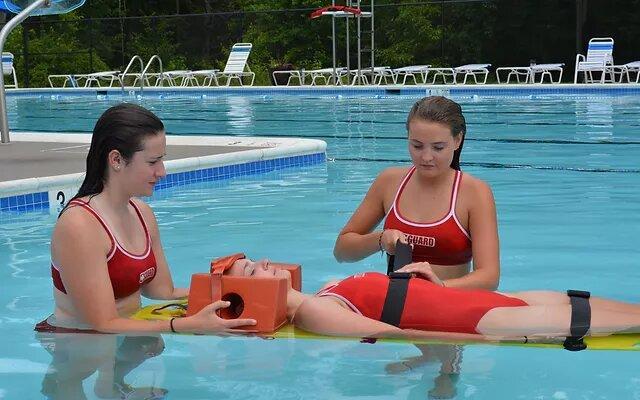
Spinal Injury Management
Spinal injury management remains one of the most sensitive lifeguard responsibilities. Recertification reinforces:
-
Recognition of potential spinal injuries
-
In-water stabilization techniques
-
Backboarding procedures
-
Team coordination and communication
Precision and teamwork are emphasized to prevent further injury.
Surveillance and Prevention Skills
Recertification reinforces prevention-focused skills, including:
-
Effective scanning techniques
-
Zone coverage responsibilities
-
Identifying risky behavior
-
Early intervention strategies
Strong surveillance helps lifeguards prevent emergencies before rescues are required.
Scenario-Based Emergency Training
Scenario-based training is a key component of recertification. These simulations replicate real emergencies and test lifeguards’ ability to apply skills under pressure.
Common scenarios include:
-
Unconscious swimmer rescue
-
Spinal injury incidents
-
Multiple-victim emergencies
-
Crowded pool or beach situations
-
Coordination with emergency responders
Scenario training strengthens leadership, communication, and confidence.
Written and Practical Skill Testing
Most Lifeguard Recertification programs include hands-on skill verification. Some also include a short written review.
Practical Skill Evaluation
Lifeguards may be tested on:
-
CPR and AED performance
-
Water rescue techniques
-
First aid response
-
Professional communication
-
Water competency
Written Review
If included, written assessments typically cover:
-
Safety rules and responsibilities
-
Emergency action plans
-
First aid and rescue principles
Passing these evaluations confirms continued readiness.
How Long Does Lifeguard Recertification Take?
Recertification is usually shorter than initial certification. Depending on requirements, renewal may take:
-
Several hours
-
One full day
-
Multiple short sessions
Hands-on practice and evaluation are prioritized over lecture time.
Cost of Lifeguard Recertification
The cost of recertification varies by location and provider. Factors influencing cost include:
-
CPR/AED renewal inclusion
-
Facility and equipment fees
-
Instructor experience
-
Course duration
Some employers cover or reimburse recertification costs, especially for returning staff.
What Happens If Certification Expires?
If certification expires, options depend on how long it has been expired:
-
Recently expired: Some providers allow recertification or bridge programs
-
Long expired: Full lifeguard certification may be required again
Lifeguards should contact their employer or certifying organization immediately if certification lapses.
Choosing the Right Lifeguard Recertification Program
When selecting a recertification course, consider:
-
Employer acceptance
-
Emphasis on hands-on skills
-
Instructor experience
-
Scenario-based training
-
Schedule flexibility
A quality recertification program should reinforce professional standards and challenge participants.
Lifeguard Recertification FAQs
How often is lifeguard recertification required?
Recertification frequency depends on the certifying organization but is required before expiration.
Is recertification easier than initial certification?
It is usually shorter, but skill expectations remain high.
Can lifeguard recertification be completed online?
Some theory may be online, but CPR, rescue, and water skills must be evaluated in person.
Can I work with an expired certification?
Most employers do not allow lifeguards to work with expired certification.
Conclusion: Staying Skilled and Job-Ready
Lifeguard recertification is more than a requirement—it is a commitment to safety, professionalism, and preparedness. By renewing certification on time, lifeguards maintain lifesaving skills, protect their employment, and ensure they are ready when emergencies occur.
In aquatic safety, readiness saves lives. Lifeguard recertification ensures that readiness never fades.
Author Bio
Arlo Booker is a swimming, beach, and lifeguard safety author with a strong focus on aquatic rescue training, certification standards, and emergency preparedness. He creates people-first, experience-driven content to help lifeguards stay skilled, confident, and ready to protect lives in pool and open-water environments.