
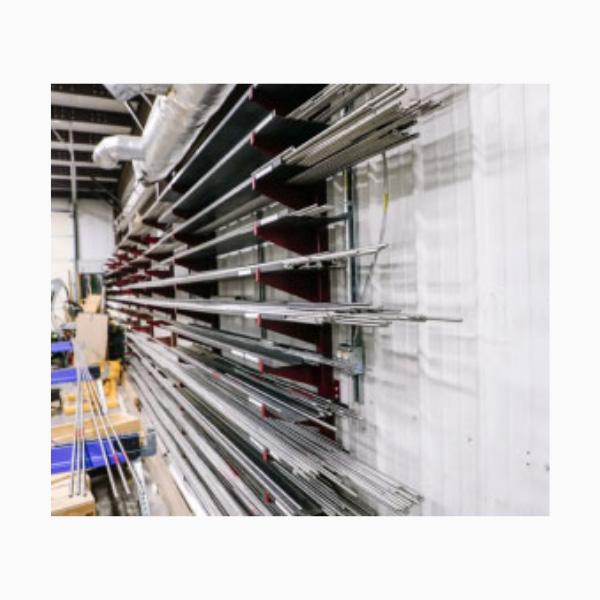
When people search for stainless steel high pressure tubing, they are usually trying to solve a very practical problem. They want tubing that can survive extreme pressure, harsh environments, and long operating hours without failing unexpectedly. Very quickly, that search leads to one common question: Should I use 304 or 316 stainless steel tubing?
On paper, both materials look similar. Both are stainless steel. Both are widely used. Both can handle high pressure when manufactured correctly. But in real industrial environments, especially oil and gas or chemical processing, the difference between 304 and 316 stainless steel tubing becomes very important.
This guide explains that difference clearly, without unnecessary complexity, so you can make the right decision for high-pressure applications.
Why Stainless Steel Is Preferred for High Pressure Tubing
High pressure tubing must handle more than just internal force. It must also resist corrosion, temperature changes, vibration, and long-term fatigue. Stainless steel has become the preferred material because it combines strength with corrosion resistance and predictable performance.
In high-psi environments, even small material weaknesses can turn into major failures. That is why stainless steel high pressure tubing is commonly chosen for oil and gas systems, pressure testing equipment, chemical injection lines, and waterjet systems.
However, not all stainless steel behaves the same under pressure and corrosion exposure. This is where the 304 versus 316 decision matters.
Understanding 304 Stainless Steel in High Pressure Applications
304 stainless steel is one of the most widely used stainless steel grades in the world. It offers good strength, good corrosion resistance in mild environments, and is relatively cost-effective. For many general industrial uses, it performs well.
In high pressure tubing, 304 stainless steel can be suitable when the environment is clean and non-corrosive. Systems that handle clean water, inert fluids, or controlled indoor conditions often use 304 without problems.
However, when pressure systems are exposed to aggressive chemicals, salt, moisture, or hydrocarbons, 304 stainless steel begins to show limitations. Over time, corrosion can develop, especially in areas where stress is already present due to high internal pressure.
This does not mean 304 is unsafe. It means it is environment-dependent. Many failures attributed to pressure are actually corrosion-assisted failures that start at the material level.
Why 316 Stainless Steel Is Often Chosen for High PSI Systems
316 stainless steel contains molybdenum, which significantly improves corrosion resistance. This single difference changes how the material behaves in harsh environments.
In oil and gas operations, tubing may be exposed to chlorides, saltwater, sour gas, or chemical additives. In these conditions, corrosion resistance becomes just as important as pressure strength. 316 stainless steel tubing resists pitting and crevice corrosion far better than 304.
When high pressure and corrosion act together, material fatigue accelerates. This is why many engineers automatically specify 316 stainless steel high pressure tubing for critical systems, even if the pressure rating alone could be met by 304.
Over long operating periods, 316 tubing typically maintains its integrity better, reducing leaks, downtime, and safety risks.
316 vs 304 High Pressure Tubing in Oil and Gas Environments
Oil and gas is one of the clearest examples where material choice matters. These systems often operate continuously, under high pressure, and in environments that promote corrosion.
304 stainless steel may perform adequately during early operation, but prolonged exposure to corrosive elements increases the risk of localized corrosion. Once corrosion begins, the tubing wall thickness effectively reduces, which raises stress levels and increases the chance of failure.
316 stainless steel tubing is preferred in these environments because it provides a wider safety margin. It does not just handle pressure better; it handles pressure and corrosion together. This combination is critical in pipelines, control lines, and pressure testing systems used in oil and gas facilities.
This is why many industry specifications and internal standards lean toward 316 for high-psi applications in corrosive settings.
Seamless Stainless Tubing and Why It Matters More Than Grade Alone
Regardless of whether the tubing is 304 or 316, manufacturing method plays a major role. Seamless stainless tubing is strongly preferred for high pressure systems because it eliminates weld seams, which are natural weak points.
Under extreme pressure, welds can become initiation points for cracks, especially when combined with corrosion. Seamless tubing provides uniform strength throughout the tube wall, which improves fatigue resistance and long-term reliability.
In recent years, ASME clarifications around material testing and qualification have reinforced the importance of material traceability and consistent manufacturing quality. These updates support the industry shift toward seamless stainless steel tubing for high-pressure environments.
Grade selection and seamless construction work together. Choosing 316 stainless steel but using poorly manufactured tubing defeats the purpose.
Pressure Is Not the Only Stress Acting on Tubing
One common misconception is that pressure rating alone determines tubing suitability. In reality, pressure is only part of the equation.
High pressure tubing experiences repeated stress cycles, vibration, temperature changes, and environmental exposure. Over time, these factors combine. Corrosion can create microscopic pits that become stress concentrators. Pressure cycling then turns those weak spots into cracks.
This is why corrosion resistance directly affects pressure performance. A corrosion-resistant material like 316 maintains its effective wall thickness and strength for longer periods, especially in demanding environments.
Cost vs Long-Term Reliability
Many buyers hesitate when they see the price difference between 304 and 316 stainless steel tubing. On a purchase order, 304 often looks attractive. Over the lifetime of a high pressure system, the equation changes.
Downtime, leaks, inspection failures, and replacement costs can easily outweigh the initial savings of choosing a lower-grade material. In safety-critical systems, the cost of failure is far higher than the cost of material.
This is why many experienced operators view 316 stainless steel tubing as a long-term investment rather than an upgrade.
ASME Standards and Material Qualification
ASME standards play a major role in high pressure system design. Recent clarifications on material testing and qualification emphasize proper documentation, traceability, and performance consistency for tubing used in high-quality 40k - 66k psi tubing environments.
These updates have increased confidence in high-quality stainless steel tubing, particularly when sourced from manufacturers that follow strict testing protocols. They also highlight the importance of selecting materials appropriate for the operating environment, not just the pressure number.
For systems subject to audits or regulatory review, material choice is often scrutinized. In such cases, 316 stainless steel tubing is easier to justify due to its proven corrosion resistance and widespread acceptance.
Making the Right Choice Without Overcomplicating It
If your system operates in a clean, controlled environment with minimal corrosion risk, 304 stainless steel high pressure tubing may be sufficient. It performs well when conditions are stable and predictable.
If your system operates in oil and gas, chemical processing, marine environments, or anywhere corrosion is a concern, 316 stainless steel tubing is usually the safer and smarter choice. It offers better long-term reliability and reduces the risk of pressure-assisted corrosion failures.
The most important thing is matching the material to the environment. Pressure capability alone should never be the only deciding factor.
Final Thoughts
Choosing between 316 vs 304 high pressure tubing is not about which material is stronger on paper. It is about how the tubing behaves over time under real operating conditions.
Stainless steel high pressure tubing must handle pressure, corrosion, and fatigue together. In mild environments, both grades can work. In harsh or critical applications, 316 stainless steel provides a level of protection and reliability that 304 cannot always match.
When safety, uptime, and long-term performance matter, material selection becomes a strategic decision, not just a technical one.
About the Author
Dr. Eric Roll is a pressure systems engineer specializing in material selection, corrosion behavior, and reliability of ultra-high-pressure tubing in industrial environments.