
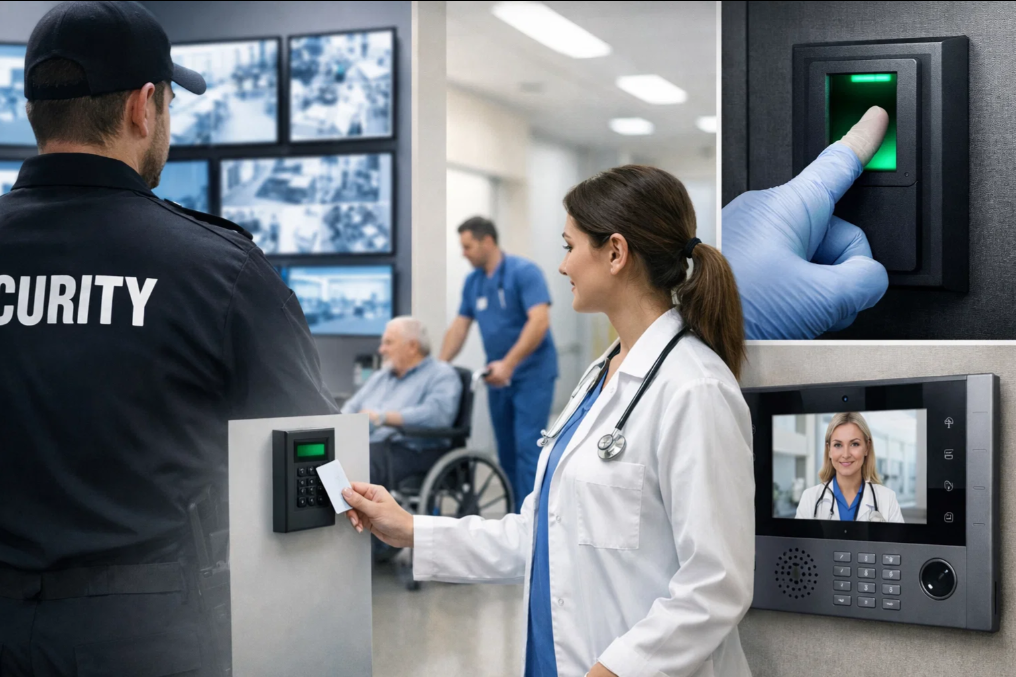
Hospitals and healthcare facilities are among the most sensitive and high-risk environments when it comes to security. Protecting patients, staff, and sensitive medical data is a top priority, yet these institutions must also maintain open, accessible spaces for care delivery. This delicate balance creates unique security challenges that cannot be adequately addressed by traditional locks or basic access measures.
Access control for hospital and healthcare is no longer just about securing doors—it is a sophisticated, integrated system that ensures safety, compliance, and operational efficiency. Modern healthcare facilities are increasingly turning to advanced access control software and cloud based access control systems to meet these needs. By implementing these technologies, hospitals can control who enters specific areas, monitor access in real time, and maintain compliance with stringent healthcare regulations.
This article explores the importance of access control in hospitals, the challenges faced, and how modern solutions deliver both security and efficiency.
The Unique Security Challenges of Healthcare Facilities
Healthcare environments are inherently complex. Unlike corporate offices or retail spaces, hospitals must accommodate patients, visitors, doctors, nurses, and administrative staff while safeguarding sensitive areas such as operating rooms, pharmacies, laboratories, and patient records.
Some of the most pressing security challenges include:
1. Protecting Sensitive Patient Data
Healthcare facilities are required to comply with regulations like HIPAA (Health Insurance Portability and Accountability Act) in the United States, which mandate strict controls over patient information. Unrestricted access to medical records or sensitive areas can lead to data breaches, regulatory fines, and reputational damage.
2. Controlling Access to Restricted Areas
Certain hospital areas, such as pharmacies, neonatal units, and surgical suites, must be restricted to authorized personnel only. Uncontrolled entry could result in theft, tampering, or accidental interference with critical operations.
3. Managing High Traffic Environments
Hospitals operate 24/7 with hundreds or thousands of people moving through their doors daily. This makes manual security oversight impractical. Without proper access control, monitoring every entry point becomes almost impossible.
4. Responding to Emergencies Quickly
In emergencies, hospitals need a system that allows rapid, yet controlled, access. Emergency responders must gain entry without delays, while maintaining security for other areas of the facility.
5. Preventing Internal Security Risks
Internal threats, whether accidental or intentional, are a significant concern. Employees or contractors may inadvertently access areas they shouldn’t, or worse, misuse access for malicious purposes.
Why Traditional Security Measures Fall Short
Traditional security measures, such as keys, swipe cards, or manual logs, are insufficient for modern healthcare environments.
- Physical keys can be lost or duplicated, creating security vulnerabilities.
- Basic card systems lack real-time monitoring, so unauthorized access may go undetected until after the fact.
- Manual access logs are labor-intensive and prone to errors, making compliance reporting difficult.
- Scalability is limited, which is a problem for large hospitals or multi-campus systems.
To address these challenges, hospitals are moving toward advanced access control software and cloud based access control systems that provide greater control, visibility, and adaptability.
Understanding Access Control for Hospital and Healthcare
Access control in healthcare is not just about locking doors. It is a comprehensive security framework designed to manage, monitor, and control entry to sensitive areas based on roles, permissions, and compliance requirements.
Key Components of Modern Access Control
- Credential Management
Modern systems replace physical keys with digital credentials, often stored on smart cards or mobile devices. These credentials can be revoked or updated instantly, reducing administrative overhead. - Role-Based Access
Employees, contractors, and visitors can be granted access based on their role, department, or clearance level. For example, a pharmacist may have access to the pharmacy but not surgical suites. - Audit Trails and Reporting
Advanced systems track every access attempt and generate audit logs. This ensures compliance with regulations and provides evidence in case of incidents. - Integration with Other Security Systems
Access control can be integrated with video surveillance, alarm systems, and emergency notification platforms, creating a unified security ecosystem. - Remote Management
With cloud based access control system solutions, administrators can manage permissions and monitor activities from anywhere, improving responsiveness and oversight.
Advanced Access Control Software: Enhancing Security and Efficiency
At the core of modern healthcare access control is advanced access control software. This software provides intelligent capabilities that traditional systems cannot match.
Key Benefits
- Real-Time Monitoring: Security teams can track who enters sensitive areas in real time, reducing the likelihood of unauthorized access.
- Automated Workflows: Onboarding, offboarding, and temporary access for contractors or visitors can be automated, saving time and reducing errors.
- Enhanced Security: Multi-factor authentication, biometric verification, and encrypted credentials improve protection against internal and external threats.
- Compliance Support: Advanced software generates reports and audit trails that satisfy regulatory requirements.
In other words, advanced access control software for better security & efficiency not only secures the facility but also reduces administrative workload and improves operational performance.
Cloud-Based Access Control: Transforming Healthcare Security
A cloud based access control system allows healthcare administrators to manage security without being tied to on-site servers. Cloud technology offers several advantages:
1. Centralized Management Across Multiple Locations
Hospitals with multiple campuses can control access from a single dashboard. Permissions can be updated instantly for all locations, ensuring consistent security standards.
2. Scalability
Cloud systems can easily accommodate new users, doors, or buildings without expensive hardware upgrades.
3. Remote Oversight
Administrators can monitor activity, grant temporary access, or revoke credentials from anywhere—essential during emergencies or after-hours incidents.
4. Automatic Updates and Security Patches
Cloud solutions ensure that the latest security features are always in place, reducing vulnerabilities.
5. Cost Efficiency
By reducing the need for on-premises servers and IT support, cloud solutions can lower overall infrastructure costs.
Meeting Regulatory Demands in Healthcare
Healthcare facilities face strict regulatory requirements related to patient safety, privacy, and security.
Access control systems help hospitals meet these demands by:
- Ensuring only authorized personnel access patient records and sensitive areas
- Providing audit trails for HIPAA compliance and internal reviews
- Maintaining secure, encrypted data storage
- Supporting multi-factor authentication for sensitive zones
By adopting advanced and cloud-based solutions, hospitals can demonstrate compliance more easily and reduce the risk of penalties.
Enhancing Patient Safety with Access Control
Effective access control has a direct impact on patient safety:
- Preventing unauthorized individuals from entering patient care areas
- Controlling access to medications and controlled substances
- Restricting entry to laboratories and surgical suites
- Protecting vulnerable patients, such as infants in neonatal units
This ensures that healthcare providers can focus on care delivery without compromising security.
Operational Efficiency Through Smart Access Control
Beyond safety, modern access control also improves operational efficiency.
Examples Include:
- Streamlined Staff Movement: Employees can move quickly between departments using mobile or digital credentials.
- Visitor Management: Temporary access can be granted to visitors or contractors without disrupting workflows.
- Reduced Administrative Workload: Automating credential issuance and revocation saves time and resources.
- Integration With HR Systems: Employee access can be automatically adjusted based on roles or shift changes.
These efficiencies allow healthcare staff to dedicate more time to patient care rather than security logistics.
Future Trends in Hospital Access Control
As healthcare facilities continue to evolve, access control systems are also advancing. Emerging trends include:
- Mobile Access Control: Smartphones and wearable devices are replacing traditional cards for more convenience and security.
- Biometric Authentication: Fingerprint, facial recognition, and iris scanning improve accuracy and reduce risk of credential sharing.
- AI and Analytics: Systems can detect unusual patterns of access and automatically alert security teams.
- Integration with IoT: Smart building sensors and connected devices create proactive and automated security measures.
These innovations ensure that access control for hospital and healthcare will continue to support patient safety, regulatory compliance, and operational efficiency.
Choosing the Right Access Control System for Healthcare
When selecting an access control system, hospitals should consider:
- Security Needs: Which areas require strict access? What level of authentication is needed?
- Scalability: Can the system grow with the hospital’s needs?
- Integration: Does the system work with existing security, HR, and IT infrastructure?
- Regulatory Compliance: Does it provide the necessary audit trails and reporting?
- User Experience: Is the system easy for staff and visitors to use?
Solutions like advanced access control software and cloud based access control system platforms provide the flexibility and intelligence needed to meet these requirements.
The Millennium Approach to Healthcare Security
Leading providers like Millennium emphasize integrating advanced access control software for better security & efficiency in healthcare facilities. Their solutions combine cloud technology, mobile credentials, and real-time monitoring to ensure:
- Robust security for patients, staff, and data
- Compliance with healthcare regulations
- Scalability and adaptability for future needs
- Simplified management and operational efficiency
By adopting a Millennium-inspired approach, hospitals can build a security ecosystem that meets today’s challenges and is ready for tomorrow’s innovations.
Conclusion
Access control for hospital and healthcare facilities is no longer a simple matter of locking doors. The stakes are high—protecting patients, staff, and sensitive data requires intelligent, scalable, and compliant solutions.
Traditional methods, while once sufficient, cannot keep up with the demands of modern healthcare environments. Advanced access control software and cloud based access control systems provide the flexibility, security, and efficiency hospitals need to meet regulatory requirements and operational goals.
By embracing these technologies, healthcare facilities can improve patient safety, streamline operations, and demonstrate compliance with regulations—all while preparing for the future of intelligent security.
In today’s fast-evolving healthcare landscape, investing in advanced access control software for better security & efficiency is not just a choice—it is a necessity.