
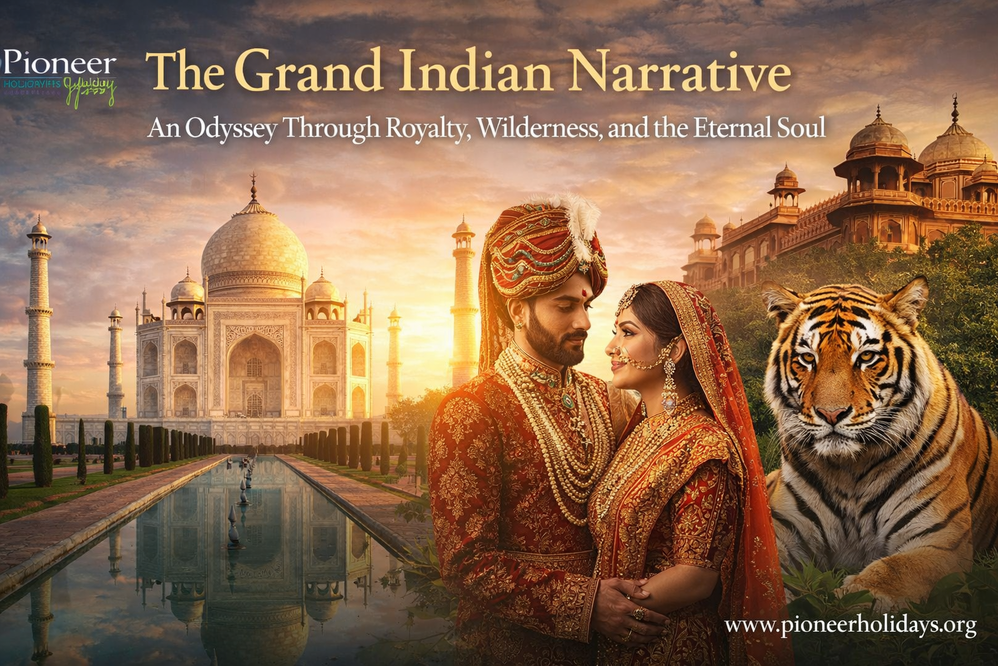
India is not a destination that you simply visit; it is a profound transformation that you undergo. It is a land where the whispers of Mughal emperors still echo through red sandstone corridors, where the roar of a Bengal tiger pierces the silence of an ancient dry forest, and where the flickering lamps on the Ganges represent a bridge between the mortal and the divine. To see India is to see the world in high definition.
For the modern traveler, the challenge is not just "where to go," but "how to feel" the essence of this vast sub-continent. While the iconic cities of Delhi, Agra, and Jaipur provide the structural beauty, it is the extensions into the wild and the spiritual that provide the soul. This is a journey designed for those who seek the extraordinary.
Part I: The Architectural Epicenter – The Golden Triangle
The Golden Triangle is the most celebrated circuit in India, and for good reason. It offers a crash course in the country’s diverse history, showcasing the transition from Islamic architecture to Rajputana brilliance.
1. Delhi: The City of Paradoxes
Delhi is a city where 12th-century ruins coexist with 21st-century glass skyscrapers. It is divided into two distinct personalities:
-
Old Delhi (Shahjahanabad): This is the heart of the Mughal Empire. Walking through Chandni Chowk is a sensory explosion. The smell of frying paranthas from the century-old Gali Paranthe Wali mixes with the scent of incense. The Jama Masjid, built by Shah Jahan, offers a panoramic view of the chaotic streets below.
-
New Delhi: Built by the British, this part of the city is characterized by wide boulevards and monumental architecture. The Rashtrapati Bhavan (President's House) and India Gate are symbols of national pride. Don't miss the Humayun’s Tomb, a garden tomb that feels like a peaceful island in the middle of the city's hustle.
-
The Spiritual Layer: Beyond history, Delhi is a melting pot of faiths. The Lotus Temple (Bahá'í House of Worship) and the sprawling Akshardham Temple showcase the modern architectural prowess and spiritual depth of India.
2. Agra: More Than Just the Taj
Agra was once the capital of the Mughal Empire, and its monuments reflect that former glory.
-
The Taj Mahal: No words can truly capture the Taj. It is a monument that changes its mood with the light—milky white in the morning, golden in the evening, and silver under the moonlight. It is a masterclass in symmetry and marble inlay work (Pietra Dura).
-
Agra Fort: This UNESCO World Heritage site is a massive crescent-shaped fort. Inside, the Diwan-i-Khas and Jahangiri Mahal tell stories of courtly intrigues and royal lifestyles.
-
Itmad-ud-Daulah: Often called the "Baby Taj," this tomb is much more delicate and intricate, offering a quieter, more personal experience than its famous neighbor.
3. Jaipur: The Pink Gateway
Jaipur is a city of royalty and celebration. Every wall here is painted in a terracotta pink, a color traditionally associated with hospitality.
-
Amer Fort: Situated atop the Cheel ka Teela (Hill of Eagles), this fort is a formidable structure. The Sheesh Mahal, with its thousands of convex mirrors, is a sight to behold.
-
City Palace & Museum: Still the residence of the former royal family, the palace houses a stunning collection of royal costumes, weapons, and the famous silver jars—the largest in the world.
-
The Local Bazaars: Jaipur is a shopper’s paradise. From Johari Bazaar (jewelry) to Bapu Bazaar (textiles), the city offers a chance to take a piece of Rajasthan home with you.
Part II: The Wild Chapter – Into the Tiger’s Territory
For many, the stone monuments are just the beginning. The real thrill lies in the untamed heart of the desert state. This is where the golden triangle tour with ranthambore bridges the gap between man-made wonders and the raw power of nature.
Ranthambore: Where History Meets the Jungle
Ranthambore National Park is unique because it is one of the few places in the world where history and wildlife are inseparable. The Ranthambore Fort, dating back to the 10th century, stands as a silent guardian over the jungle.
-
The Majesty of the Bengal Tiger: Ranthambore is famous for its "bold" tigers. Unlike other parks where tigers are shy, here they are often seen basking in the sun or hunting near the lakes. Spotting a tiger like the legendary Machli’s descendants is a memory that stays for a lifetime.
-
The Diverse Ecosystem: While the tiger is the star, the park is home to leopards, caracals, striped hyenas, and over 300 species of birds. The sight of a crocodile lunging at a deer by the Padam Talao lake is a raw display of nature's law.
-
The Safari Life: Staying in a luxury jungle camp or a heritage resort adds a layer of magic. Waking up to the sound of birds and heading out in an open-top Jeep for a morning safari is the highlight of a golden triangle tour with ranthambore.
Part III: The Spiritual Chapter – The Eternal Ghats of Varanasi
If Ranthambore is an adventure for the body, Varanasi is an adventure for the soul. By adding this destination, your golden triangle tour with varanasi becomes a complete circle of the Indian experience.
Varanasi: The Living Eternity
Varanasi, or Kashi, is the oldest living city in the world. It is said that the city rests on the trident of Lord Shiva. Here, time is not linear; it is a cycle.
-
The Morning Boat Ride: As the sun rises over the Ganges, the city comes alive. Thousands of pilgrims descend the stone steps (ghats) to take a holy dip. Watching the city wake up from a boat is a surreal experience that feels like a painting coming to life.
-
The Ganga Aarti: Every evening, the Dashashwamedh Ghat hosts a grand prayer ceremony. The synchronized movements of the priests, the smell of sandalwood, and the thousands of floating lamps (diyas) create an atmosphere of pure divinity.
-
The Narrow Alleys: Varanasi’s charm lies in its "galis." These narrow lanes are home to hidden temples, ancient shops selling silk, and the most delicious street food, like Kachori Sabzi and Lassi.
-
Sarnath: A short drive from the city, Sarnath is where Lord Buddha gave his first sermon. The Dhamek Stupa and the Ashoka Pillar are symbols of peace and non-violence, offering a calm contrast to the high-energy pulse of the Varanasi ghats.
Choosing a golden triangle tour with varanasi is an invitation to witness the core of Indian philosophy—the belief that life and death are just two sides of the same coin.
Part IV: A Connoisseur’s Guide to India
Culinary Delights Across the Circuit
-
Delhi: Indulge in the butter chicken at Moti Mahal or the street food at Daulat ki Chaat.
-
Agra: Try the 'Pancha-ratna' Petha—a sweet that defines the city.
-
Jaipur: A traditional Laal Maas (spicy lamb curry) is a must for meat lovers.
-
Varanasi: Don't miss the Banarasi Paan and the morning Jalebis.
Festive Calendar 2026
If you are planning your trip, consider aligning it with India’s vibrant festivals:
-
Holi (March): Experience the festival of colors in Jaipur or Mathura (near Agra).
-
Diwali (October/November): See Varanasi lit up with millions of lamps for Dev Deepawali.
-
Pushkar Fair (November): A short detour from Jaipur takes you to the world’s largest camel fair.
Frequently Asked Questions (FAQs)
1. Is it safe for solo travelers? Yes, India is generally safe for solo travelers, provided you follow basic precautions. Using reputable travel agencies and staying in well-reviewed hotels is recommended.
2. What is the best way to travel between Jaipur and Varanasi? The most efficient way is a direct flight. However, for those who love the romance of the rails, the Marudhar Express offers a direct train link, though it takes longer.
3. Can I customize my safari in Ranthambore? Yes, you can choose between a 6-seater Jeep (Gypsy) for a more private experience or a 20-seater Canter. We recommend the Jeep for better photography and access.
4. What should I pack for this diverse trip? Pack layers. Delhi and Agra can be chilly in the morning, Ranthambore requires earthy-toned cottons, and Varanasi requires modest clothing for temple visits.
5. How far in advance should I book? For the best hotels and guaranteed safari slots, booking 4 to 6 months in advance is highly recommended, especially for the peak winter season.
The Final Word
India is a land that requires an open heart and a curious mind. It will overwhelm you, it will surprise you, and ultimately, it will change you. From the royal palaces of the Rajputs to the wild trails of the tigers and the sacred waters of the Ganges, this is the journey of a lifetime.
To ensure your journey is as flawless as the monuments you will visit, and to get the best local insights, visit us PioneerHolidays.