
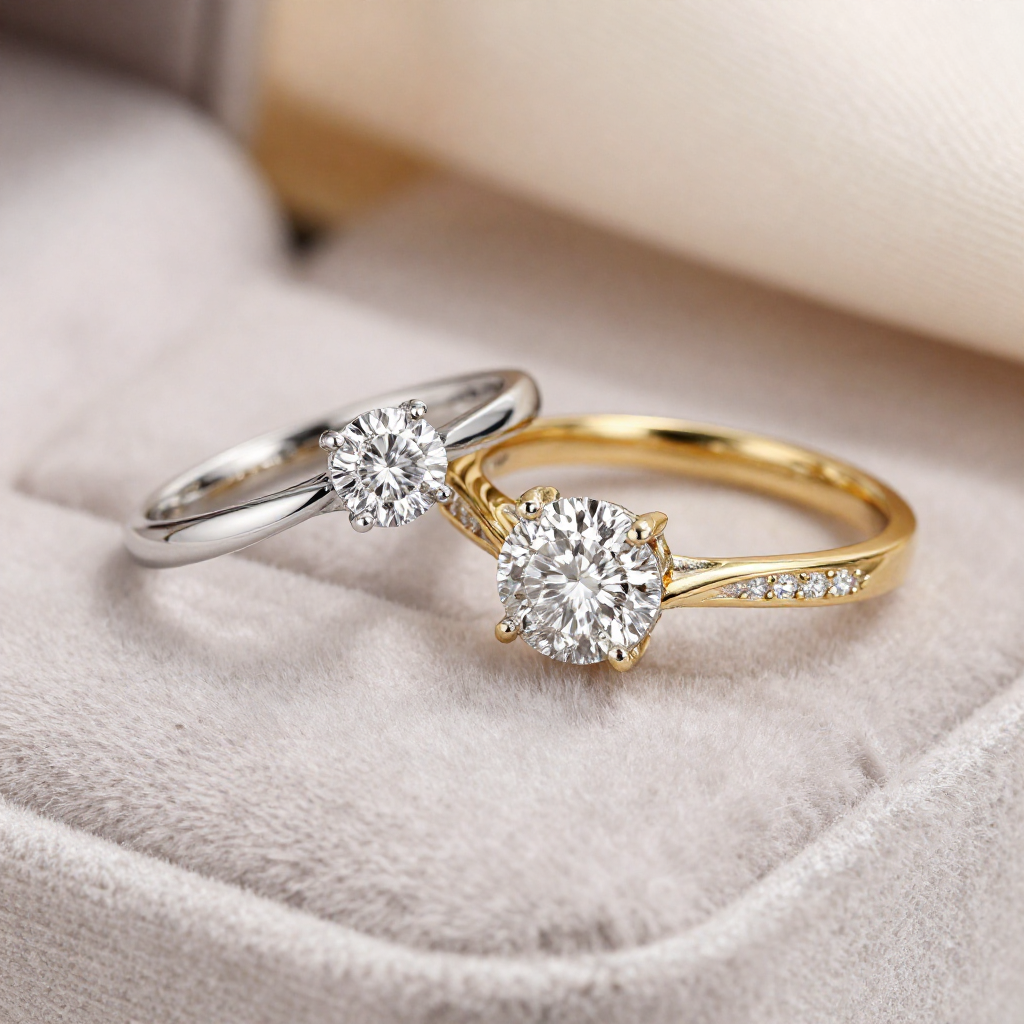
There’s something oddly quiet about the moment you first notice a diamond ring. Not loud, not dramatic. Just… a pause. Like time hesitates for a second. I remember once standing in a small jewelry store on a random weekday afternoon, not even planning to buy anything, and the light hit a ring just right. It wasn’t even the biggest piece there. But it held something. A kind of stillness. And yeah, I stared longer than I probably should have.
That’s the thing about diamond rings. They don’t just sit on your hand. They stay with you, in memory, in emotion, in weird little moments you don’t expect.
What Makes Diamond Rings So Meaningful and Timeless?
Diamond rings have always carried meaning, but it’s not just tradition. It’s deeper than that. There’s something about the durability, the way diamonds form under pressure over time, that people connect with. Love, commitment, milestones… all those big feelings somehow find a home in something so small.
And honestly, it’s not always about grand gestures. Sometimes it’s subtle. A promise made quietly. A celebration of something personal. That’s why diamond rings for women have stayed relevant for generations. They evolve, sure, but they never lose that emotional core.
There’s also this idea of permanence. Diamonds don’t fade easily. They don’t scratch like other stones. So when someone gives a diamond ring, it feels like they’re saying, “This matters." This lasts.” Maybe that’s why even natural diamond rings, formed over billions of years, feel almost poetic. Like you’re wearing a piece of time itself.
And yet, despite all that history, they never feel outdated. That’s the strange part. You’d think something so old would lose its charm. But no. It just adapts. Quietly. Consistently.
Different Types of Diamond Rings: Styles Every Buyer Should Know
Walk into any jewelry store and you’ll notice something immediately. There’s not just one kind of diamond ring. There are dozens. Maybe hundreds. It can feel overwhelming at first, not gonna lie.
Solitaire rings are the classic. One diamond, simple band. Clean, timeless, no distractions. Then you have halo designs, where smaller diamonds surround a center stone, adding extra sparkle. They catch light in a different way, almost like the ring is glowing from within.
Then there are three-stone rings. Those always feel symbolic. Past, present, future. Or at least that’s how people describe them. Whether you believe that or not… It's a nice thought.
Eternity bands are another category. Diamonds all around the band, no beginning or end. These are often chosen for anniversaries, but honestly, they work for everyday wear too. Subtle, but not really. You notice them.
And then there are designer diamond rings. These are where things get interesting. Unique settings, unexpected shapes, mixed metals, sometimes even unconventional diamond cuts. These rings feel more personal. Less traditional. Like they’re telling a slightly different story.
You might find yourself drawn to something you didn’t expect. Happens all the time. You walk in thinking you want one thing, and suddenly you’re staring at something completely different. It’s okay. That’s part of the process.
Understanding the 4Cs of Diamonds: Cut, Color, Clarity, and Carat
Alright, this part can feel technical. A bit dry, maybe. But it matters. The 4Cs are basically the foundation of how diamonds are evaluated.
Cut is probably the most important. Not the shape, but how well the diamond is cut. It affects how light reflects inside the stone. A well-cut diamond sparkles more. Simple as that. Even a smaller diamond with a great cut can outshine a bigger one with a poor cut. Kind of surprising, right?
Color refers to how colorless the diamond is. The less color, the higher the grade. Most diamonds have slight hints of yellow or brown, but many are so subtle you won’t notice unless you’re comparing side by side.
Clarity is about imperfections. Tiny inclusions inside the diamond or blemishes on the surface. Most are invisible to the naked eye, so unless you’re using magnification, it’s not something you’ll constantly notice.
Carat is the weight. Not size, technically, but people often use it that way. Bigger diamonds are rarer, so they tend to be more expensive. But again, bigger doesn’t always mean better. Balance matters.
It can feel like a lot. Numbers, grades, scales. But once you understand the basics, it gets easier. You start to see what really matters to you. And that’s the key.
How to Choose the Perfect Diamond Ring for Every Occasion?
Choosing a diamond ring isn’t just about budget or trends. It’s about context. The occasion, the person, the feeling behind it.
For engagements, people often lean toward something timeless. A classic solitaire or a halo design. Something that won’t feel outdated years later. But even then, personal style matters. Some prefer bold designs; others want something minimal.
Anniversary rings are different. They can be more expressive. Eternity bands, multi-stone designs, even colored diamonds sometimes. It’s less about tradition and more about celebrating a journey.
And then there are rings you buy for yourself. Which, by the way, more people are doing now. No occasion, no milestone. Just… because. Those choices tend to be the most personal. Less pressure. More freedom.
When choosing between natural diamond rings and other options, it often comes down to preference. Some people value the natural origin, the history behind the stone. Others focus more on design or budget. There’s no right answer here.
Try things on. That’s probably the best advice. What looks good in a display case doesn’t always feel right on your hand. And sometimes, the opposite happens. A ring you didn’t even notice at first suddenly feels perfect.
Latest Trends in Diamond Rings: Modern Designs with Classic Appeal
Trends in diamond rings are always shifting, but not in a loud way. It’s subtle. Gradual.
Right now, there’s a growing interest in unique shapes. Oval, pear, and cushion cuts. They feel a bit different from the traditional round diamond but are still classic enough to last. It’s like a small twist on something familiar.
Mixed metals are also becoming more popular. Yellow gold with white gold or even rose gold accents. It adds depth to the design and makes the ring feel more layered.
Minimalist bands are having a moment too. Thin, delicate, almost understated. But paired with a well-cut diamond, they still make an impact. Quiet elegance, I guess.
And then there are vintage-inspired designs. Intricate details, milgrain edges, filigree work. They bring a sense of history, even if the ring is brand new. That blend of old and new is what makes them appealing.
Even with all these trends, one thing stays consistent. The focus on craftsmanship. Whether it’s a simple band or a complex designer diamond ring, the quality of the work matters. You can feel it. Sometimes you can’t even explain why one ring feels better than another, but it just does.
At the end of the day, diamond rings are more than jewelry. They’re markers. Of moments, of emotions, of choices. Some planned, some spontaneous.
Also Read: Which Multi-Stone Ring Combination To Choose?
And maybe that’s why they never really go out of style. Because people don’t stop celebrating, or loving, or remembering. And diamonds, in their quiet, steady way, just keep holding those stories.
FAQs
- Are natural diamond rings better than other types of diamonds?
It depends on what you value. Natural diamond rings carry a sense of rarity and history, while other options may offer affordability or ethical sourcing. Both can be beautiful and meaningful.
- What style of diamond rings for women is most popular right now?
Oval and pear-shaped diamonds, minimalist bands, and vintage-inspired settings are trending. But classic solitaire rings still remain a top choice.
- How do I choose between designer diamond rings and traditional styles?
Designer diamond rings offer unique, personalized designs, while traditional styles focus on timeless appeal. Choose based on your personal taste and how you want the ring to feel over time.