
Freight shipping may seem straightforward, but small mistakes when you calculate freight class can quickly lead to costly problems. Many businesses unknowingly overpay for shipping or face delays due to incorrect freight class calculations and improper classification.
Freight class plays a critical role in determining LTL (Less-Than-Truckload) shipping costs. When you calculate freight class, factors like density, handling, liability, and stowability must be considered. Even a small error in freight class calculation can result in reclassification fees, billing adjustments, and delivery delays.
To avoid these issues, it’s best to use a reliable tool like the freight class calculator, which helps you calculate freight class accurately based on real shipment data.
Understanding how to properly calculate freight class and avoid common freight class calculation mistakes can help you reduce costs and improve shipping efficiency. This guide highlights the most common errors and shows you how to calculate freight class correctly for better results.
Why Freight Class Accuracy Matters
Freight class is not just a number. It directly impacts how much you pay for shipping and how your shipment is handled.
Carriers rely on freight class to:
-
Determine pricing
-
Allocate space in trucks
-
Assess handling requirements
When the freight class is incorrect, carriers often reclassify the shipment. This leads to additional charges and delays. Accurate classification ensures smooth delivery and predictable costs.
Top 7 Freight Class Calculation Mistakes
Below is a clear breakdown of the most common mistakes and how to avoid them.
1. Incorrect Measurements
One of the biggest mistakes is entering incorrect dimensions. Even a small error in length, width, or height can significantly affect the calculated density.
Many shippers measure only the product and forget to include packaging. This leads to incorrect volume and wrong freight class.
Always measure the full shipment, including pallets, boxes, and wrapping materials. Accuracy in dimensions is the foundation of correct freight classification.
2. Ignoring Packaging Weight and Size
Packaging is not just protection. It directly impacts freight class.
Boxes, pallets, and protective materials add both weight and volume. Ignoring these factors results in underestimating density.
This mistake often leads to reclassification fees when carriers inspect the shipment.
Proper packaging measurement ensures you get the correct freight class the first time.
3. Using Wrong Units of Measurement
Mixing units is a common but costly mistake.
Freight calculations usually require:
-
Dimensions in inches
-
Weight in pounds
Using centimeters or kilograms without conversion leads to incorrect density calculations.
Always double-check units before entering data into any freight class calculator.
4. Miscalculating Density
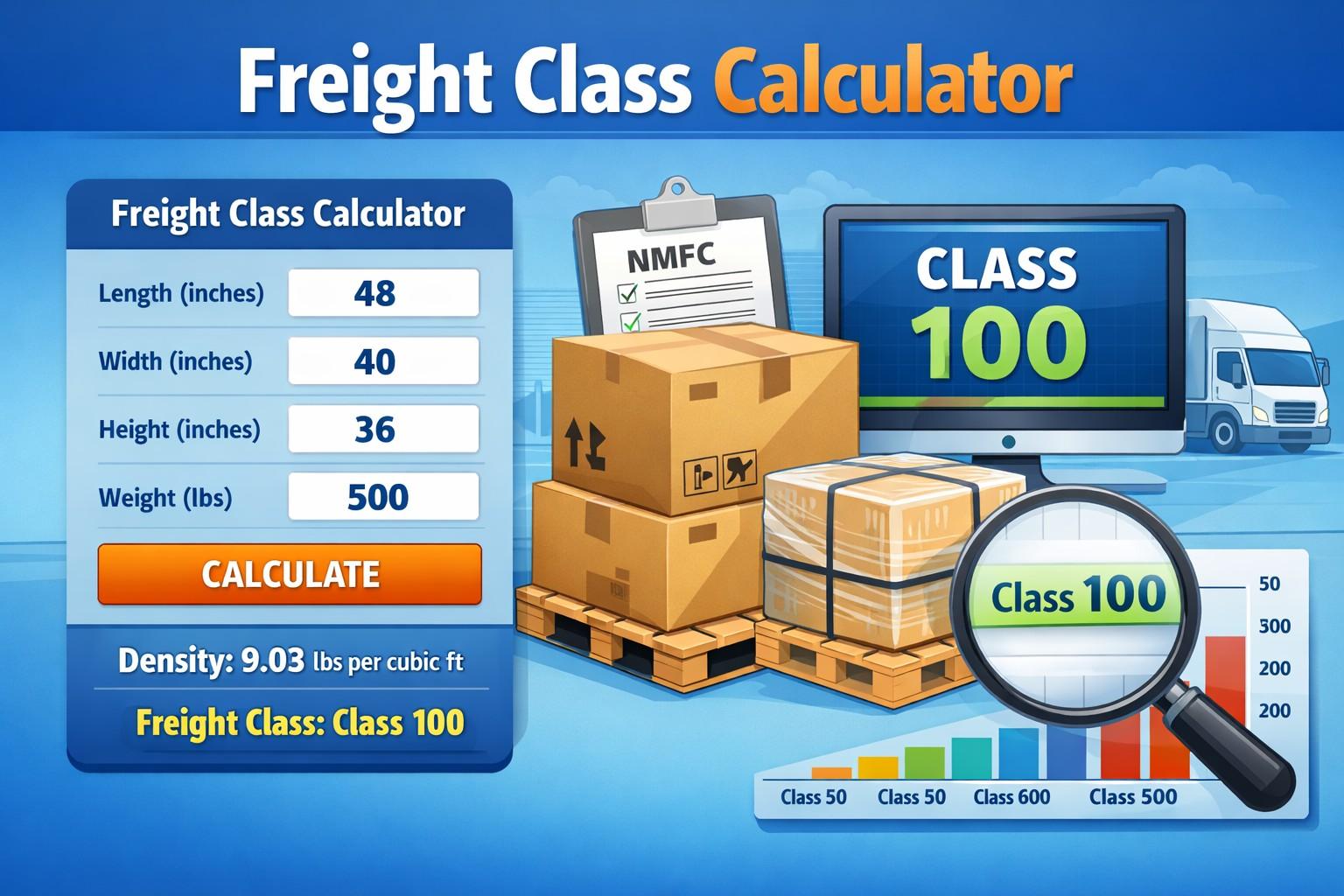
Density is the most important factor in freight classification. It is calculated using the formula:
Density = Weight ÷ Volume
Errors in either weight or volume will produce the wrong density. This leads to incorrect freight class assignment.
Many manual calculations go wrong due to rounding errors or incorrect conversions.
Using an accurate tool like a freight class calculator helps eliminate this issue.
5. Ignoring Product Characteristics
Freight class is not based on density alone.
Carriers also consider:
-
Fragility
-
Value
-
Ease of handling
-
Risk of damage
A lightweight but fragile item may have a higher freight class than expected.
Ignoring these factors can lead to incorrect classification and higher charges later.
6. Not Verifying with the Carrier
A freight class calculator provides an estimate, not a final confirmation.
Different carriers may have slightly different rules or interpretations. Some shipments may require special classification.
Failing to confirm with the carrier can result in unexpected adjustments.
Always verify your freight class before finalizing the shipment.
7. Relying Only on Manual Calculations
Manual calculations increase the risk of human error.
Even experienced shippers can make mistakes when calculating volume or density.
Automated tools are designed to provide faster and more accurate results.
Using a reliable freight class calculator saves time and reduces errors significantly.
Quick Comparison Table: Mistakes vs Solutions
| Mistake | Impact | Solution |
|---|---|---|
| Incorrect measurements | Wrong density calculation | Measure full shipment including packaging |
| Ignoring packaging | Underestimated volume | Always include pallets and wrapping |
| Wrong units | Incorrect results | Use inches and pounds consistently |
| Density miscalculation | Wrong freight class | Use a calculator instead of manual math |
| Ignoring product factors | Reclassification fees | Consider fragility and handling requirements |
| Not confirming with carrier | Unexpected charges | Always verify before shipping |
| Manual calculation errors | Time loss and mistakes | Use automated tools for accuracy |
How to Avoid These Mistakes Completely
Accuracy starts with proper data collection. Measure everything carefully and double-check your inputs.
Using a trusted online tool simplifies the process and removes guesswork. A freight class calculator ensures your data is processed correctly.
Consistency is also important. Always use the same units and follow a standard process for every shipment.
Taking a few extra minutes to verify details can save significant money and prevent delays.
Smart Tips for Better Freight Classification
Better freight classification leads to lower costs and smoother shipping.
Use compact packaging whenever possible. Higher density often results in lower freight class and cheaper shipping.
Combine shipments when possible. Grouping items increases density and reduces cost per shipment.
Keep records of previous shipments. This helps you quickly estimate freight class for similar items in the future.
Regularly review your shipping process and update it as needed.
Why Using a Freight Class Calculator Is Essential
A freight class calculator removes complexity from the process.
It automatically calculates:
-
Volume
-
Density
-
Estimated freight class
This reduces the chances of human error and saves time.
Modern tools are designed to be user-friendly and accurate. They help businesses ship smarter and more efficiently.
Real-World Impact of Freight Class Mistakes
Many businesses lose money due to incorrect freight classification.
Overestimating freight class leads to higher shipping costs. Underestimating it results in penalties and delays.
Both scenarios affect profitability and customer satisfaction.
Accurate classification ensures predictable costs and reliable delivery timelines.
Final Thoughts
Freight class calculation is a critical part of shipping that should never be ignored.
Small mistakes can lead to big financial losses. Understanding common errors and how to avoid them gives you a strong advantage.
Focus on accuracy, use reliable tools, and always verify your data.
By avoiding these top 7 mistakes, you can reduce costs, improve efficiency, and make your shipping process more professional.
FAQs
What is the most common freight class mistake?
Incorrect measurements are the most common issue. Even small errors can affect the final freight class.
Does packaging affect freight class?
Yes, packaging adds both weight and volume, which directly impacts density.
Can I calculate freight class manually?
Yes, but it increases the risk of errors. Using a calculator is more accurate.
Why do carriers reclassify shipments?
They reclassify when the provided freight class does not match the actual shipment details.