
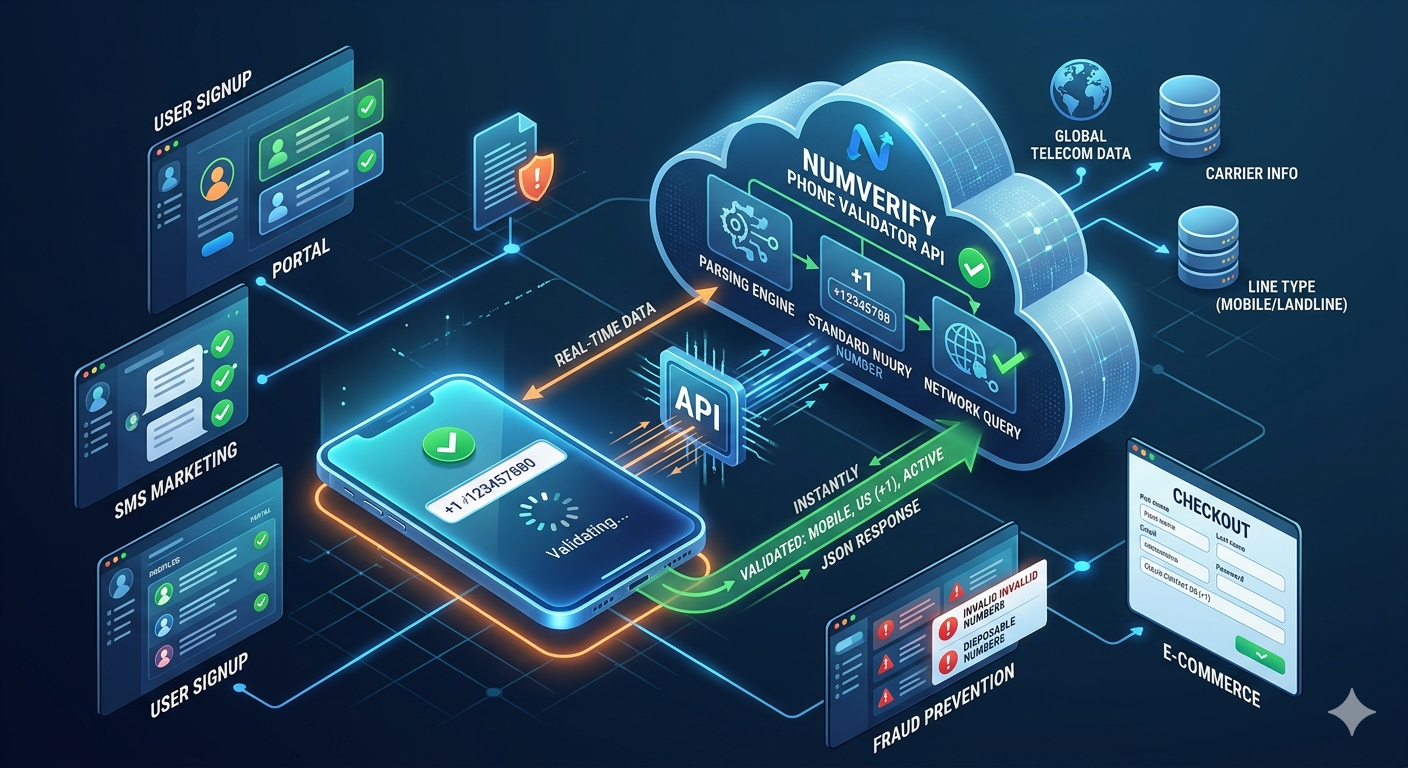
Businesses that rely on user data cannot afford to work with inaccurate phone numbers. Whether it is for onboarding users, running marketing campaigns, or preventing fraud, validating phone numbers instantly has become essential. This is where a phone validator api plays a critical role by verifying numbers in real time and ensuring the data you collect is reliable.
This article explains how these APIs function behind the scenes, what makes them effective, and why they are a must-have tool for modern applications.
What Is a Phone Validator API?
A phone validator API is a service that checks whether a phone number is valid, active, and formatted correctly. It works by connecting your application to a database of global telecom information and returning structured data about the number.
Instead of relying on manual validation or outdated databases, businesses use APIs to automate the process and get instant results.
Why Real-Time Validation Matters
Real-time validation means that the number is checked at the exact moment a user enters it. This has several benefits:
- Prevents fake or incorrect entries during signup
- Improves communication success rates
- Reduces marketing costs by targeting valid numbers only
- Enhances user experience with instant feedback
Without real-time validation, businesses risk storing invalid data, which leads to wasted resources and poor campaign performance.
How a Phone Validator API Works in Real Time
The process may look simple from the outside, but several steps happen in milliseconds behind the scenes.
1. User Input
A user enters their phone number into a form on your website or app. This triggers an API request in the background.
2. API Request Sent
Your system sends the number to the API endpoint along with an access key. This request typically includes:
- Phone number
- Country code if available
- Authentication credentials
3. Number Formatting and Parsing
The API first standardizes the number into an international format. This ensures consistency regardless of how the user entered the number.
For example:
- Local format: 9876543210
- International format: +919876543210
This step is critical for accurate validation.
4. Database Lookup
Next, the API performs an api number lookup by checking the number against telecom databases. These databases contain information about:
- Country and region
- Carrier or network provider
- Line type such as mobile, landline, or VoIP
This lookup happens instantly using high-speed infrastructure.
5. Validation Checks
The API then runs multiple checks:
- Is the number structurally valid
- Does the country code match the region
- Is the number assigned to a carrier
- Is it active or likely reachable
Some advanced APIs also detect disposable or virtual numbers.
6. Response Returned
Within milliseconds, the API sends back a response in JSON format. This response may include:
- Valid or invalid status
- Country name and code
- Carrier details
- Line type
Your application can then use this data to accept or reject the number.
Key Features of a Real-Time Phone Validation API
A high-quality API offers more than just basic validation. Here are some important features:
Global Coverage
It should support numbers from multiple countries and regions.
Carrier Detection
Knowing the carrier helps in optimizing SMS delivery and routing.
Line Type Identification
Distinguishing between mobile, landline, and VoIP numbers is crucial for communication strategies.
Fast Response Time
Real-time validation requires responses within milliseconds.
Scalability
The API should handle thousands of requests without performance issues.
Top Phone Validator APIs
When choosing a reliable API, performance, accuracy, and ease of integration matter. Here are some popular options:
Numverify
Numverify stands out as one of the most reliable solutions. It offers real-time validation, global coverage, and detailed number insights. Its simple integration and fast response time make it ideal for businesses of all sizes.
Twilio Lookup
A well-known option with strong infrastructure and global reach.
Abstract API
Provides phone validation along with additional data enrichment features.
Veriphone
Focused on accurate validation and carrier detection.
Among these, Numverify is often preferred for its balance of performance, simplicity, and cost-effectiveness.
Use Cases of Phone Validator APIs
User Registration
Ensure only valid numbers are entered during signup to maintain clean databases.
SMS Marketing
Improve delivery rates by targeting active mobile numbers.
Fraud Prevention
Detect suspicious or disposable numbers used for fake accounts.
Customer Support
Verify contact details before initiating communication.
E-commerce
Reduce failed deliveries and improve customer communication.
Benefits for Businesses
Integrating a phone validation API offers measurable advantages:
- Higher data accuracy
- Better ROI on marketing campaigns
- Reduced operational costs
- Improved customer trust
- Enhanced security
Real-time validation ensures that your business operates on reliable data, which directly impacts growth and efficiency.
Best Practices for Implementation
To get the most out of a phone validation API, follow these practices:
- Validate numbers at the point of entry
- Store numbers in international format
- Use validation results to segment users
- Regularly clean your database
- Combine validation with OTP verification for added security
Common Challenges and How APIs Solve Them
Incorrect Formatting
Users often enter numbers in different formats. APIs standardize them automatically.
Fake Numbers
Validation APIs detect invalid or unassigned numbers instantly.
Global Variations
Different countries have different numbering systems. APIs handle these complexities seamlessly.
High Volume Requests
Modern APIs are built to scale and handle large volumes without delays.
Future of Phone Validation Technology
As communication technology evolves, phone validation APIs are becoming smarter. Future improvements include:
- AI-based fraud detection
- Real-time carrier switching updates
- Enhanced data enrichment
- Better integration with communication platforms
Businesses that adopt these technologies early will have a competitive advantage.
FAQs
What is a phone validator API?
It is a tool that verifies whether a phone number is valid, active, and correctly formatted in real time.
How fast does phone number validation happen?
Most APIs return results within milliseconds, making them suitable for real-time applications.
Can it detect fake phone numbers?
Yes, advanced APIs can identify invalid, unassigned, or suspicious numbers.
Is it useful for global businesses?
Absolutely. Most APIs support international number validation across multiple countries.
Do I need technical skills to integrate it?
Basic API integration knowledge is enough, and many providers offer simple documentation.
If you want to improve data accuracy, reduce fraud, and enhance customer communication, it is time to integrate a reliable phone validation solution.
Numverify offers a powerful and easy-to-use API that delivers real-time phone number validation with global coverage. Whether you are running a startup or managing enterprise-level operations, it can help you maintain clean and actionable data.
Get started today by visiting: https://numverify.com/ and take control of your phone data with confidence.