
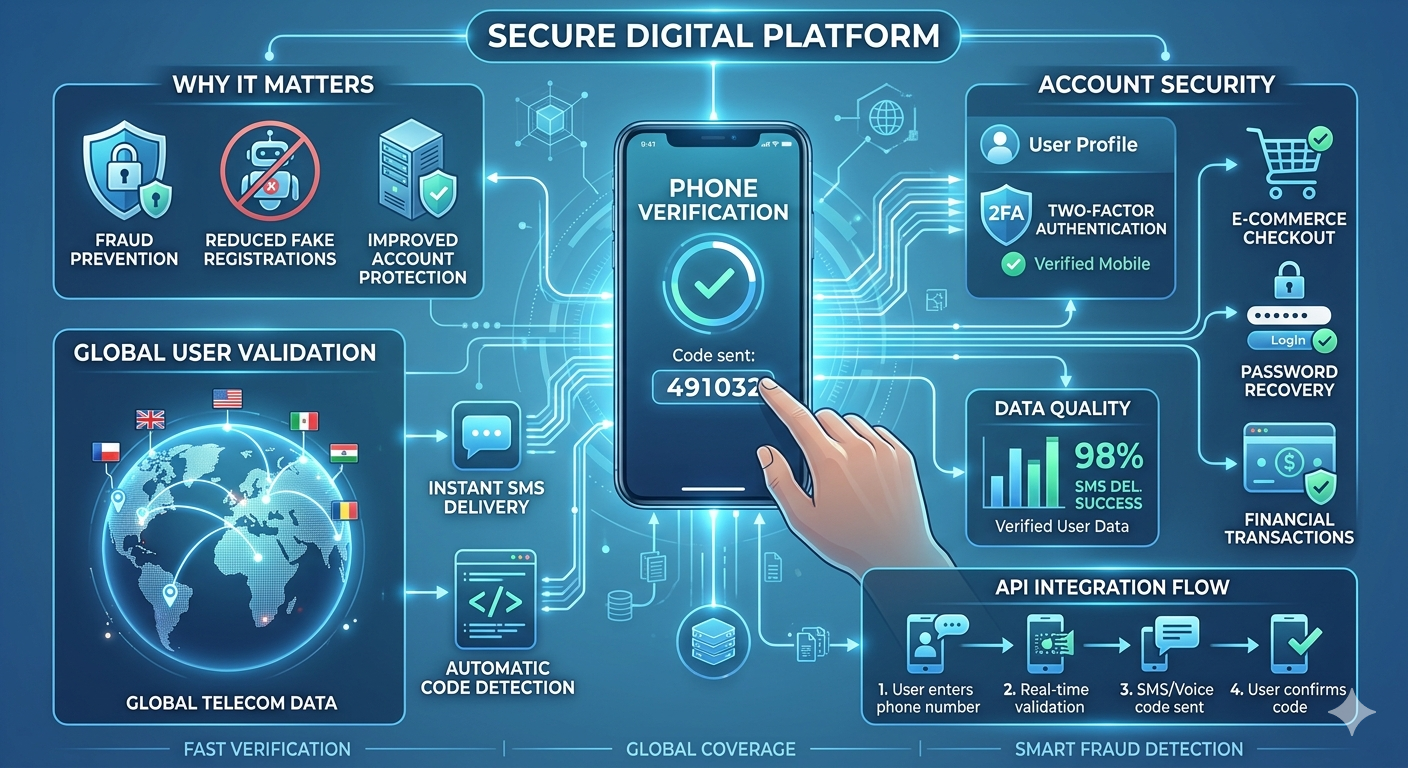
Digital platforms rely heavily on user trust. Whether someone is creating an account, making a payment, signing up for a service, or recovering a password, businesses need a reliable way to confirm that the user is genuine. This is where a phone verification api becomes an essential part of modern security systems.
Phone based verification has become common because mobile numbers are directly connected to real users. Unlike email addresses that can be created instantly in bulk, phone numbers are harder to fake at scale. This makes phone verification one of the most effective methods for preventing fraud, reducing fake registrations, and improving account protection.
For businesses that manage customer accounts, online transactions, or user authentication, integrating phone verification can improve both security and user confidence.
Why Phone Verification Matters for Online Platforms
Cybersecurity threats continue to grow across industries. Fake accounts, spam registrations, phishing attempts, and automated bot attacks affect websites and applications of all sizes. Many businesses lose valuable resources handling invalid users and suspicious activity.
Phone verification adds an additional layer of identity confirmation. When a user submits a mobile number, the system checks whether the number is valid and accessible. In many cases, the user must also confirm ownership through a one time password or verification code.
This simple process creates a major barrier against unauthorized access and automated abuse.
Businesses commonly use phone verification for:
- User account registration
- Password recovery
- Two factor authentication
- E commerce checkout validation
- Banking and fintech security
- Online booking systems
- Delivery and logistics confirmation
- Customer onboarding
The process helps ensure that real users are interacting with the platform.
How a Phone Verification API Works
A phone verification system usually operates through an API integration. The API connects your website or application to a verification service that validates mobile numbers in real time.
The process generally follows a few steps.
A user enters their phone number during signup or login. The API checks whether the number format is correct, active, and connected to a real telecom carrier. After validation, the platform sends a verification code through SMS or voice call.
The user then enters the code into the application. If the code matches, the system confirms ownership of the number.
Some advanced solutions also detect:
- Temporary or disposable numbers
- Virtual phone services
- Suspicious country codes
- High risk telecom operators
- Fraudulent activity patterns
This allows businesses to stop risky users before they gain access to the platform.
Reducing Fake Accounts and Spam
One of the biggest advantages of phone verification is the reduction of fake registrations. Many websites struggle with bots creating thousands of accounts for spam, scams, or abuse.
Without verification, attackers can easily automate account creation using random email addresses. Phone verification increases the difficulty because each account requires a working mobile number.
As a result, businesses can:
- Improve user quality
- Reduce spam activity
- Protect community platforms
- Prevent promotional abuse
- Maintain cleaner databases
This is especially important for social media platforms, online marketplaces, and SaaS applications where fake users can damage credibility and user experience.
Strengthening Account Security
Password based security alone is no longer enough. Many users reuse passwords across multiple platforms, making accounts vulnerable to hacking attempts.
Phone verification supports stronger authentication systems by confirming user identity during login or password recovery.
When combined with two factor authentication, phone verification creates an additional security step. Even if a password is compromised, unauthorized access becomes much harder because the attacker also needs access to the user’s mobile device.
This significantly reduces the risk of:
- Account takeovers
- Credential stuffing attacks
- Unauthorized password resets
- Fraudulent logins
For industries like banking, healthcare, and finance, this extra layer of protection is especially valuable.
Improving Customer Trust
Users are more likely to trust platforms that prioritize security. When customers see phone verification during registration or login, it signals that the business is actively protecting accounts and sensitive information.
Trust directly affects user retention and brand reputation.
A secure onboarding process can help businesses:
- Increase customer confidence
- Reduce fraud related complaints
- Build stronger user relationships
- Encourage safer online behavior
People want reassurance that their personal information is protected. Verification systems help provide that reassurance.
Supporting Global User Verification
Modern businesses often serve users across multiple countries. This creates challenges when handling different phone formats, telecom networks, and regional standards.
A reliable verification solution supports international phone validation and messaging. This allows businesses to verify users globally without creating friction in the signup process.
Global support is particularly useful for:
- International ecommerce stores
- Travel booking platforms
- Remote workforce applications
- Global fintech services
- Online education platforms
The ability to verify users from different regions improves scalability while maintaining security standards.
Preventing Fraud in Financial Transactions
Fraud prevention is one of the strongest reasons businesses adopt phone verification systems.
Financial fraud can occur during account creation, payment processing, or transaction approvals. By verifying phone ownership, businesses can reduce suspicious activity and confirm user identity before processing sensitive actions.
Many financial platforms use phone verification to:
- Confirm payment approvals
- Secure digital wallets
- Protect online banking access
- Verify loan applications
- Monitor suspicious login behavior
This additional verification step helps businesses minimize financial losses and maintain regulatory compliance.
Better Data Quality for Businesses
Invalid phone numbers can create operational issues for customer support, marketing campaigns, and transactional communication.
A verified phone number database improves communication efficiency because businesses know they are contacting real users.
This helps with:
- SMS delivery success
- Customer engagement
- Appointment reminders
- Order updates
- Support communication
High quality user data also improves marketing performance and reduces wasted communication costs.
Enhancing User Experience
Security systems should protect users without making the process frustrating. Modern verification APIs are designed to work quickly and smoothly.
Fast verification processes reduce signup abandonment and improve onboarding experiences.
Many APIs now support features like:
- Instant SMS delivery
- Automatic code detection
- Voice verification options
- Retry systems
- Multi language support
These features make verification easier while maintaining strong protection.
A good balance between security and convenience is important because users expect both safety and simplicity from online services.
Industries That Benefit the Most
Phone verification is useful across many sectors. Some industries depend on it more heavily because of higher fraud risks and stricter security requirements.
Ecommerce
Online stores use verification to prevent fake orders, reduce payment fraud, and confirm customer identity during checkout.
Fintech
Financial platforms rely on secure authentication to protect transactions and user accounts.
Healthcare
Healthcare applications use verification to protect sensitive patient information and maintain secure communication.
Online Education
Educational platforms use verification to confirm student registrations and reduce fake enrollments.
Delivery Services
Food delivery and logistics companies use phone verification to improve communication and delivery accuracy.
Choosing the Right Verification Solution
Not every verification service offers the same level of performance. Businesses should evaluate several factors before selecting a provider.
Key areas to consider include reliability, delivery speed, global coverage, security features, and integration flexibility.
A strong solution should provide:
- High SMS delivery rates
- Real time number validation
- Secure API infrastructure
- International support
- Fraud detection capabilities
- Easy developer integration
Businesses should also look for detailed reporting and monitoring features to track verification success and suspicious activity.
The Future of Phone Verification
As digital threats evolve, identity verification technologies will continue to improve. Businesses are already combining phone verification with artificial intelligence, behavioral analysis, and biometric authentication.
Future systems may include smarter fraud detection, risk scoring, and adaptive authentication methods that respond to unusual activity automatically.
Despite these advancements, phone based verification remains one of the most trusted and widely used methods for securing online platforms.
Its effectiveness, simplicity, and global accessibility make it an important security tool for businesses of all sizes.
Final Thoughts
Security is no longer optional for digital businesses. Users expect platforms to protect their accounts and personal information from fraud and unauthorized access.
A reliable phone verification system helps businesses reduce fake accounts, strengthen authentication, improve customer trust, and maintain cleaner user databases. It also supports better fraud prevention and smoother onboarding experiences.
By integrating a validate phone number api, businesses can create safer digital environments while delivering a more secure and trustworthy experience for their users.
FAQs
What is a phone verification API used for?
A phone verification API is used to confirm whether a phone number is real and accessible. Businesses use it for account registration, login security, password recovery, and fraud prevention.
Can phone verification help stop fake accounts?
Yes, phone verification helps reduce fake registrations by requiring users to verify ownership of a working mobile number before accessing a platform.
Is phone verification important for ecommerce websites?
Phone verification is very important for ecommerce businesses because it helps reduce fraudulent orders, improves customer communication, and secures user accounts during transactions.