
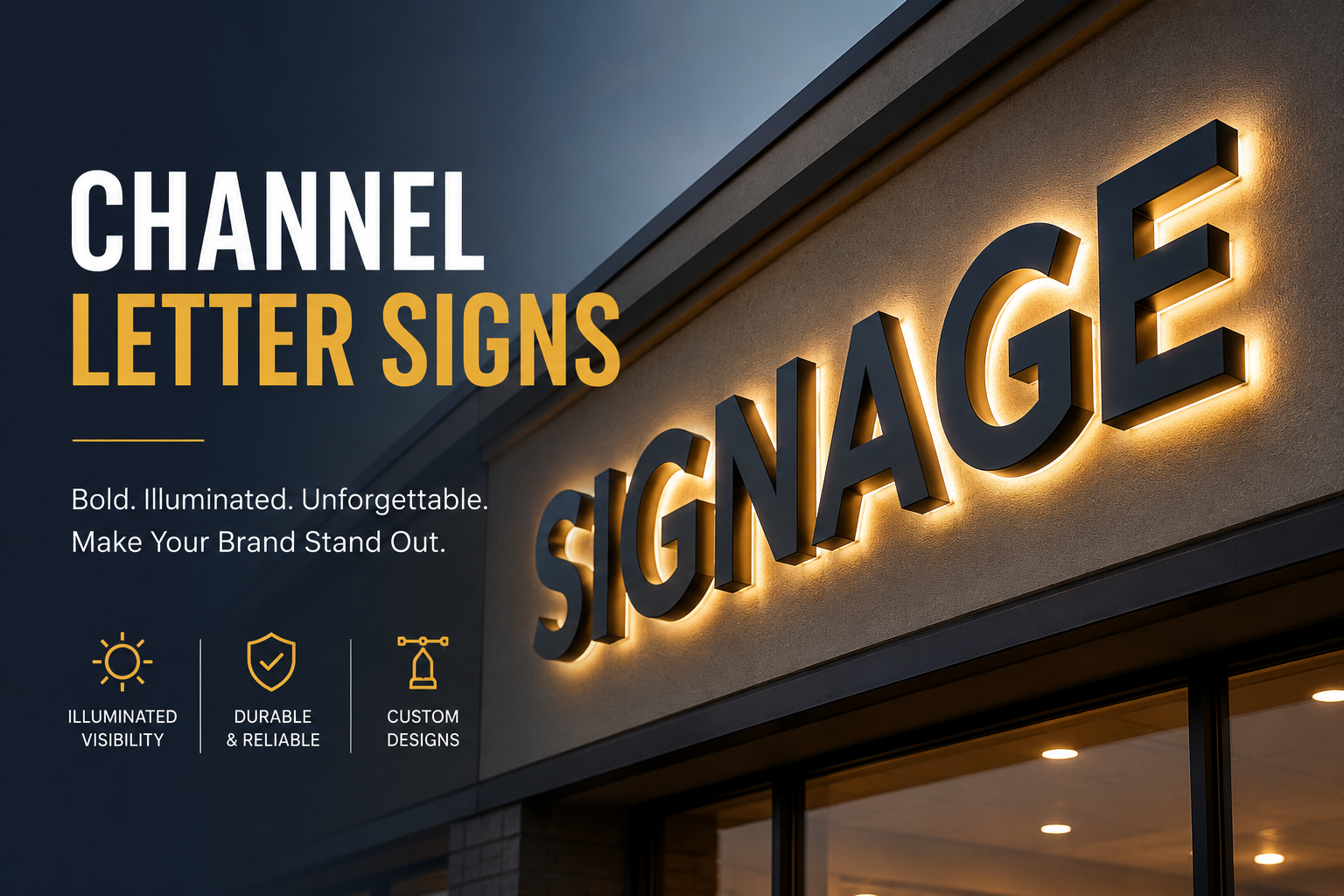
If you're a business owner looking to boost your storefront visibility, few signage solutions deliver results the way channel letter signs do. This guide breaks down everything you need to know — from types and materials to costs, benefits, and how to choose the right sign company.
What Are Channel Letter Signs?
Channel letter signs are three-dimensional, individually crafted letters or shapes typically mounted on a building's exterior wall or raceway. Each letter is a hollow metal form — most often aluminum — with a face made of acrylic that can be illuminated from within using energy-efficient LED modules.
Unlike flat painted signs or printed vinyl banners, channel letters have depth and dimension. That three-dimensional quality makes them visible from greater distances, readable in bright sunlight, and unmistakable at night when they glow with crisp, consistent light.
Walk through any shopping plaza or commercial corridor — the signs on the front of storefronts that light up with your favorite restaurant or retailer's name? Those are almost certainly channel letter signs.
Why Businesses Choose Channel Letter Signs
The popularity of channel letters isn't accidental. Businesses across industries — retail, healthcare, fitness, automotive, hospitality — rely on them for several key reasons:
Maximum Visibility, Day and Night Illuminated channel letters are visible in full daylight and continue working after dark, making them one of the few sign types that deliver value 24 hours a day. A customer driving past your shopping center at 8 PM sees your name just as clearly as someone walking past at noon.
Immediate Brand Recognition Channel letters can be fabricated to match your exact brand fonts, logo shapes, and colors. When a business installs channel letters that mirror their brand identity precisely, every customer who passes that storefront receives a brand impression — even if they don't stop that day.
Professionalism That Builds Trust There's a reason established businesses invest in dimensional signage. A well-designed, professionally installed channel letter sign communicates permanence, investment, and credibility. First-time customers often judge a business by its exterior before they ever walk through the door.
Long-Term Durability Quality channel letters are built with aluminum returns, UV-resistant acrylic faces, and weatherproof LED modules. In climates like Southern California — where intense sun exposure is a daily reality — the materials used in channel letter fabrication are specifically engineered to resist fading, corrosion, and moisture damage. A well-maintained set of channel letters can last 8 to 10 years or more.
Energy Efficiency Modern LED illumination consumes a fraction of the power that older neon signage required. For businesses that keep their signs lit through evening hours, this translates to meaningful energy savings over the sign's lifetime.
Types of Channel Letter Signs
Not all channel letters look or work the same way. Understanding the different styles helps businesses choose the right visual effect for their brand and building.
Front-Lit Channel Letters
This is the most common style. The LED modules sit inside the letter housing, and the light shines outward through the acrylic face. The result is a brightly lit letter face with a clean, crisp look. Front-lit letters work well for retail storefronts, restaurants, dental or medical offices, and any business that needs to be clearly readable from the street.
Halo-Lit (Reverse) Channel Letters
In reverse channel letters, the LEDs face toward the wall rather than outward. Light escapes around the back of the letter and illuminates the wall behind it, creating a soft glowing "halo" effect. This style is popular with upscale businesses, law firms, corporate offices, and luxury retailers because it conveys sophistication and restraint rather than high-energy brightness.
Combination-Lit Channel Letters
This style combines front illumination with a halo glow behind the letters. The result is striking — a brightly lit face with an atmospheric halo that dramatically increases nighttime visibility. Businesses that want maximum impact after dark often choose this option.
Open Face Channel Letters
Open face letters expose the LED or neon source directly, without an acrylic cover. This creates a more raw, retro, or industrial aesthetic. Bars, restaurants, entertainment venues, and businesses going for a vintage vibe frequently use open face channel letters.
Raceway Mounted Channel Letters
Letters are attached to a raceway — a long rectangular enclosure that houses the electrical wiring and transformers. Raceway mounting simplifies installation and reduces the number of wall penetrations required. Many landlords and property managers prefer raceway mounting because it causes less disruption to building surfaces and makes removal or replacement easier.
Backer Panel Channel Letters
In this configuration, letters are mounted on a decorative panel rather than directly to the wall. The backer panel adds a visual frame around the signage, and it allows for more design flexibility — contrasting colors, shaped cutouts, or panel materials that complement the building's architecture.
What Industries Use Channel Letter Signs?
Channel letter signs are used across virtually every commercial sector, but they're especially common in:
Retail and Shopping Centers — Storefront channel letters help individual retailers stand out within a busy plaza. When multiple tenants compete for the same customer's attention, bold, well-lit signage is a meaningful competitive advantage.
Restaurants and Hospitality — Food and beverage businesses often need signage that's visible to passing traffic late into the evening. Channel letters deliver that visibility reliably.
Healthcare and Medical Offices — Patients need to easily identify clinics, dental offices, urgent care centers, and specialty practices. Channel letters serve both branding and wayfinding purposes for medical facilities.
Corporate Offices and Professional Services — Law firms, financial services companies, and corporate headquarters often prefer halo-lit or combination-lit letters for a polished, refined appearance.
Fitness Centers and Gyms — High-energy, bold illuminated signage aligns well with gym branding and helps drive awareness for members and new prospects.
Automotive Dealerships — Large channel letters on dealership buildings serve as landmarks, helping customers and service clients locate facilities from a distance.
Apartment Communities — Residential properties use channel letters for entrance signage and leasing office identification, improving nighttime curb appeal and property visibility.
Materials: What Makes a Channel Letter Sign Last
The longevity and appearance of channel letter signs depend heavily on the materials used in their construction. Here's what goes into a quality sign:
Aluminum Returns — The sides of the letter (called the "return") are typically fabricated from aluminum. Aluminum is lightweight, resistant to rust and corrosion, and easy to powder-coat in any color. Thicker gauges and high-quality welds ensure structural stability over years of outdoor exposure.
Acrylic Faces — The front face of illuminated letters is usually acrylic, which transmits light evenly and can be cut and formed to match any font or shape. Premium acrylics use UV inhibitors that prevent yellowing and fading under prolonged sun exposure — a critical consideration in Southern California.
LED Illumination Modules — Modern channel letter LEDs are energy-efficient, produce minimal heat, and maintain brightness consistently over time. Quality LED modules carry ratings for 50,000 hours or more of operational life.
Powder-Coated Finishes — The aluminum components are powder-coated in your brand's colors. Quality powder coating resists chipping, fading, and environmental damage far better than liquid paint.
Weather-Resistant Electrical Components — Transformers, wiring, and electrical connections are sealed and rated for outdoor use, ensuring reliable operation through heat, rain, and humidity fluctuations.
The Channel Letter Sign Process: From Concept to Installation
Understanding what goes into a channel letter project helps business owners set realistic expectations and ask the right questions.
Consultation and Site Survey A sign professional will evaluate your building's façade, assess visibility angles, measure available signage space, and discuss your branding goals. For businesses in shopping centers or multi-tenant buildings, they'll also review any landlord-imposed sign criteria.
Custom Design Designers develop sign concepts that translate your logo, typography, and brand colors into a dimensional format. This stage includes decisions about letter height, lighting style, mounting method, and panel options. You'll review and approve artwork before fabrication begins.
Permit Applications Most municipalities require permits for illuminated exterior signage. A reputable sign company handles permit preparation and submission, including drawings and specifications that comply with local sign codes. Skipping this step — or working with a vendor who skips it — creates legal risk and potential fines.
Fabrication Once permits are approved, the letters enter production. Aluminum is cut and formed, acrylic faces are fabricated, LED modules are installed, and electrical components are assembled and tested. Quality fabrication shops use precision equipment and perform quality checks before installation.
Installation A professional installation crew mounts the letters, makes electrical connections, and ensures everything is properly sealed and aligned. After installation, the sign is tested to verify all LEDs are functioning and illumination is even.
How Much Do Channel Letter Signs Cost?
Channel letter sign pricing varies based on several factors, and it's one of the most common questions business owners ask. Here's what influences the investment:
Letter Size and Quantity — Larger letters require more material and more LEDs. A longer business name costs more than a shorter one.
Illumination Type — Combination-lit letters cost more than front-lit, and halo-lit letters with specialized back assemblies add to the price. Open face letters with exposed LEDs may be less expensive than fully enclosed options.
Mounting Method — Raceway mounting can be less expensive than direct (flush) mounting, which requires more wall penetrations and electrical runs. Backer panels add material costs but can simplify installation.
Installation Complexity — Multi-story buildings, difficult-access façades, or locations requiring permits from multiple agencies increase project costs.
Permitting Fees — These vary by city and sign size, but they're a real cost to budget for.
For most small-to-midsize storefronts, channel letter sign projects — including design, fabrication, permitting, and installation — typically range from a few thousand dollars to well over ten thousand, depending on the variables above. The investment generally pays for itself through increased visibility, brand impressions, and customer acquisition over the sign's multi-year lifespan.
Choosing the Right Sign Company
The quality of your channel letter sign is only as good as the company that designs, fabricates, and installs it. Here's what to look for:
In-House Fabrication — Companies that fabricate signs in their own shop have tighter quality control and faster turnaround than resellers who outsource production.
Permitting Experience — Working with a sign company that has established relationships with local permitting authorities saves time and avoids regulatory surprises.
Portfolio of Completed Projects — Ask to see examples of channel letter signs the company has installed. Consistent quality across different clients and industries is a good indicator.
Complete Project Management — The best sign companies handle everything from design through installation, giving you one point of contact and accountability throughout the project.
Local Market Knowledge — Sign companies serving a specific region understand local sign codes, permit timelines, and architectural norms. For businesses in Southern California, working with a sign company based in the area — with experience navigating city requirements in Corona, Irvine, Riverside, Anaheim, and neighboring communities — reduces friction and ensures code compliance.
Channel Letter Signs in Corona, CA: What to Know
Corona, CA businesses operating in commercial zones and retail plazas face sign regulations governed by the City of Corona's municipal sign code. Most illuminated exterior signs require permit approval, and applications typically require engineered drawings showing letter dimensions, electrical specifications, and mounting details.
Businesses in multi-tenant shopping centers also need to comply with landlord-provided sign criteria, which often specify maximum letter heights, allowable sign areas, and approved mounting locations. Experienced local sign companies are familiar with these requirements and can design signage that satisfies both municipal codes and landlord standards from the outset — avoiding redesigns and delays.
Frequently Asked Questions
How long do channel letter signs last? High-quality LED channel letters typically last 8 to 10 years or more with routine maintenance. LED modules themselves are rated for 50,000+ hours of operation, which means the structure and materials often determine the sign's practical lifespan more than the lighting components.
Are channel letter signs energy efficient? Yes. Modern LED illumination uses significantly less electricity than older neon or fluorescent systems. For businesses that operate illuminated signs through evening hours, LED channel letters can meaningfully reduce operating costs over the sign's lifetime.
Do I need a permit? In most California municipalities, illuminated exterior building signs require a permit. The permitting process involves submitting engineering drawings, paying applicable fees, and waiting for approval — which can take several weeks depending on the jurisdiction. A reputable sign company handles this process on your behalf.
Can the letters match my brand's exact colors? Yes. Acrylic faces are available in hundreds of standard colors, and they can be custom-tinted to match specific brand standards. Aluminum returns are powder-coated to your specification. A quality sign fabricator will request your brand color codes (Pantone, CMYK, or hex) and match them with precision.
What's the difference between raceway and flush mounting? Raceway mounting attaches letters to a long housing that sits on the wall surface, with all electrical components inside the raceway. Flush (direct) mounting attaches each letter individually, with wiring routed through the wall. Flush mounting creates a cleaner appearance but requires more wall penetrations. Many landlords specify which method is acceptable for their buildings.
Final Thoughts
Channel letter signs are one of the most effective long-term investments a business can make in its physical presence. They work around the clock, communicate professionalism, reinforce brand identity, and outperform flat signage in virtually every visibility metric.
The key is choosing the right style for your brand, working with a fabricator who uses quality materials, and partnering with a sign company that manages the full process — from design and permitting through installation and beyond.