
Quick Answer: Key Differences Every Beginner Should Understand
- Sailboats rely primarily on wind power and offer a quieter, more traditional cruising experience, while motor yachts use engines for speed and convenience.
- Sailboats generally have lower fuel costs but require more sailing knowledge and active handling compared to motor yachts.
- Motor yachts are easier for beginners due to simplified operation, consistent speed control, and reduced dependency on weather conditions.
- Sailboats often provide better long-term cruising efficiency, while motor yachts offer faster travel and more flexible itineraries.
- The right choice depends on whether the priority is relaxed sailing lifestyle or convenient, power-driven cruising comfort.
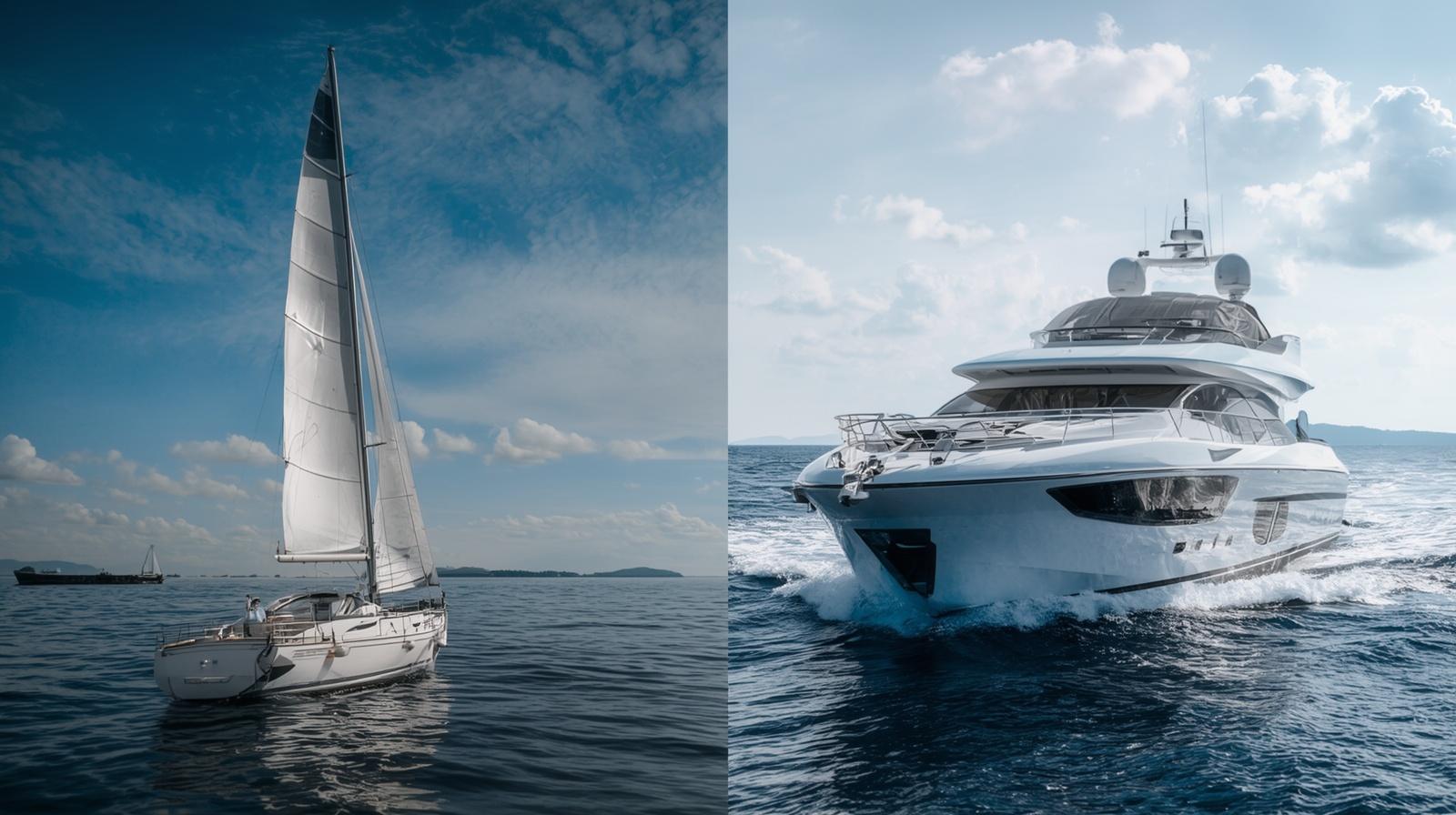
For many first-time buyers entering the boating world, one of the most important decisions is choosing between a sailboat and a motor yacht.
After more than a decade of working with new owners and brokerage clients, I have seen this decision shape not only how people use their boats, but also how often they actually enjoy them.
This beginner boat selection guide is designed to help clarify the real differences in operation, cost, comfort, and lifestyle expectations between the two most common yacht categories.
In reality, there is no universally “better” option. Instead, the right choice depends on how you plan to use your boat, how much time you want to spend learning seamanship skills, and what kind of experience you want on the water.
Some owners are drawn to the quiet, wind-powered rhythm of sailing, while others prefer the simplicity and predictability of motorized cruising.
Understanding these differences early helps prevent costly misalignment between expectations and actual ownership experience.
Key Differences Between Sailboats and Motor Yachts
The most fundamental difference between sailboats and motor yachts is propulsion.
Sailboats primarily use wind as their driving force, supplemented by auxiliary engines for docking and low-speed maneuvering. Motor yachts rely entirely on engines for propulsion.
This difference influences almost every aspect of ownership, including:
- Speed and travel time
- Fuel consumption
- Maintenance complexity
- Skill requirements
- Cruising style
Sailboats tend to move slower but offer a more immersive connection to the marine environment. Motor yachts prioritize convenience and time efficiency.
Another major difference is onboard layout.
Sailboats often have:
- Narrower hull designs
- More compact interiors
- Functional living spaces optimized for balance and weight
Motor yachts typically feature:
- Wider beam widths
- Larger salons
- More luxurious cabins
- Greater storage capacity
In practical brokerage experience, sailboats often attract owners who enjoy hands-on sailing and longer passages, while motor yachts appeal to those prioritizing comfort and ease of use.
Both vessel types can be suitable for leisure cruising, but the experience they deliver is fundamentally different.
Ease of Handling for First-Time Boat Owners
For beginners, ease of handling is often the most decisive factor.
Motor yachts are generally easier to operate because they:
- Do not require sail trimming skills
- Offer direct throttle control
- Provide predictable maneuverability
- Respond consistently to steering inputs
Modern motor yachts often include joystick docking systems and autopilot features, which significantly reduce stress during marina operations.
Sailboats, on the other hand, require learning several core skills:
- Understanding wind direction and sail trim
- Managing tacking and jibing
- Balancing sail area with weather conditions
- Coordinating crew communication
While modern sailboats, including many New Sailboats, are becoming increasingly user-friendly, there is still a learning curve that should not be underestimated.
In real-world training situations, most beginners become comfortable handling a motor yacht within a few outings, whereas sailboat proficiency often requires more time and practice.
However, many sailors find the learning process rewarding because it builds deeper seamanship knowledge.
Cost Comparison: Purchase and Maintenance
Cost is another important consideration for first-time buyers.
In general:
- Sailboats often have lower fuel costs
- Motor yachts typically consume more fuel but require less sailing skill investment
- Maintenance costs depend more on size and systems than propulsion type alone
Sailboats may appear cheaper initially, but they can still involve significant maintenance for rigging, sails, and keel systems.
Motor yachts may have higher fuel expenses, but they often avoid sail replacement costs and rigging inspections.
Key cost factors include:
- Engine type and hours
- Hull material
- Electronics systems
- Storage location
- Frequency of use
From a brokerage perspective, total ownership cost differences often become clearer after the first year rather than at the point of purchase.
Speed, Range, and Cruising Experience
Speed and cruising style are where the differences become most noticeable.
Motor yachts provide:
- Higher cruising speeds
- Faster route completion
- Greater schedule flexibility
Sailboats provide:
- Slower, more relaxed travel
- Longer passage experiences
- Greater dependence on weather conditions
In practical terms, a motor yacht can complete a weekend trip in hours, while a sailboat may turn the same journey into a full-day experience.
This difference is not necessarily better or worse—it simply reflects different philosophies of time on the water.
Some owners prefer efficiency and destination-focused travel. Others enjoy the journey itself as part of the experience.
Comfort and Onboard Living Conditions
Comfort onboard is where sailboats and motor yachts diverge most clearly in daily use.
Motor yachts generally provide:
- Larger cabins and wider berths
- More spacious salons for socializing
- Better insulation from motion in calm waters
- Greater headroom and interior volume
- Larger galleys and refrigeration capacity
Sailboats, by contrast, prioritize functional efficiency:
- Narrower interior layouts
- More compact but practical living spaces
- Efficient use of storage compartments
- Reduced interior noise from engines
From real-world brokerage experience, families and social cruisers often feel more immediately comfortable on motor yachts, especially for overnight stays or entertaining guests.
Sailboats, however, offer a different kind of comfort—one centered around simplicity, natural airflow, and a closer connection to the sea. Many long-term sailors actually prefer the quieter, less mechanically complex onboard environment.
Motion comfort is another key factor. Sailboats heel under wind power, which some passengers enjoy and others find challenging. Motor yachts generally maintain a more level cruising posture, especially in calm or moderate sea states.
Ultimately, comfort is subjective. It depends on whether the user values spacious luxury or a more traditional sailing atmosphere.
Which Boat Type Is Best for Beginners?
For most first-time owners, motor yachts tend to be the more practical starting point.
They offer:
- Easier handling and docking
- Faster learning curve
- Less dependency on weather conditions
- More predictable cruising behavior
- Reduced need for advanced seamanship skills
This makes motor yachts particularly attractive for owners who want to focus on leisure rather than learning complex sailing techniques.
However, sailboats remain an excellent choice for beginners who are:
- Interested in developing sailing skills
- Comfortable investing time in training
- Drawn to wind-powered cruising culture
- Looking for lower fuel dependence
In practice, I have seen two very different beginner profiles:
- Lifestyle-focused owners who want convenience and family comfort often succeed faster with motor yachts.
- Skill-focused owners who enjoy hands-on sailing often find sailboats more rewarding over time.
There is also a middle ground. Many modern New Sailboats are designed with simplified sail handling systems, making them significantly more beginner-friendly than older models.
The most important factor is not the boat itself, but whether it matches how the owner realistically plans to spend time on the water.
A mismatch—such as buying a performance sailboat without interest in learning sailing mechanics—often leads to underuse or frustration.
Conclusion
Choosing between a sailboat and a motor yacht is less about which option is objectively better and more about how each aligns with your intended boating lifestyle.
Motor yachts provide simplicity, speed, and comfort with a shorter learning curve, making them ideal for beginners who want immediate enjoyment on the water.
Sailboats offer a more immersive and skill-based experience, rewarding those who are willing to learn wind navigation and embrace a slower cruising rhythm.
From long-term industry experience, the most satisfied owners are those who choose based on real usage patterns rather than romantic expectations.
When the vessel matches the owner’s lifestyle, boating becomes consistently enjoyable rather than occasionally complicated.
FAQ
Q1: Are sailboats harder to operate than motor yachts?
A1: Yes. Sailboats require wind management skills, sail trimming, and more active decision-making, while motor yachts are generally simpler to control for beginners.
Q2: Which is cheaper to own, a sailboat or motor yacht?
A2: Sailboats often have lower fuel costs, but overall ownership depends on size, maintenance, storage, and equipment, not just propulsion type.
Q3: What is better for beginners in boating?
A3: Motor yachts are usually better for beginners due to easier handling and shorter learning curves, though sailboats suit those wanting to learn sailing skills.