
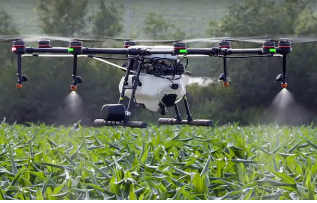
For centuries, farming was a practice defined by labor, intuition, and the endurance of the land. But walk onto a progressive farm today, and you are just as likely to hear the high-pitched hum of a rotor blade as you are the rumble of a tractor.
Agricultural drones, or Unmanned Aerial Vehicles (UAVs), have officially moved from the realm of "futuristic concept" to "essential farm equipment." As the global population climbs toward an estimated 10 billion by 2050, farmers are under immense pressure to produce more food with fewer resources. Drones are providing the precision, efficiency, and data-driven insights necessary to meet this challenge.
In this post, we’ll explore how this aerial technology is fundamentally reshaping agriculture, from the soil up to the clouds.
1. Precision Mapping and Crop Monitoring
The most immediate benefit of drone technology is the ability to see the "big picture." In the past, assessing the health of a large field meant walking miles of rows or relying on low-resolution satellite imagery that might be obscured by clouds.
Drones equipped with high-resolution RGB cameras and multispectral sensors can now capture a bird’s-eye view of an entire operation in minutes. These images are stitched together to create orthomosaic maps, which provide farmers with a level of detail that standard satellite imagery cannot match.
The Power of Multispectral Imaging
By utilizing sensors that detect wavelengths of light invisible to the human eye, drones can calculate the Normalized Difference Vegetation Index (NDVI). This index measures how plants reflect light, helping farmers identify:
- Nutrient Deficiencies: Spotting "stressed" crops before the human eye can detect a change in color.
- Pest and Disease Outbreaks: Identifying isolated patches of infestation before they spread across the field.
- Water Irrigation Issues: Detecting clogged nozzles or dry spots that could lead to crop failure.
2. Precision Spraying and Application
Traditionally, spraying fertilizers or pesticides was a "one size fits all" process. Equipment like tractors would drive through a field, applying chemicals uniformly across the entire acreage. This is not only inefficient but environmentally taxing, as it often leads to chemical runoff and unnecessary waste.
Agricultural drone spraying has revolutionized this process. Equipped with precision nozzles and GPS mapping, these UAVs can perform variable-rate application.
- Spot-Spraying: Instead of spraying a whole field, the drone can be programmed to spray only the specific areas identified as needing treatment.
- Accessing Difficult Terrain: For farmers working on sloped, hilly, or muddy terrain where tractors struggle, drones act as an agile replacement.
- Reduced Soil Compaction: Ground-based machinery compresses the soil, which can hinder root growth and water absorption. Drones eliminate this issue entirely by doing the heavy lifting from the air.
3. Seed Planting and Reforestation
Believe it or not, we are now entering the age of "drone-enabled reforestation." Startups and agricultural researchers have developed systems where drones fire seed pods into the soil with pneumatic force.
These pods contain not just seeds, but the necessary nutrients and protective substances to give the plant a head start. This process is significantly faster and cheaper than manual planting. It has proven especially useful in post-fire restoration efforts and in planting cover crops during seasons when the soil is too wet to support a tractor.
4. Livestock Management and Security
Agriculture isn't just about crops. For ranchers, keeping track of livestock across hundreds or thousands of acres is a logistical nightmare.
Thermal imaging drones have become an invaluable tool for modern shepherds. A thermal camera can easily pick up the heat signatures of cows, sheep, or even predators hiding in dense brush, even in the dark or during low-visibility conditions. Furthermore, drones can check on fence lines, monitor water troughs, and ensure that livestock are grazing in designated areas, saving hours of manual labor every week.
5. The Data Advantage: Improving Long-Term Yields
The true value of a drone lies in the data it generates. When a farmer collects drone footage over several seasons, they create a digital history of their farm.
This longitudinal data allows for better decision-making:
- Yield Prediction: By analyzing crop density and growth rates, farmers can forecast harvest volumes with much higher accuracy, allowing them to better manage their supply chain and market timing.
- Input Optimization: By knowing exactly where fertilizer is needed, farmers can reduce their overhead costs, leading to more sustainable profit margins.
- Compliance and Reporting: In an era of strict environmental regulations, having detailed drone records provides proof of responsible chemical application and water usage.
The Challenges: Why Isn't Every Farm a Drone Farm?
While the benefits are clear, we must acknowledge the hurdles to widespread adoption.
- Regulatory Hurdles: Civil Aviation Authorities (like the FAA in the U.S.) have strict rules regarding flight altitude, line-of-sight, and commercial licensing. Navigating these requirements can be daunting for small farmers.
- Training and Expertise: Learning to fly a drone is one thing—learning to interpret the raw multispectral data it produces is another. Many farmers now enlist the help of "ag-tech" consultants to bridge this knowledge gap.
- Battery Life and Payload: While battery technology is improving, current drones still have limited flight times. Large-scale farming requires multiple batteries and logistical planning to ensure continuous operation.
The Future: Autonomous Farming
We are currently moving toward a future of fully autonomous agricultural ecosystems. Imagine a "swarm" of drones communicating with a central AI system, where a ground sensor detects a nutrient deficiency, sends a signal to a drone, which then immediately launches to perform a targeted spot-spray—all without human intervention.
We are not quite at the point where robots do everything, but the trend is irreversible. Drones are transitioning from being a "cool gadget" to a fundamental part of the toolkit.
Final Thoughts
Agriculture is undergoing its most significant evolution since the invention of the tractor. By allowing farmers to act with precision rather than broad-stroke guesswork, drones are making farming more efficient, more profitable, and—importantly—more sustainable.
The sky is no longer the limit for modern agriculture; it is the new frontier. Whether you are a small plot holder or managing a massive industrial operation, integrating aerial technology is no longer just an advantage—it is the path to ensuring a prosperous harvest for the future.