
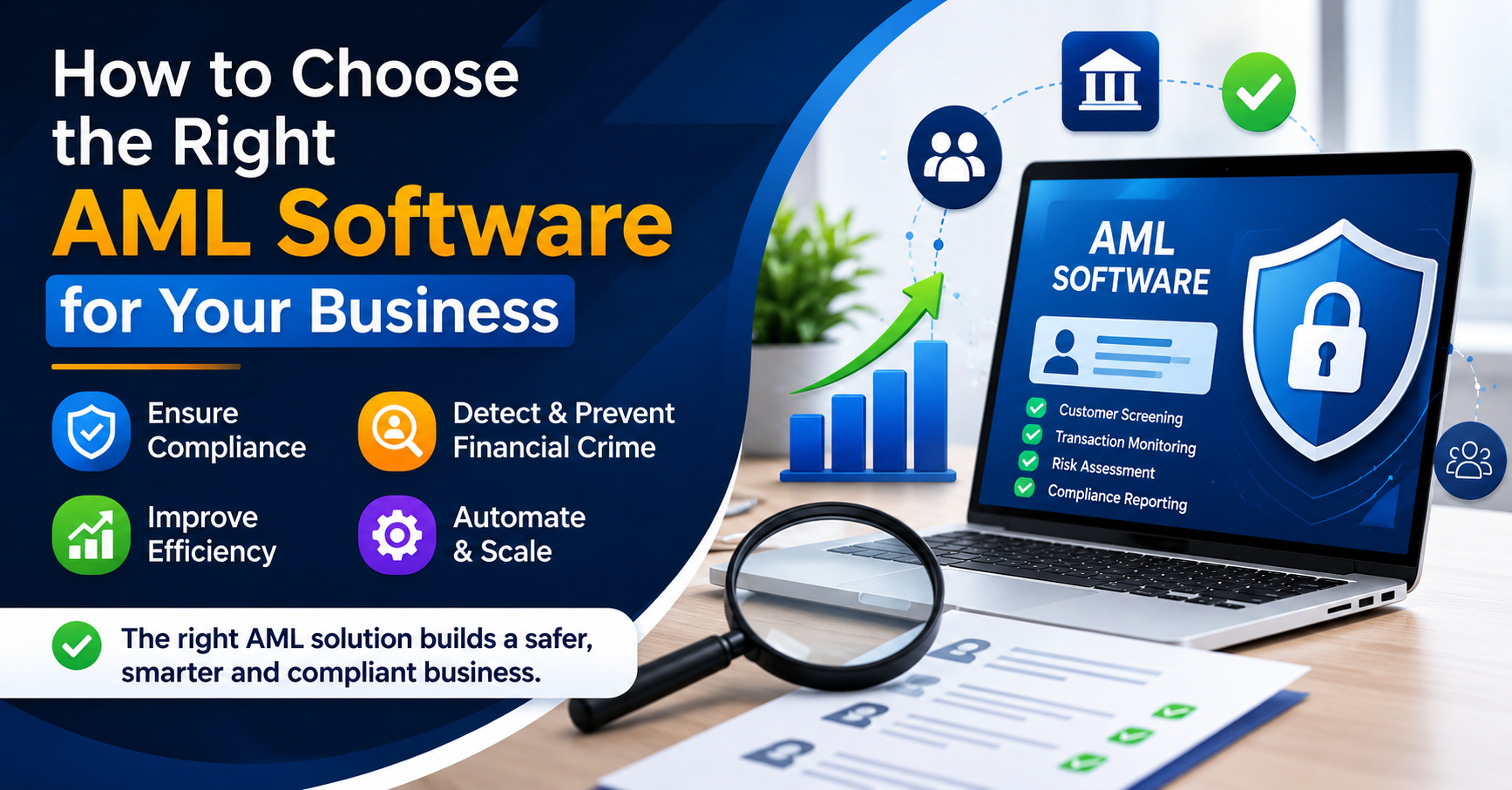
Selecting the right Anti-Money Laundering (AML) solution is one of the most important decisions for financial institutions, fintech companies, insurance providers, payment gateways, cryptocurrency platforms, and other regulated businesses. As financial crimes become more sophisticated and regulatory requirements continue to evolve, businesses need AML systems that can detect suspicious activities accurately while supporting operational efficiency and scalability.
Choosing the wrong AML solution can lead to high false positives, compliance gaps, inefficient investigations, and increased regulatory risks. The right AML platform should align with your business model, transaction volume, customer onboarding process, and compliance requirements. Modern AML systems are expected to support real-time monitoring, automated screening, risk scoring, and regulatory reporting.
Businesses increasingly rely on AML Software to automate transaction monitoring, sanctions screening, customer due diligence, suspicious activity detection, and case management. When selecting AML software, organizations should focus on scalability, integration capabilities, automation features, regulatory support, and ease of use. A strong AML platform not only improves compliance performance but also strengthens fraud prevention and operational productivity.
The ideal AML solution should support both current compliance needs and future business growth. Organizations must therefore evaluate software vendors carefully before making a long-term investment.
One of the first factors businesses should consider when choosing AML software is data quality management. AML systems are only as effective as the quality of data they process. Poor-quality customer data can weaken transaction monitoring systems and increase false positives.
To improve data accuracy, many organizations integrate Data Scrubbing Software into their compliance infrastructure. Data scrubbing tools clean, validate, and standardize customer information before it enters AML systems. This helps businesses maintain accurate customer profiles and improve screening performance.
When evaluating AML solutions, organizations should ensure the platform supports automated data validation and integration with external data quality tools. Strong data management capabilities improve customer onboarding, risk assessment, and suspicious activity detection.
Financial institutions handling large customer databases should especially prioritize AML systems with strong data quality and integration features.
Businesses operating in India or managing Indian customer data must also consider local compliance requirements and regulatory frameworks. AML regulations in India continue to evolve rapidly as digital transactions and fintech adoption increase.
To strengthen compliance operations, many organizations implement AML Screening Software India solutions that support real-time sanctions screening, watchlist monitoring, and customer risk profiling. These systems help businesses identify high-risk customers efficiently while maintaining compliance with local regulatory standards.
When selecting AML software in India, organizations should evaluate whether the solution supports local KYC requirements, regulatory reporting formats, and integration with Indian compliance systems. Real-time screening capabilities and automated risk scoring are especially important for businesses processing high transaction volumes.
Scalable and API-driven AML platforms are particularly valuable for fintech companies and digital payment providers operating in India’s rapidly growing financial ecosystem.
Another critical consideration when selecting AML software is customer data management. Duplicate customer records can create repeated alerts, distort risk assessments, and reduce monitoring efficiency.
To solve this issue, many organizations implement Deduplication Software to identify and merge duplicate customer profiles across systems. Businesses should choose AML platforms that either include built-in deduplication capabilities or integrate easily with external deduplication systems.
Effective deduplication improves customer visibility and enables compliance teams to maintain a unified customer profile across multiple systems. This strengthens suspicious activity detection and reduces operational inefficiencies.
Organizations with complex infrastructures or multiple data sources should especially prioritize AML systems capable of centralized customer data management.
In addition to enterprise-level systems, many businesses rely on a dedicated Deduplication Tool to continuously monitor databases for duplicate records and inconsistencies. These tools improve customer matching accuracy and help maintain clean customer profiles over time.
When evaluating AML vendors, organizations should consider how effectively the platform handles duplicate detection, customer matching, and data synchronization. Businesses processing large transaction volumes require systems capable of real-time customer data consolidation.
Strong deduplication features improve operational efficiency and help compliance teams investigate suspicious activities more effectively. Businesses that fail to address duplicate data issues often experience inefficient workflows and weaker AML performance.
Integrated data management capabilities are therefore an essential part of selecting the right AML software.
Another important factor in AML software selection is ongoing data maintenance and quality management. Customer information changes frequently, and outdated records can reduce monitoring accuracy and increase compliance risks.
To maintain long-term data quality, organizations use Data Cleaning Software to continuously validate, update, and standardize customer records. AML systems that integrate with automated data cleaning tools provide more reliable monitoring and better regulatory reporting accuracy.
Businesses should evaluate whether the AML platform supports real-time data synchronization, automated updates, and continuous validation processes. These features help reduce false positives and improve suspicious activity detection.
Organizations handling large customer databases or operating across multiple regions especially benefit from strong data cleaning and governance capabilities.
Regulatory reporting capabilities are another major consideration when choosing AML software. Businesses must comply with increasingly strict KYC and AML reporting requirements while maintaining operational efficiency.
To simplify compliance reporting, many organizations implement CKYCRR 2.0 Upload Software to automate KYC record uploads and validation processes. When selecting AML systems, businesses should ensure the platform supports automated reporting workflows and integration with centralized regulatory databases.
Automated reporting capabilities reduce manual effort, improve submission accuracy, and strengthen regulatory compliance. Businesses should also evaluate whether the AML software provides detailed audit trails, case management tools, and investigation workflows.
As compliance requirements continue to evolve, scalable reporting automation will become increasingly important for businesses across all financial sectors.
Key Factors to Consider When Choosing AML Software
Businesses should evaluate AML software based on the following factors:
1. Regulatory Compliance Support
Ensure the software supports local and international AML regulations.
2. Real-Time Transaction Monitoring
The system should detect suspicious activities instantly.
3. Scalability
Choose a platform that can grow with your business and transaction volumes.
4. Integration Capabilities
The software should integrate with banking systems, CRMs, APIs, and KYC platforms.
5. Automation Features
Automated screening, reporting, and alert generation improve operational efficiency.
6. Data Management
Strong data cleaning, scrubbing, and deduplication capabilities are essential.
7. User-Friendly Interface
Compliance teams should be able to use the platform efficiently without excessive complexity.
8. Audit and Reporting Features
The system should support detailed audit trails and regulatory reporting requirements.
9. AI and Risk Scoring
Advanced analytics and AI-driven risk profiling improve monitoring accuracy.
- Vendor Support and Expertise
Choose vendors with strong industry experience and reliable customer support.
Conclusion
Choosing the right AML solution is essential for building an effective and scalable compliance framework. Businesses must evaluate AML software based on regulatory requirements, integration capabilities, scalability, automation, and data management performance.
Technologies such as AML Software, Data Scrubbing Software, AML Screening Software India, Deduplication Software, Deduplication Tool, Data Cleaning Software, and CKYCRR 2.0 Upload Software help organizations improve compliance efficiency, strengthen transaction monitoring, and reduce financial crime risks.
By selecting AML solutions that align with their operational needs and future growth plans, businesses can improve compliance accuracy, enhance fraud prevention capabilities, and build stronger and more secure financial ecosystems.