
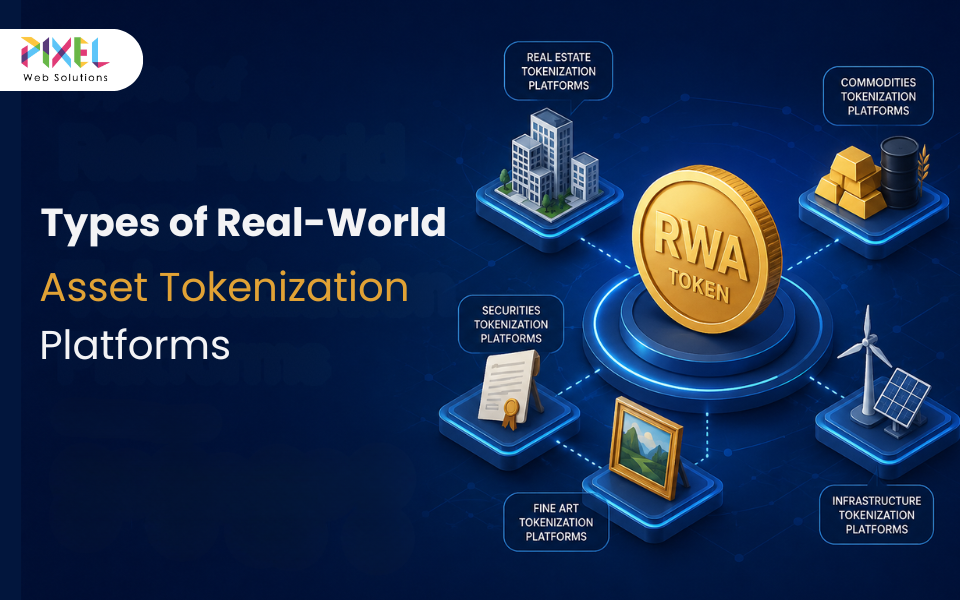
Blockchain tech is kind of reshaping how companies handle and trade assets. One of the more important innovations in the Web3 world is RWA tokenization, or real-world assets, stuff like that. So, from real estate, commodities, all the way to intellectual property and energy projects, businesses are basically turning physical holdings into digital tokens, and they do it with blockchain technology.
An RWA Tokenization Platform can help companies digitize their assets, boost liquidity, and open up safer investment ways. As blockchain adoption keeps moving forward, it’s important to really understand the various kinds of tokenization platforms for real-world assets, especially for startups, large enterprises, and investors.
What Is an RWA Tokenization Platform?
An RWA (Real-World Asset) tokenization platform is a kind of software and infrastructure that turns physical or more traditional financial assets, like real estate, gold, or even government bonds, into digital tokens on a blockchain. So basically, it helps to make these assets split up into smaller fractional shares, then people can trade them globally, without the usual middlemen or traditional intermediaries.
By using smart contracts, businesses can automate transactions, improve transparency, and reduce intermediaries. This makes asset management more secure, efficient, and accessible.
Different Types of Real-World Asset Tokenization Platforms
1. Real Estate Tokenization Platforms
Real estate tokenization platforms allow property owners to divide assets into digital shares. Investors can purchase fractional ownership in commercial buildings, apartments, or luxury properties.
These platforms improve liquidity and make real estate investments accessible to global investors.
2. Commodity Tokenization Platforms
Platforms that tokenize commodities transform various assets such as gold, silver, oil, and agricultural goods into digital tokens that operate on blockchain technology.
These asset-backed tokens provide secure ownership, transparent trading, and improved liquidity for investors.
3. Equity and Securities Tokenization Platforms
These platforms tokenize company shares, stocks, and financial securities using blockchain technology.
Equity tokenization enables faster settlements, automated compliance, and cost-efficient fundraising through security token offerings (STOs).
4. Art and Collectibles Tokenization Platforms
Art tokenization platforms digitize ownership of rare artwork, luxury watches, collectibles, and memorabilia.
Fractional ownership allows multiple investors to own shares of high-value collectibles while blockchain ensures authenticity and transparency.
5. Debt and Bond Tokenization Platforms
Debt and bond tokenization platforms convert traditional debt instruments into digital blockchain assets.
These platforms automate interest payments, improve transparency, and simplify fundraising for governments and enterprises.
6. Intellectual Property (IP) Tokenization Platforms
IP tokenization platforms help creators tokenize patents, copyrights, trademarks, and music royalties.
Blockchain-based ownership records allow creators to automate royalty distribution and monetize digital assets globally.
7. Infrastructure and Energy Tokenization Platforms
These platforms tokenize renewable energy projects, utilities, and infrastructure developments.
Investors can participate in solar farms, smart city projects, and green energy investments through secure digital tokens.
Key Benefits of RWA Tokenization Platforms
RWA tokenization platforms offer several advantages for businesses and investors, including:
- Increased liquidity
- Fractional ownership opportunities
- Global investment accessibility
- Enhanced transparency and security
- Faster blockchain-based transactions
- Reduced operational costs
These benefits are, kinda driving the fast growth of blockchain asset tokenization across different industries. Many businesses that want to bring out a secure and scalable solution often team up with a seasoned RWA Tokenization Platform development company, so it can streamline the build and make sure the blockchain infrastructure is regulation-ready.
Future of RWA Tokenization Platforms
The future of taking real-world assets and turning them into tokens looks pretty promising. Technologies like AI, DeFi integration, and multi-chain interoperability are expected to improve tokenization platforms further.
As institutional adoption really ramps up, more companies are looking at blockchain approaches to modernize how ownership works and how investment systems behave. It feels like real-world asset tokenization is about to become a big slice of the global digital economy within the next few years.
Conclusion
Real-world asset tokenization is kind of reshaping the way assets are actually owned, traded, and managed. Think about real estate and commodities, but also intellectual property and infrastructure different kinds of RWA tokenization platforms are opening new kinds of possibilities for businesses as well as investors.
As blockchain adoption keeps climbing, companies can use these tokenization platforms to boost liquidity, add more visibility, and make investing a bit more reachable. Honestly, this feels like a good moment to dig into what blockchain-powered asset tokenization solutions can really do.