
Navigating Official Document Translation in Malaysia: A Practical, Stress-Free Guide
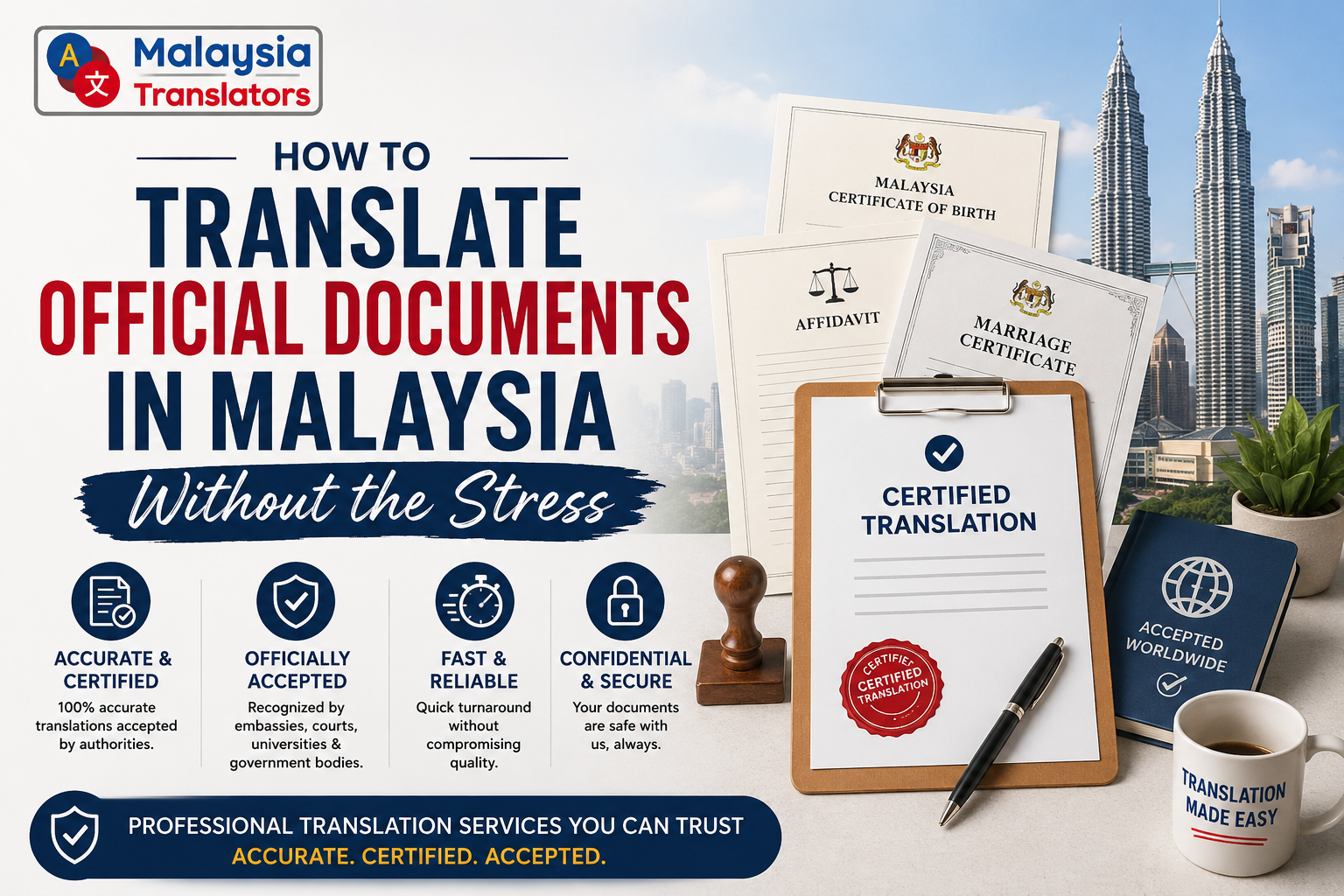
Dealing with paperwork is rarely anyone’s idea of a good time. Whether you are planning to study overseas, expanding your business into new international markets, or trying to secure a spouse visa, there is always a mountain of documents waiting for you. It gets even more complicated when those documents are written in Bahasa Melayu or Chinese, but the department or embassy receiving them strictly demands English. A simple DIY translation using online tools won't cut it here; official institutions require paperwork that holds legal weight.
When you start looking into the process, you will quickly realize that standard translations are rejected by immigration authorities almost immediately. To avoid these setbacks, working with a reputable certified translation agency Malaysia is the safest way to ensure your paperwork gets accepted. Missing a deadline just because a single stamp is missing or a legal term was translated incorrectly can throw off your entire timeline. This guide is designed to break down exactly how the translation process works in Malaysia so you can get your documents sorted correctly the first time.
Why Standard Translations Don't Work for Government Bodies
It is a common misconception that anyone who speaks two languages can translate an official document. While a bilingual friend might help you understand a personal letter, government departments, courts, and foreign embassies operate on strict legal frameworks. They require an official guarantee that the translated document is a completely accurate representation of the original text.
In Malaysia, this means the translation must come with a formal certification. This certification usually involves a signed declaration by the translator or agency, an official stamp, and a clear statement of accuracy. Without these elements, government officers at Wisma Putra (the Ministry of Foreign Affairs) or the Immigration Department (JIM) cannot verify the validity of your papers.
The consequences of using an uncertified translation go beyond simple rejection. It can lead to months of administrative delays, extra processing fees, and an incredible amount of avoidable stress. Official entities need to see a clear chain of accountability before they can approve your application.
Navigating the Wisma Putra Attestation Process
If you are sending Malaysian documents abroad, the translation is often just the first step. Most foreign governments require your documents to go through a process called attestation or legalization at Wisma Putra in Putrajaya.
The typical workflow looks like this:
- Step 1: You obtain the original official document from the relevant Malaysian government department.
- Step 2: The document is translated into English by a certified professional translator.
- Step 3: The translated version is verified and stamped by the translation agency.
- Step 4: You take both the original and the certified translation to Wisma Putra for final legal attestation.
Skipping any of these steps can result in your papers being sent back. Knowing this sequence beforehand saves you multiple trips to government offices and ensures you don't waste time in queues only to be told you lack the proper stamps.
Dealing with Personal Identification Documents
Among all the paperwork you might need to handle, personal identification documents are the most common yet the most scrutinized. Minor mistakes in your name, date of birth, or place of registration can halt an entire visa application process.
For example, if you are migrating or enrolling a child in an international school, getting an accurate JPN birth certificate translation is absolutely crucial. The National Registration Department (Jabatan Pendaftaran Negara or JPN) issues these certificates with specific administrative terminology and layout structures. A professional translator knows how to maintain the exact formatting—often referred to as a mirror layout—so that foreign officials can easily cross-reference the translated version with your original document.
This level of precision applies across the board. Marriage certificates, divorce decrees, and change-of-name documents all carry specific legal weight. If a translator misinterprets a single clause or misspells a proper noun, it creates inconsistencies across your file that look highly suspicious to immigration reviewers.
The Complexities of Corporate and Legal Translation
While personal documents are relatively straightforward in terms of length, corporate and legal paperwork presents a completely different challenge. If you run a business in Malaysia and are looking to form foreign partnerships or pitch to international investors, you will need to translate corporate profiles, financial audits, board resolutions, and legal contracts.
Commercial translation requires a deep understanding of corporate law and accounting standards. A translator working on financial statements needs to know the exact English equivalents for Malaysian accounting terms used by the Companies Commission of Malaysia (SSM).
Furthermore, legal contracts contain highly specific jargon. A literal, word-for-word translation can alter the legal meaning of a contract clause entirely, potentially exposing your company to significant legal risks. Professional translators focus on contextual accuracy, ensuring that the legal intent of the original text remains completely intact in the target language.
Common Mistakes to Avoid in the Document Translation Process
When people are in a hurry to get their paperwork done, they often fall into common traps that end up costing them more time and money. Being aware of these pitfalls can save you a lot of trouble down the line.
1. Waiting Until the Last Minute
Translation takes time, especially when quality checks and certifications are involved. Rushing a translator increases the likelihood of typos, and express services often come with premium fees. Give yourself a buffer of at least a few days before your official submission deadline.
2. Not Confirming the Exact Requirements
Every embassy and government body has slightly different rules. Some embassies require translations to be done only by their approved panel of translators, while others accept any certified agency registered in Malaysia. Always ask the receiving authority exactly what type of certification they require before commissioning the work.
3. Forgetting the Supporting Documents
Sometimes, a main document relies heavily on supporting paperwork. For instance, if you are translating a university degree, you will almost certainly need to translate the academic transcripts that accompany it. Submitting an incomplete set of translated documents is a quick way to get your application sidelined.
What to Look for in a Trusted Translation Service
Because the stakes are so high when dealing with official paperwork, you shouldn't just pick the cheapest option you find online. Look for providers that demonstrate clear transparency and industry expertise.
A reliable translation service should offer:
- Recognized Credentials: Their stamps and certifications should be widely accepted by Malaysian authorities like Wisma Putra and foreign embassies.
- Data Confidentiality: Personal documents like birth certificates, bank statements, and legal decrees contain highly sensitive information. Ensure the service provider has strict data privacy protocols in place.
- Clear Timelines: They should give you a realistic turnaround time and stick to it, keeping you updated if any complexities arise.
- Formatting Accuracy: The final document should look neat, clean, and professional, mirroring the layout of the original paper for easy reading.
Conclusion: Peace of Mind for Your Important Milestones
At the end of the day, document translation is about protecting your future plans. Whether you are chasing a new career opportunity overseas, uniting with a spouse, or scaling your business internationally, your paperwork is the foundation of that next step.
Handing your documents over to qualified professionals ensures that your application moves forward smoothly without unexpected bureaucratic hurdles. Taking the time to secure a certified, accurate, and recognized translation gives you the peace of mind you need to focus on your journey ahead rather than worrying about administrative rejections.