
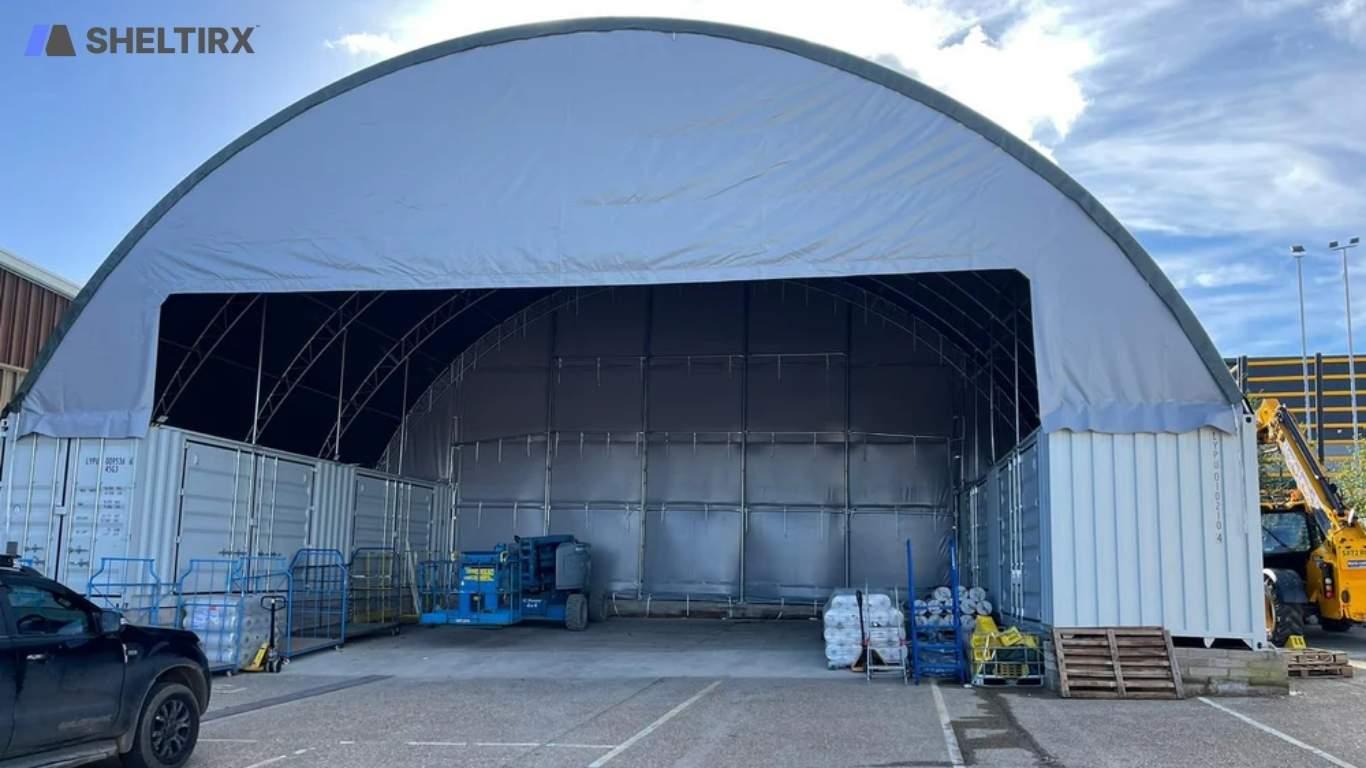
The first time many buyers look for a shelter container, it feels like a simple purchase—just a large protective structure for storage, right? In reality, it’s a long-term industrial investment that can either save thousands of dollars or quietly drain budgets through poor decisions made in the first few weeks.
Across warehouses, farms, construction sites, and logistics yards in the USA, I’ve seen the same pattern repeat: businesses rush the purchase, underestimate environmental demands, and end up replacing or repairing structures far sooner than expected.
This guide breaks down the real-world mistakes that lead to those failures—and how to avoid them with practical, experience-based decisions that actually hold up in the field.
Mistake 1: Choosing Based Only on Price Instead of Lifespan Value
One of the most expensive errors buyers make is focusing only on upfront cost. A lower-priced structure often uses thinner steel framing, weaker anchoring systems, or low-grade fabric coverings that degrade quickly under UV exposure.
What looks like savings in the beginning often turns into early replacement costs within 2–3 years.
Experienced facility managers in the USA tend to evaluate total lifecycle cost instead of purchase price alone. That includes installation durability, maintenance cycles, and expected weather exposure.
A slightly higher initial investment often pays for itself simply through reduced downtime and fewer repairs.
Mistake 2: Ignoring Local Weather Reality
Not all environments are equal. A structure that performs well in Texas heat may fail under heavy snow loads in the Midwest or high winds along coastal regions.
Many buyers underestimate:
- Wind uplift pressure in open industrial yards
- Snow accumulation load during winter months
- UV degradation in southern states
- Moisture buildup in humid agricultural regions
Ignoring these factors leads to structural fatigue, tearing, or frame distortion. A proper environmental assessment should always come before purchase decisions—not after damage occurs.
Mistake 3: Poor Foundation and Ground Preparation
Even the strongest structure fails if it sits on an unstable base.
Uneven ground leads to:
- Frame misalignment
- Water pooling around edges
- Stress concentration on anchor points
- Accelerated material wear
Concrete pads, compacted gravel beds, or engineered anchoring systems significantly improve long-term performance. Skipping this step is one of the fastest ways to reduce structural lifespan.
Mistake 4: Underestimating Installation Precision
Installation is often treated as a quick setup job. In reality, small alignment errors can create long-term structural problems.
Common installation mistakes include:
- Incorrect tensioning of covering material
- Misaligned support arches
- Inadequate anchoring depth
- Improper sealing at joints
These issues may not appear immediately, but over time they weaken stability and increase vulnerability during storms.
Professional-grade installation practices are often the difference between a structure lasting 5 years versus 15+ years.
Mistake 5: Overlooking Ventilation and Internal Climate Control
Storage protection is not just about keeping rain out—it’s also about controlling internal conditions.
Without proper ventilation:
- Heat buildup damages stored equipment
- Moisture causes rust and mold
- Condensation weakens fabric materials
- Air quality deteriorates in enclosed spaces
This is especially important for agricultural storage and machinery protection in humid regions of the USA.
Proper airflow design significantly improves both safety and asset preservation.
Mistake 6: Using the Wrong Size for Operational Needs
A surprisingly common mistake is selecting a structure based on available space rather than functional requirements.
Too small, and operations become cramped and inefficient. Too large, and energy loss, maintenance costs, and installation complexity increase unnecessarily.
A well-planned layout considers:
- Equipment movement paths
- Storage stacking requirements
- Loading and unloading zones
- Future expansion possibilities
Good planning prevents costly redesigns later.
Mistake 7: Weak Material Selection in High-Stress Environments
Durability depends heavily on material quality. Industrial environments demand more than basic protection.
Structures exposed to:
- Heavy machinery traffic
- Frequent loading operations
- Harsh UV exposure
- Snow and wind pressure
require reinforced steel frames and industrial-grade covering systems.
Cutting corners on material strength often leads to premature failure at connection points and surface tearing.
Mistake 8: Neglecting Long-Term Maintenance Planning
Many buyers assume these structures are “install and forget.” That assumption leads to avoidable deterioration.
Routine maintenance should include:
- Checking anchor tightness
- Inspecting fabric tension
- Cleaning debris buildup
- Monitoring corrosion points
- Ensuring drainage efficiency
Without maintenance, even high-quality structures lose performance over time. Small issues left unaddressed tend to escalate into expensive repairs.
Mistake 9: Ignoring Real Use Case Requirements
One of the most overlooked aspects is matching design with actual use cases.
Different industries require different configurations:
- Construction sites need mobility and quick deployment
- Agriculture requires ventilation and moisture control
- Logistics hubs need wide-span access
- Industrial storage requires fire resistance and load stability
When the design doesn’t match the use case, efficiency drops and operational risks increase.
Why Weather Resistance Defines Long-Term Success
In real-world conditions, durability is tested daily. Structures that cannot withstand extreme weather conditions quickly become liabilities.
This is where the concept of a well-engineered shelter container setup becomes critical in industrial planning. It’s not just about covering space—it’s about ensuring year-round resilience against unpredictable environmental stress.
Wind load capacity, thermal expansion handling, and snow resistance all play a major role in long-term structural success.
The Hidden Factor Most Buyers Realize Too Late
Beyond materials and installation, the biggest difference between a failing and successful structure is planning discipline.
Facilities that perform well over time usually share one thing in common: they were designed with long-term operational thinking, not short-term convenience.
That includes anticipating expansion, seasonal changes, and equipment upgrades before installation even begins.
Final Thoughts: Build Once, Build Right
Industrial storage structures are not short-term purchases—they are infrastructure assets. Every decision, from site preparation to material selection, directly affects operational stability and cost efficiency over time.
Businesses that take the time to evaluate environment, usage patterns, and installation quality almost always outperform those who rush decisions based on price alone.
For companies aiming to avoid these costly pitfalls while building reliable long-term storage systems, solutions from Sheltirx are often chosen by operators who prioritize durability, efficiency, and real-world performance without unnecessary complexity.