
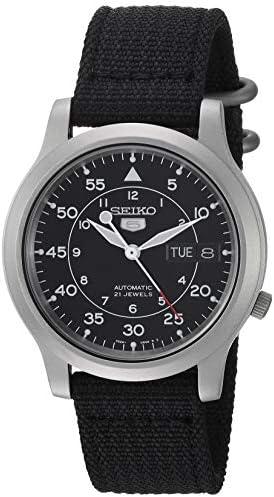
For decades, the luxury watch market cultivated an aura of exclusive, fragile sophistication. Mechanical timepieces were treated as delicate instruments, reserved for formal wear or specialized professional use, and priced far beyond the reach of the average consumer. In 1963, Seiko permanently disrupted this dynamic by introducing a watch built on a completely antithetical premise: it was mechanical, remarkably affordable, virtually indestructible, and designed for an active lifestyle.
Originally launched as the Sportsmatic 5, this collection evolved into the Seiko 5 Sports line in 1968. It quickly became the definitive entry point for generations of watch collectors and adventurers, proving that uncompromised engineering and accessible pricing could coexist within a single steel case.
Decoding the Code: The Five Core Promises
The numerical designation in "Seiko 5" was not a random marketing choice. It represented a strict engineering manifesto drafted by project lead Ren Tanaka. Every single timepiece bearing the badge had to possess five distinct functional attributes that guaranteed its status as a reliable, daily tool watch:
-
An Automatic Winding Movement: The watch required no battery, powering itself entirely from the natural motion of the wearer’s wrist.
-
A Combined Day/Date Display: Positioned uniquely within a single window at the 3 o'clock mark, this feature was an industry innovation popularized by designer Taro Tanaka.
-
Robust Water Resistance: Built to survive anything from sudden downpours to recreational swimming.
-
A Recessed Crown at the 4 O'Clock Position: By shifting the crown away from the traditional 3 o'clock spot, the watch became much more comfortable to wear during athletic activity, preventing the crown from digging into the back of the hand.
-
A Highly Durable Case and Bracelet: Crafted from rugged stainless steel to withstand significant physical impacts without failure.
-
Engineering Value: The Mechanical Secrets
To make the Seiko 5 series profitable at its famously accessible price point, Seiko could not rely on traditional, labor-intensive Swiss assembly methods. Instead, they engineered clever mechanical shortcuts that streamlined mass production while actually improving long-term reliability.
The most critical of these innovations was the Magic Lever, a proprietary winding system invented by Tsuneya Nakamura. Unlike complex, multi-gear automatic mechanisms, the Magic Lever uses a simple pawl-lever system connected directly to the rotor. No matter which way the rotor spins, the Magic Lever harnesses the kinetic energy to wind the mainspring in a single, fluid direction. This reduction in moving parts significantly cut production costs and created an extraordinarily robust automatic system that could run for decades without requiring a service.
For decades, these watches relied on the legendary, workhorse 7S26 movement. While it lacked premium features like hacking seconds (stopping the seconds hand when pulling out the crown to set precise time) or manual hand-winding, its durability was legendary. It became the beating heart of millions of watches, including the highly coveted military-style SNK field series and the iconic SKX dive collection.
The 2019 Rebirth and Modern Evolution
By the late 2010s, the landscape of affordable horology was shifting. Watch enthusiasts demanded modern upgrades, leading Seiko to completely overhaul the entire lineup in 2019 under a modernized, stylized "5" logo that closely resembles a Superman crest or a winding rotor.
The modern Seiko 5 Sports lineup phased out the older 7S movements in favor of the significantly upgraded 4R36 caliber. This modern movement brought hacking seconds and manual hand-winding capabilities to the entry-level catalog, pairing a 21,600 vibrations-per-hour (3Hz) sweep with a reliable 41-hour power reserve.
Furthermore, Seiko split the updated 5 Sports family into distinct thematic styles tailored to different lifestyle subcultures:
| Collection Series | Core Aesthetic | Distinctive Design Elements |
| SKX Series | Classic Dive | Rotating 60-minute bezels, bold LumiBrite indices, arrow hands. |
| Field Series | Military / Vintage | Fixed bezels, 12/24-hour matte dials, highly legible Arabic numerals. |
| SNXS Series | Everyday Dress | Smaller case profiles, polished finishes, integrated vintage-style bracelets. |
While some purists initially lamented the transition—noting that the standard SKX-styled Seiko 5 models moved from a ISO-certified 200m screw-down crown to a 100m push-pull crown—the trade-off allowed for an unprecedented level of aesthetic diversity, better case finishing, and see-through exhibition casebacks that let wearers view the mechanical movement in action.
Cultivating the Modding and Pop Culture Phenomenon
One of the most unique aspects of the Seiko 5 Sports legacy is its relationship with the global watch modification ("modding") community. Because the case dimensions of the modern modern lines share structural DNA with classic vintage references, an entire aftermarket industry emerged. Collectors regularly swap out standard Hardlex crystals for sapphire, install ceramic bezel inserts, or change dials and hands, using the affordable Seiko 5 chassis as a canvas for horological creativity.
Seiko embraced this cultural relevance by turning the 5 Sports line into a platform for limited-edition collaborations. The brand has released specialized pieces celebrating everything from classic animation franchises like the Pink Panther and iconic anime like Initial D, to partnerships with high-end custom design houses like Bamford Watch Department.
A Lasting Horological Benchmark
Ultimately, the enduring genius of the Seiko 5 Sports line rests on its role as the great equalizer of the watch world. It strips away the pretension often associated with mechanical timepieces, focusing entirely on practical functionality, durability, and visual style. For the college student purchasing their very first mechanical watch, or the seasoned collector looking for a worry-free daily wearer, the Seiko 5 Sports remains an irreplaceable cultural icon—proving that a truly great watch doesn't need to cost a fortune to earn respect on the wrist.