
A day that began without great expectations
In Lisbon, it's easy to get caught up in the rhythm of the big city: ups and downs, yellow trams, observation decks, bustling squares, the smell of coffee and pastries on almost every corner. But on the third or fourth day of my trip, I suddenly longed not for a new route through the capital, but for fresh air, water, and the feeling of being able to spend the day at my leisure. I researched short trips in advance, consulted https://guidekin.com/, and realized that Cascais was almost ideal: it's nearby, easy to get to, and in one day you can combine the old city center, beaches, cliffs, the ocean road, and dinner by the water. As a result, this trip, which I initially perceived as a simple pause between Lisbon and Sintra, unexpectedly turned into one of the most relaxing days of the entire trip.
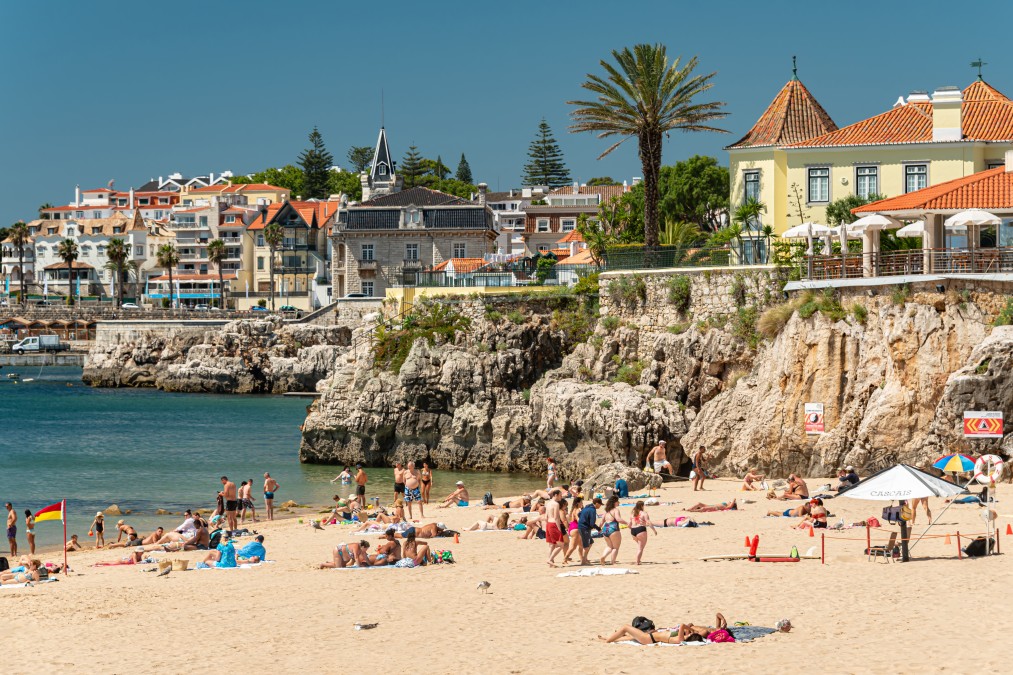
Cascais doesn't try to surprise you right away. It doesn't overwhelm you with palaces like Sintra, nor does it require a constant uphill climb like Lisbon. It reveals itself more gently: through the light-colored facades of houses, small streets, boats in the harbor, the Atlantic breeze, and the calm sound of the waves. This turned out to be the main point of the trip. Sometimes the most enjoyable part of a trip isn't seeing as much as possible, but finally stopping counting the sights and simply following where the coastline leads.
The road from Lisbon already feels like the start of a holiday
I left Lisbon in the morning, but without the early rise and anxious feeling of being late for something important. In this direction, the road itself becomes part of the experience. As the city leaves behind, more and more water, light, and coastal houses appear outside the window. The Atlantic doesn't seem like a distant destination here. It gradually approaches, as if the day is warning us in advance: soon we'll be able to breathe a sigh of relief.
Cascais is convenient because it doesn't require complex logistics. If you're looking for a short escape from the capital, you don't need to plan an overnight stay, lug around a suitcase, or rearrange your entire travel schedule. Simply set aside a day, choose a comfortable pace, and decide in advance whether you want to stay in the city itself or connect it with Sintra, Cabo da Roca, and the coastal road. This route is ideal for first-time visitors to Portugal who want to experience its different sides: urban, oceanic, rocky, and a touch of resort.
I had no desire to turn this day into a race. I deliberately left some breathing room in the route: time for coffee, for occasional stops, for sitting on the embankment without feeling like I had to rush somewhere right away. After the busy days in Lisbon, this felt almost like a luxury.
The old center of Cascais and the first sensation of the sea
The first thing I did in Cascais was visit the old town. It's small, but that has its own charm. You don't need to constantly check a map. The streets lead naturally to a square, a ceramic shop, a café with tables right on the sidewalk, or a gap between buildings through which the sea suddenly appears.
The old center of Cascais looks well-kept, but not museum-like. It's alive with life: some stroll with beach towels, others sip coffee, tourists photograph the facades, and locals chat leisurely at the entrance to cafes. After Lisbon, where even the quieter neighborhoods are often bustling with activity, there's a different rhythm to it. Not sleepy, not empty, but distinctly coastal. It's as if the city is used to people coming here not just to see, but also to relax.
I enjoyed simply strolling without a clear destination. Places like these don't always need flashy sights. Just white walls, tiles underfoot, a gentle breeze, and the feeling of the day stretching out. While in Lisbon I was constantly capturing views from above, in Cascais everything was closer to the land and water: boats, benches, beaches, wet sand, the smell of salt.
The harbor, boats, and that resort break
The harbor was the first place I actually stopped. Not just for a moment to take a photo, but truly stopped. The water there is calmer than the open ocean, the boats rock almost lazily, and the atmosphere of a seaside town, where time seems to lose its sharp edges, is evoked. It's easy to see why Cascais is often chosen not only for a short stroll but also as a destination for a more leisurely getaway.
I spent a long time looking at the boats, at the people coming out to the water with coffee, at the tourists choosing their perfect angle for a photo. At that moment, Cascais seemed to me not just a suburb of Lisbon, but a separate small stage, where the sea plays the leading role. Even without visiting the museums or planning a complex route, the harbor already conveys a sense of change.
Waterfront cafes in places like these almost seem like part of the landscape. You sit down at a table, order something simple, gaze at the horizon—and suddenly realize this is exactly what was missing from your trip. Not another obligatory stop, but a quiet respite where you can simply be within the day.
Cascais beaches and a short barefoot walk
The beaches in Cascais don't look wild and endless, but they are very accessible. This isn't the kind of beach where you have to drive an hour, descend a challenging trail, or plan your gear in advance. The water is right next to the town, and that changes the whole atmosphere. You can walk out of a narrow street and find yourself standing on the sand in just a few minutes.
I hadn't planned on swimming, but I took off my shoes and walked by the water anyway. The Atlantic was cool, the wind stronger than it seemed in the center, and the sand felt almost therapeutic after the cobblestone streets of Lisbon. It's moments like these that make you experience travel differently. Memory preserves not only palaces and viewpoints but also simple physical sensations: the coolness of the water, the salt on your lips, the sun on your face, the damp hem of your jeans after a failed attempt to escape the waves.
The beaches of Cascais are perfect for a relaxing break. You can spend an hour there, linger longer, or simply gaze at the sea and move on. I liked that the town doesn't force you to choose between a stroll and relaxing. Everything is close by, and the route unfolds naturally.
Boca do Inferno and the Other Side of the Atlantic
After the gentle center and tranquil beaches, the road to Boca do Inferno dramatically changes the mood. Here, Cascais reveals its more dramatic, rather than resort-like, side. The cliffs, the wind, the sound of the water below, the sharp edges of the shore—everything becomes rougher and more intense. The name "Mouth of Hell" sounds overly dramatic until you get closer and hear the ocean crashing against the rock.
Boca do Inferno doesn't require much time, but it's definitely worth a visit. It reminds you that the Atlantic isn't just for beautiful photos and dinners with a view. It's a real ocean, powerful and unpredictable. Even on a clear day, you can feel the force of the water. The waves crash against the rocks as if the urban neatness of Cascais has been left far behind.
It was on this stretch that I realized the trip had been a success because of the contrast. In the morning, there were bright streets and the harbor, then the beach and coffee, and now, cliffs and dark water stood before me. By mid-afternoon, as I mentally compiled my things to do in Cascais, it became clear that the main advice here is simple: don't limit yourself to the center, because the true character of a place emerges precisely in the transition from the cozy city to the open ocean.
The Road to Guincho and the Feeling of the Edge of the Map
If you have the time and desire to continue on, the drive toward Guincho is a great way to continue your day. It's not exactly a stroll through the city, but rather a drive along the coast, where the landscape widens, the wind gets stronger, and the Atlantic seems more rugged. After the compactness of Cascais, the landscape opens up, and you feel like you're driving not just to the beach, but to the edge of the map.
Guincho is different from city beaches. It feels more open, windier, and less tame. Here, you don't just want to lie on the sand, but rather watch the wind whip the waves, the changing light, and how people accustomed to the ocean feel so much more confident in these elements than tourists. For me, it wasn't a mandatory stop, but a beautiful extension of the mood: if Cascais offers tranquility, the road to Guincho adds dimension.
It's easy to make short stops along the way. These stops are often the most memorable: not because there's a famous monument there, but because at some point you see the ocean, the empty road, the cliffs, and realize it was worth leaving Lisbon for at least one day.
Cascais, Sintra and Cabo da Roca in one itinerary
Cascais is conveniently combined with Sintra and Cabo da Roca, but it's important to be honest about your pace. Technically, in one day you could see the palaces of Sintra, visit the westernmost point of continental Europe, descend to the ocean, and end the day in Cascais. In practice, such an itinerary requires good organization, especially if you don't want to turn the day into a constant commute.
I think Cascais works best in two ways. The first is as a standalone, relaxing day trip from Lisbon, when you're in no rush and just enjoying a stroll by the water. The second is as the final leg of a busy itinerary through Sintra and Cabo da Roca, when after palaces, hills, and windy headlands, you want to end the day in a more relaxed atmosphere. In this case, Cascais becomes not just another stop, but a pleasant ending, where you can have dinner, stroll along the waterfront, and recover from all the excitement.
The key is to avoid trying to cram too much in unnecessarily. Portugal is especially beautiful when there's space between points. In Cascais, this space is literally felt: in the pauses between the waves, in the distance between the tables at the café, in the slow walk from the beach to the harbor.
Cafe by the water and evening return
By the end of the day, I found myself back by the water. It was a logical conclusion to the itinerary: after the old city center, the beaches, Boca do Inferno, and the road toward Guincho, I wasn't looking for new views, but rather a simple dinner or at least coffee with a sea view. In Cascais, it's easy to find a place to sit and uncomplicated things. Fish, a glass of wine, dessert, the murmur of conversations at neighboring tables, the evening light on the water—all this brings the day together into a coherent picture.
I liked that Cascais doesn't feel like it has a final destination, after which you have to leave immediately. Even in the evening, it remains calm. People stroll, some returning from the beach, some lingering in restaurants, some photographing the sunset. The city seems to fade slowly, rather than abruptly close the day.
Returning to Lisbon after such a day feels a little strange. You might have traveled only a short distance, but inside you feel as if you've changed not just the city, but your state of mind. In the morning, there was the capital, with its stairs, noise, and busy itinerary, and in the evening, there was salt on your skin, wind in your hair, and the rare feeling that the day had passed at exactly the pace it was meant to.
Why Cascais is worth leaving on your itinerary
Cascais shouldn't be considered a secondary stop near Lisbon. Yes, it's convenient for a day trip, yes, it's easy to combine with other destinations, but that's precisely its strength. It doesn't require much effort, yet it offers what's often missing from a busy trip: tranquility, the sea, beautiful walks, and a sense of ease.
For me, Cascais wasn't just a place on the map, but a pause that made the journey more alive. Afterward, Lisbon felt different: not like a city to escape, but a place with the Atlantic Ocean, cliffs, beaches, and small coastal towns with their own unique atmosphere.
If you want to escape the capital for a day without wasting it, Cascais is almost ideal. Here you can stroll through the old town, admire the boats in the harbor, stroll along the beach, reach Boca do Inferno, head towards Guincho, and end the day at a café by the water. Or you can do it even more simply: arrive without a rigid plan, trust the sea, and let this day become the most relaxing memory of your trip to Portugal.