
A practical 2026 comparison of WATI, AiSensy, and self-hosted WhatsApp AI automation - features, AI tooling, pricing, and who each one fits.
If you're choosing a WhatsApp AI automation setup in 2026, three options dominate the conversation: WATI, AiSensy, and the self-hosted route where you own the platform. Each fits a different kind of business. Here's a straight comparison of what they do well, where they fall short, and how to decide - without the marketing gloss.
WATI: the WhatsApp-focused team inbox
WATI is best known as a reliable shared inbox for WhatsApp (and Instagram DM) support, with a no-code flow builder that's easy to start with. Its weak spots in 2026 are AI tooling and automation limits: it currently offers no AI features for ad, template, or chatbot-flow creation, and it caps automation triggers - commonly cited in the low thousands per month - with conversations exiting automation silently when the cap is hit. It's a solid pick for a support team that wants a tidy inbox, but teams wanting heavy AI or unlimited automation often outgrow it and look toward a more flexible WhatsApp automation platform.
AiSensy: broadcast and AI tooling
AiSensy has pushed furthest on AI among the mainstream SaaS tools, offering an AI Flow Builder that generates chatbot flows from prompts, an AI template-message generator, and AI ad-creative tools. It starts lower, with free API setup and broad support channels, and it's strongest when broadcast campaign volume is the objective. The trade-off is the usual SaaS one: recurring fees that scale with usage and feature tiers, plus your data and logic living on someone else's platform. For many it's a strong starter, though growth often surfaces the case for an owned WhatsApp automation system.
Where Interakt and others fit
It's worth noting adjacent players: Interakt is frequently recommended when Shopify cart-recovery workflows are the priority, while Respond.io targets higher-volume, cross-channel operations spanning a dozen-plus channels. Each is a reasonable SaaS choice for a specific need. But all of them share the subscription model and hosted-data trade-off that pushes scaling businesses to evaluate a self-hosted WhatsApp automation tool.
Self-hosted: own the platform
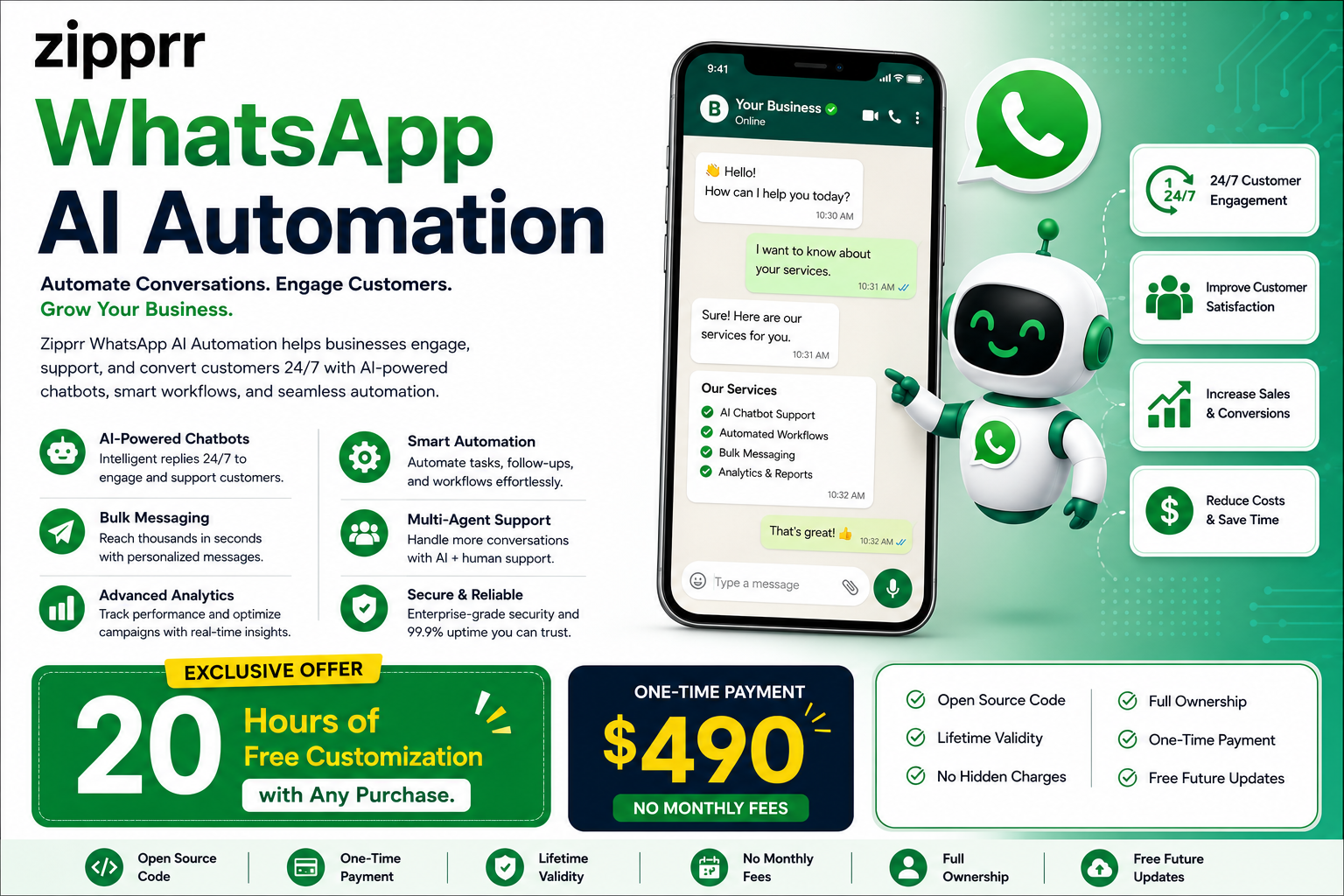
The third path is owning the software outright. A self-hosted platform connects directly to the WhatsApp API and runs on your infrastructure, so you control the data, customize every flow, and pay once rather than monthly. There are no per-seat markups, no automation-trigger caps imposed by a vendor, and no policy surprises from your platform provider. Zipprr's WhatsApp automation software sits in this category, and it can be white-labeled - which is why agencies and resellers gravitate to it. The trade-off is that you take on hosting and maintenance, but for a business where WhatsApp is central, that responsibility buys a level of independence and customization no rented platform can match.
How the AI gap is widening
One difference worth watching in 2026 is how unevenly AI capability is distributed across these tools. AiSensy has leaned hard into AI features like prompt-based flow generation, while WATI currently offers none for ad, template, or flow creation - a notable gap for a platform of its size. Meta's own Business Agent, meanwhile, sets a rising baseline that every tool is now measured against. For a buyer, this means the AI maturity of your chosen platform matters more each quarter, and a setup you can extend yourself avoids being stuck waiting on a vendor's roadmap. Owning the platform lets you plug in whichever models and logic you prefer rather than accepting whatever AI features your provider has shipped so far.
Which one should you choose?
Choose WATI if you mainly want a reliable WhatsApp support inbox and don't need much AI. Choose AiSensy if broadcast campaigns and out-of-the-box AI tooling are your priority and you're comfortable with recurring fees. Choose self-hosted if you want data ownership, deep customization, predictable one-time cost, or the ability to white-label for clients. The SaaS tools win on speed-to-start; an owned, customizable WhatsApp platform wins on control and long-run economics.
The deciding question
It comes down to how central WhatsApp automation is to your business. If it's a convenient add-on, a SaaS subscription is fine. If it's core infrastructure - something you'll scale, brand, and build a business around - owning it usually wins on both control and cost over time. Map your volume, your AI needs, and your appetite for customization against these options, and the right fit becomes clear. If ownership and flexibility top your list, see how Zipprr's WhatsApp automation compares for your specific use case.