
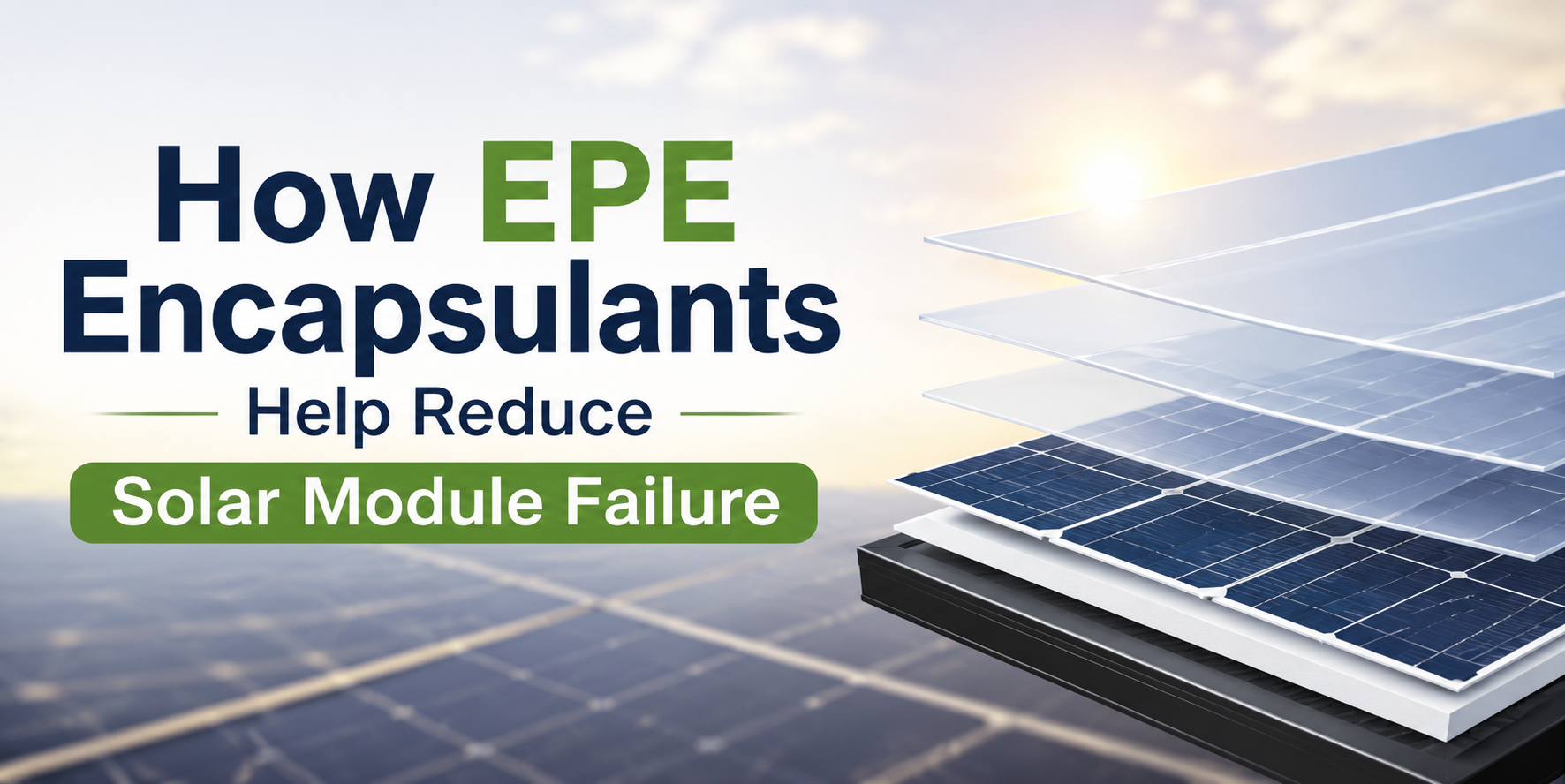
Imagine buying a solar panel and expecting it to last for thirty years, only to have it break down after five. This happens more often than you might think. Solar panels live outside in the harshest conditions possible. They face baking heat, freezing nights, and heavy rain. To survive, the internal parts of the panel need a high-quality bodyguard. This is where EPE Encapsulants come into the picture. These materials act as a protective layer that keeps the delicate solar cells safe from the world outside.
Choosing the right protection is the most important decision a manufacturer can make. If the protective layer fails, the whole panel fails. Many people are now looking at the EPE sheet as the ultimate solution for keeping solar modules running smoothly.
In this guide, we will look at how this specific technology stops panels from breaking and ensures you get the most energy for your money. It is not just about making power; it is about making power that lasts for decades without any trouble.
What Is an EPE Encapsulant?
An EPE encapsulant is a special type of three-layer sandwich used in solar panels. The letters E-P-E stand for EVA-POE-EVA. EVA is a common material that sticks very well to glass, while POE is a material that is amazing at blocking water and electricity leaks. By putting a layer of POE between two layers of EVA, engineers created a material that has the best of both worlds. It sticks like glue and protects like a fortress.
This specific combination is often called an EPE Solar Encapsulant. It was designed to solve the problems that older materials could not handle. When panels are made, this material is melted around the solar cells. Once it cools down, it creates a clear, tough shield. This shield is the main reason why modern solar panels are becoming much more reliable than the ones made just ten years ago.
Why Do Solar Modules Fail?
1. Moisture Ingress
Moisture is the number one enemy of any electronic device. In a solar panel, even a tiny bit of water vapor getting inside can cause big problems. When water touches the metal ribbons that connect the cells, it causes rust. This rust increases resistance, which means less electricity can flow through. If the moisture levels get too high, the panel might stop working entirely.
2. Potential-Induced Degradation (PID)
PID is a technical way of saying that electricity is leaking out of the solar cells. This usually happens when there is high humidity and high voltage. The electricity travels through the glass and the frame instead of going into the wires. Over time, this "leak" ruins the cells and can cut the power output of a solar panel by half or more in a very short time.
3. Delamination
Delamination happens when the layers of the solar panel start to peel apart. Think of it like a sticker losing its stickiness. When the protective layers pull away from the glass or the cells, air and water get inside. This usually happens because the glue-like material inside the panel cannot handle the constant heat from the sun. Once a panel starts peeling, it is usually the beginning of the end.
4. Thermal Cycling Damage
Solar panels get very hot during the day and very cold at night. This constant change in temperature causes the materials inside to expand and shrink. If the materials are too stiff or do not handle heat well, they can crack. These tiny cracks in the solar cells are often invisible to the eye, but they stop the panel from making electricity efficiently.
5. Environmental Stress
Panels are often placed in tough spots, like near the ocean or in dusty deserts. Salt air can eat away at materials, and sand can scratch the surface. High winds also put physical pressure on the panels. Without a strong internal structure, the mechanical stress from wind and snow can bend the panel enough to snap the fragile silicon cells inside.
How EPE Encapsulants Reduce Solar Module Failure
1. Superior Moisture Barrier Protection
The most important job for EPE Encapsulants is keeping water out. Because these materials have a core made of POE, they are much better at blocking water vapor than standard EVA. The a acts like a plastic wrap that never lets a single drop through. This keeps the internal metal parts dry and shiny, preventing the rust that kills so many solar modules.
2. Excellent PID Resistance
Since the EPE Solar Encapsulant uses high-quality POE in its center, it is a great insulator. It does not let electricity escape from the cells to the frame. This effectively stops PID from happening. By using this material, solar farms can operate at higher voltages without worrying about their panels losing power over time. It keeps the electricity exactly where it belongs.
3. Strong Adhesion
A major reason to use an EPE sheet is its ability to stick to everything. The outer layers of EVA are designed to bond perfectly with the glass and the backsheet of the panel. This creates a solid, airtight unit. Because it sticks so well, the risk of the layers peeling apart (delamination) is almost zero. This bond stays strong even after twenty years of sitting in the hot sun.
4. Enhanced UV Stability
The sun’s rays are very strong and can bleach or break down most plastics. However, EPE Encapsulants are treated with special chemicals that block UV damage. This means the material stays clear and flexible for a long time. It won't turn yellow or become brittle. Staying clear is vital because if the material turns brown or yellow, it blocks the sunlight from reaching the cells, which lowers power.
5. Improved Thermal Stability
These materials are built to handle the ups and downs of temperature. They act like a cushion for the solar cells. When the panel gets hot, the encapsulant absorbs the expansion. When it cools down, it holds everything in place. This flexibility prevents micro-cracks from forming during thermal cycling. It ensures the panel stays physically healthy through thousands of day-and-night cycles.
6. Longer Module Lifespan
When you combine all these benefits, the result is a solar panel that lasts much longer. Using EPE Encapsulants means fewer repairs and fewer panels that need to be thrown away early. This is great for the environment and great for the owner’s wallet. It turns a risky investment into a safe one by ensuring the hardware can actually survive its 25-year warranty.
Conclusion
Solar energy solution is a wonderful way to power our world, but it only works if the technology is durable. Failure is not an option when you are trying to save money and the planet. By using an EPE sheet, manufacturers can protect solar cells from their biggest threats like moisture, PID, and heat damage. This simple layer makes a massive difference in how long a panel stays productive.
If you want a solar system that stands the test of time, choosing high-quality protection is the best place to start. Investing in the right materials today means cleaner, cheaper energy for many years to come.