
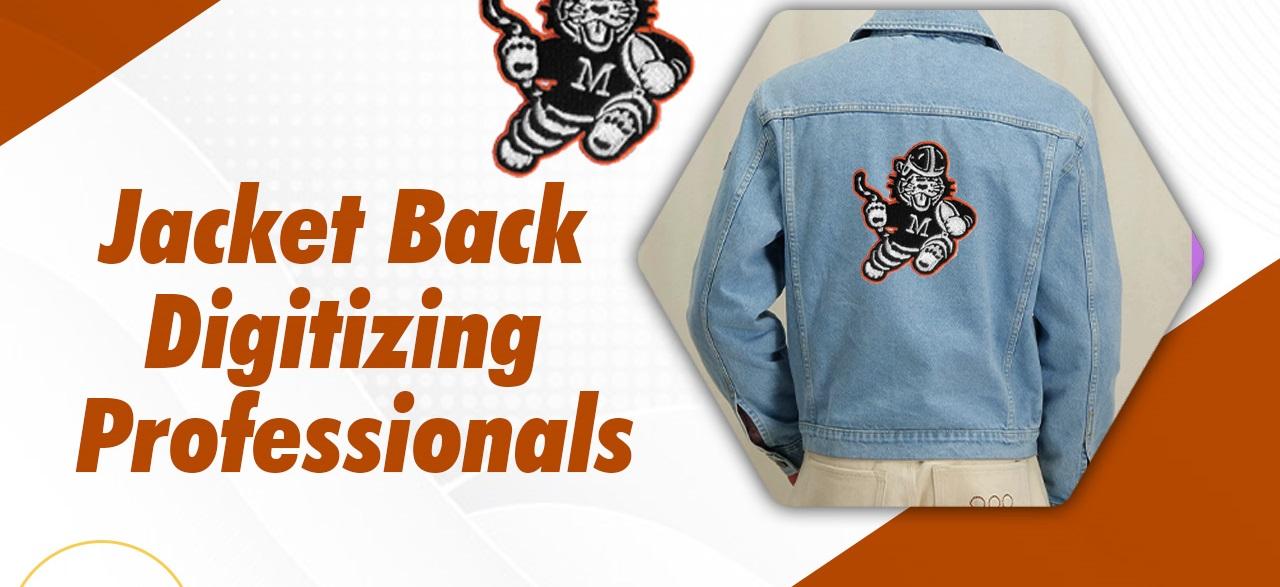
Jacket back digitizing transforms the large canvas of a jacket into a stunning focal point for custom embroidery. You turn plain outerwear into personalized statement pieces that showcase logos, artwork, or bold text. Jacket back digitizing requires special attention because of the size, fabric curves, and how the garment moves with the wearer.
Professionals approach jacket back digitizing with techniques that ensure designs look balanced, stitch smoothly, and hold up through years of wear. The process involves careful planning to handle scale while maintaining detail and preventing distortion. Whether you create team jackets, promotional gear, or unique fashion items, mastering these methods elevates your results dramatically.
Understanding the Challenges of Jacket Back Designs
Jacket backs offer plenty of real estate, but they also present unique hurdles. The fabric often stretches or shifts, especially around shoulders and seams. Large designs must account for body movement so the embroidery does not pull or pucker when someone wears the jacket.
Scale changes everything in digitizing. What works on a small chest logo fails on a full back panel. You need to adjust stitch density, underlay types, and compensation settings to keep lines crisp and fills even across bigger areas. Ignoring these factors leads to thread breaks, uneven texture, or designs that warp after laundering.
Planning Your Design for Success
Start by visualizing the finished jacket. Consider the garment style — bomber, varsity, or leather — because each behaves differently under stitches. Sketch the layout with proper margins around seams and zippers so the design sits centered and balanced.
Choose artwork that scales well. Bold shapes and clear lines perform better than tiny details that get lost from a distance. You can combine text with graphics, but keep lettering large enough to read easily on a moving person. Plan color placement early since fewer thread changes speed up production and reduce costs.
Essential Techniques for Jacket Back Digitizing
Experts use multiple underlay stitches to stabilize large areas. A grid or edge underlay anchors the design to the fabric, while a full fill underlay adds loft and prevents sinking. You adjust density based on the jacket material — lighter for nylon, heavier for canvas or denim.
Compensation plays a huge role. Pull compensation widens satin stitches or expands fills to counteract fabric tension. For jacket back digitizing, you often increase this setting around the edges and center to maintain shape after hooping and stitching.
Stitch direction matters for visual flow and structural integrity. Follow natural body lines or create radiating patterns that enhance the design. Avoid long straight satin stitches on large designs because they snag easily. Instead, break them into shorter segments or use tatami fills for better coverage and durability.
Handling Lettering on Large Jacket Backs
Text on jacket backs needs generous sizing and strong foundations. Use columnar satin stitches for straight letters and adjust width for readability. Add underlay that follows the letter shapes to prevent distortion.
For curved or arched text, digitize each letter individually and align them carefully. Overlap compensation helps letters sit snugly without gaps. Test different font styles because some digitize cleaner than others at large scales.
Working with Different Fabric Types
Nylon or polyester jackets require lighter tension and special needles to avoid melting or holes. Digitizers reduce density slightly and use tear-away stabilizers that support the large area during stitching.
Denim and canvas handle denser stitching well but need stronger underlays to manage their stiffness. Leather demands even more precision since mistakes show permanently. You choose specialty threads and lower speeds to achieve clean results without damaging the material.
Always hoop the jacket properly with appropriate stabilizers. For jacket back digitizing, many use a combination of cut-away and water-soluble toppings to keep everything flat and smooth throughout the process.
Advanced Techniques for Complex Designs
Layering creates depth in large embroidery. Digitize background elements first with lower density, then add foreground details on top. This technique works beautifully for landscapes, team mascots, or intricate illustrations.
Gradient effects and shading add realism. Vary stitch angles and densities to create light and shadow without adding extra colors. Photo digitizing techniques break images into manageable stitch zones that capture essence rather than every pixel.
Border techniques frame the entire design neatly. Satin borders or running stitch outlines define edges and hide minor imperfections while adding professional polish.
Optimizing for Production Efficiency
Large jacket back designs take time to stitch, so smart digitizing reduces jump stitches and trims. Sequence colors logically to minimize stops. Group similar elements together for smoother machine operation.
Test stitch on sample fabric identical to the final jackets. Make adjustments to tension, speed, and settings before committing to full production runs. This step prevents costly mistakes on expensive garments.
Common Pitfalls and How to Avoid Them
One frequent issue involves hooping distortion on large backs. Use proper frames and hoop midway through the design if necessary to maintain alignment. Another challenge is thread tension variation across wide areas — consistent machine maintenance helps tremendously.
Overly dense stitching causes stiffness and cracking after washing. Balance coverage with breathability, especially for wearable jackets. Always consider the end user and how the garment will be cleaned and worn.
Tools and Best Practices for Better Results
Quality stabilizers and backing materials make a significant difference in large designs. Combine types for optimal support without adding bulk. Sharp needles sized for your thread and fabric prevent breaks and skipped stitches.
Maintain consistent lighting and magnification during digitizing so you catch small issues early. Save versions of your work as you progress, allowing easy rollbacks if changes do not improve the design.
Scaling Designs for Different Jacket Sizes
Create master files that adapt across small, medium, and large jackets. Adjust proportions carefully rather than simply enlarging or reducing. Certain elements like text may need manual tweaking at different scales to remain legible and balanced.
Bringing Your Vision to Life
Jacket back digitizing rewards patience and attention to detail. You create wearable art that turns heads and tells stories. Practice on smaller pieces first, then graduate to full backs as your confidence grows.
For particularly challenging or time-sensitive projects, professional help ensures flawless execution. Needle Digitizing offers expertise specifically suited for large-scale work like this.
Conclusion
Mastering jacket back digitizing opens exciting possibilities for custom embroidery. You combine technical skill with creative vision to produce impressive designs that last. Focus on proper planning, fabric-appropriate techniques, and thorough testing for consistently great results.
Your next jacket project can feature bold, professional embroidery that stands out beautifully. Embrace these expert methods, experiment thoughtfully, and enjoy the process of bringing large designs to life. The satisfaction of seeing a finished jacket back — perfectly stitched and proudly worn — makes all the effort worthwhile. Start planning your next big design today and watch your embroidery skills reach new heights.