
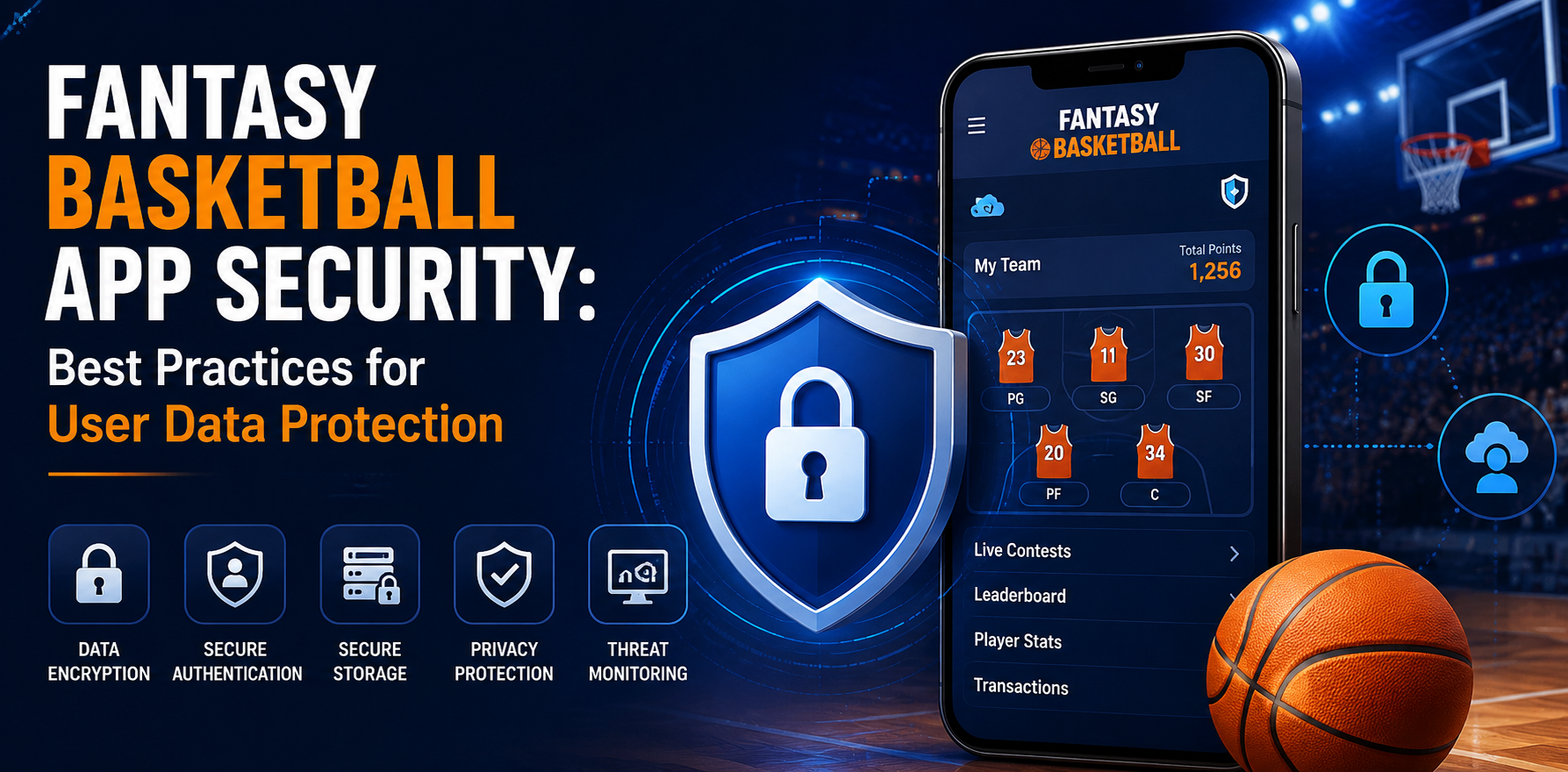
The growing number of fantasy basketball apps has led to the emergence of a new paradigm in which fans engage with their league and favorite players. At present, millions of users employ their cell phones to create teams, engage in competitions, conduct transactions, and share personal information through different applications. The growing number of users means the need for protecting valuable information from any threats of a cyber nature. Security is among the main aspects of the development of such an app at present.
The use of a secure app will allow ensuring the safety of your clients, compliance with regulations related to data protection, and building a positive image of the brand. In case you plan to launch your website or update your fantasy basketball app, you need to pay attention to security from the very beginning.
Why Security Matters in Fantasy Basketball Apps
Fantasy sports applications process a large amount of sensitive information every day. User registration details, payment credentials, transaction history, team selections, and real-time game data are all valuable targets for cybercriminals.
A successful cyberattack can result in:
- Financial losses
- Identity theft
- Loss of customer trust
- Legal penalties
- Brand reputation damage
- Reduced user engagement
For businesses investing in fantasy sports app development, security should never be considered an optional feature. Instead, it should be integrated into every stage of the development lifecycle.
Types of User Data That Must Be Protected
Fantasy basketball applications collect various categories of personal and financial information, including:
Personal Information
This includes names, email addresses, phone numbers, profile images, and account credentials.
Payment Information
Many fantasy platforms support wallet systems, deposits, withdrawals, and prize distributions. Payment-related information must always be encrypted and securely processed.
Login Credentials
Usernames, passwords, authentication tokens, and session details should be protected using advanced authentication mechanisms.
Gaming Activity
Contest history, drafted players, rankings, and gameplay behavior should remain confidential to prevent manipulation and unfair competition.
Device Information
Applications often collect device IDs, IP addresses, operating system versions, and browser details for security monitoring.
Common Security Threats in Fantasy Basketball Apps
Understanding potential risks is the first step toward building a secure platform.
Data Breaches
Hackers attempt to access databases containing sensitive user information. Poor database security often leads to massive information leaks.
Account Takeover Attacks
Weak passwords and compromised credentials allow attackers to gain unauthorized access to user accounts.
Payment Fraud
Cybercriminals exploit insecure payment gateways or stolen credit card information to conduct fraudulent transactions.
API Attacks
Fantasy applications rely heavily on APIs for player statistics, payment processing, notifications, and authentication. Unsecured APIs become easy targets.
Malware Injection
Attackers may inject malicious code that steals user information or manipulates application functionality.
DDoS Attacks
Distributed Denial-of-Service attacks overwhelm servers, making the application unavailable during major sporting events.
Best Practices for User Data Protection
1. Implement End-to-End Encryption
Encryption is one of the most effective ways to protect user information.
Sensitive data should be encrypted both while being transmitted and while stored in databases. Even if hackers gain unauthorized access, encrypted information remains unreadable.
Recommended encryption standards include:
- AES-256
- TLS 1.3
- HTTPS communication
- Secure Socket Layer (SSL)
Encryption should be applied to:
- Login credentials
- Payment information
- Personal details
- API communications
- Database records
2. Enable Multi-Factor Authentication (MFA)
Passwords alone are no longer sufficient.
Multi-factor authentication adds an extra layer of protection by requiring users to verify their identity using the following:
- SMS OTP
- Authentication apps
- Email verification
- Biometric authentication
- Security keys
Even if passwords are compromised, attackers cannot access accounts without the second verification factor.
3. Secure User Authentication
Authentication systems should follow modern security standards.
Best practices include:
- Strong password requirements
- Password hashing using bcrypt or Argon2
- Automatic account lockout after multiple failed attempts
- Session expiration
- Secure token management
Avoid storing passwords in plain text under any circumstances.
4. Use Secure APIs
Modern fantasy platforms depend heavily on third-party services.
Every API should include:
- Authentication tokens
- Authorization controls
- Rate limiting
- Input validation
- Secure HTTPS communication
- API version management
Regular API security testing helps identify vulnerabilities before attackers exploit them.
5. Protect Payment Transactions
Fantasy sports applications often involve deposits, withdrawals, subscriptions, and prize money.
Secure payment practices include:
- PCI DSS compliance
- Tokenized payment information
- Trusted payment gateways
- Fraud detection systems
- Secure transaction logs
- Transaction monitoring
Never store sensitive card details directly within application databases.
6. Encrypt Database Storage
Databases remain one of the primary targets for attackers.
Security measures should include:
- Database encryption
- Backup encryption
- Access control policies
- Activity monitoring
- Role-based permissions
- Regular database audits
Even internal employees should have access only to the information necessary for their roles.
7. Perform Regular Security Testing
Security testing should be integrated throughout the development lifecycle.
Testing methods include:
- Penetration testing
- Vulnerability assessments
- Security audits
- Code reviews
- Automated security scanning
- Ethical hacking
Continuous testing helps identify vulnerabilities before deployment.
8. Implement Role-Based Access Control (RBAC)
Not every employee requires access to sensitive information.
Role-based permissions ensure:
- Administrators access only administrative functions.
- Customer support accesses limited user information.
- Developers cannot directly access production databases.
- Finance teams manage only payment-related systems.
Limiting access significantly reduces insider security risks.
9. Monitor User Activity
Real-time monitoring helps detect suspicious behavior before significant damage occurs.
Examples include:
- Multiple failed login attempts
- Login from unusual locations
- Rapid password changes
- Large withdrawal requests
- Multiple device logins
- Automated bot behavior
AI-powered monitoring systems can quickly identify unusual activity and trigger alerts for administrators.
10. Keep Software Updated
Outdated software often contains known vulnerabilities that attackers can exploit.
Regular updates should include:
- Operating systems
- Frameworks
- Third-party libraries
- Payment SDKs
- Authentication services
- Database management systems
Timely patch management reduces the risk of cyberattacks while ensuring optimal application performance.
Conclusion
The most valuable thing that a fantasy sports platform can have is its trustworthiness, and security practices play a key role here in building that trustworthiness. It could be protecting your users' information through encryption and MFA, securing your APIs, watching out for any suspicious activities, or complying with certain regulatory requirements—anything helps you create a secure environment for your users. In order to defend against evolving cyberthreats, companies need to adopt a more proactive approach and invest in security and risk assessment.
Through association with a leading fantasy sports application development company, businesses can be assured of getting secure, scalable, and future-ready platforms that provide both security of user information and excellent performance. By adopting a security-oriented approach in the development process in every stage, businesses can be rest assured of having robust apps that can make them confident about their performance and financial transactions.