
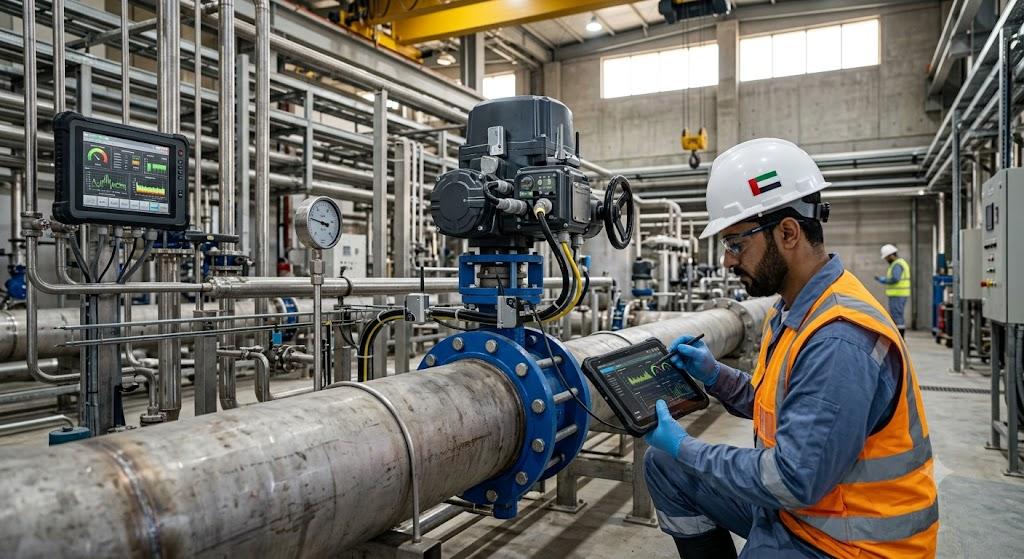
Unexpected equipment failures have a way of disrupting even the best-planned industrial operations. A single malfunctioning actuator can interrupt production, delay deliveries, increase maintenance costs, and, in some cases, create serious safety concerns. For facilities across the UAE, where industries often operate around the clock, avoiding unplanned downtime has become a top priority.
This is where predictive maintenance is making a real difference. Rather than waiting for equipment to fail or relying solely on routine maintenance schedules, companies are using operational data to identify warning signs before problems become critical. When applied to an Electric Actuator, predictive maintenance helps organizations improve reliability while reducing maintenance expenses and operational risks.
The Hidden Cost of Unexpected Actuator Failures
Electric actuators are responsible for controlling valves, dampers, and other critical equipment throughout industrial plants. They play an essential role in sectors such as oil and gas, desalination, water treatment, district cooling, manufacturing, and power generation.
Although these devices are built for long-term performance, they are not immune to wear and tear. Internal gears, motors, seals, bearings, and electronic components naturally age over time. Environmental factors like dust, humidity, vibration, and extreme temperatures can accelerate deterioration.
The challenge is that many failures develop gradually. A slight increase in motor temperature or an unusual vibration pattern may not affect operations immediately, but these early warning signs often indicate larger issues developing beneath the surface.
Ignoring those signals can eventually lead to complete actuator failure.
What Is Predictive Maintenance?
Predictive maintenance uses real-time monitoring and equipment data to assess the health of machinery continuously. Instead of replacing components at fixed intervals, maintenance teams perform repairs only when the collected data suggests they are necessary.
Sensors monitor several operating conditions, including:
- Motor temperature
- Electrical current consumption
- Torque output
- Operating cycles
- Vibration levels
- Valve movement speed
- Position accuracy
Software analyzes this information to identify unusual trends that could indicate developing mechanical or electrical problems.
Rather than reacting after a breakdown occurs, engineers receive early alerts while the equipment is still operating normally.
A Practical Example from an Industrial Facility
Imagine a large water treatment facility in the UAE operating hundreds of automated valves.
One Electric Actuator begins drawing slightly more current than usual during each operating cycle. At first, production continues without interruption, and the increase appears insignificant.
However, predictive maintenance software recognizes the gradual upward trend. At the same time, vibration readings also begin rising beyond the actuator's normal operating range.
Instead of waiting for the actuator to fail unexpectedly, maintenance engineers schedule an inspection during a planned shutdown. They discover that a gearbox bearing has started wearing prematurely.
Replacing the bearing takes only a few hours.
Had the issue remained unnoticed, the gearbox could have seized completely, damaging the motor and forcing an emergency shutdown that might have halted production for an entire day.
This simple intervention prevented a far more expensive repair while avoiding unnecessary downtime.
Why Predictive Maintenance Works So Well
Traditional preventive maintenance follows fixed service intervals. Equipment may be inspected every six months or after a specific number of operating hours.
While this approach is better than waiting for failures, it has limitations.
Some components may still be in excellent condition when replaced, while others may fail long before the scheduled inspection.
Predictive maintenance removes much of this guesswork.
By evaluating actual equipment performance, maintenance becomes based on real operating conditions instead of estimates.
This leads to several important advantages:
Reduced Unplanned Downtime
Maintenance teams can address developing issues before equipment stops working, helping facilities maintain continuous production.
Lower Maintenance Costs
Replacing only worn components prevents unnecessary servicing while reducing spare parts consumption and labor expenses.
Longer Equipment Life
Minor repairs performed early often prevent larger failures that could permanently damage an actuator.
Improved Workplace Safety
Unexpected equipment failures can create hazardous situations, particularly when controlling high-pressure pipelines or automated industrial processes.
Early detection significantly reduces those risks.
Supporting Smart Industrial Operations in the UAE
Many UAE industries are investing heavily in automation, digital monitoring, and intelligent manufacturing systems.
Modern Electric Actuator models often include built-in diagnostics capable of communicating with SCADA, PLC, and industrial monitoring platforms. This integration allows operators to monitor actuator health remotely while collecting valuable operational data.
As facilities become increasingly connected, predictive maintenance fits naturally into broader digital transformation strategies.
Instead of reacting to equipment failures, maintenance teams gain greater visibility into overall asset performance.
Small Data Can Prevent Big Problems
One of the biggest misconceptions about predictive maintenance is that only major performance changes matter.
In reality, tiny deviations often tell the most important story.
A slight increase in operating torque, a marginal temperature rise, or a few extra milliseconds during valve movement may seem insignificant individually. Yet together, these changes can accurately predict future mechanical issues.
Engineers who monitor these patterns consistently can often prevent failures weeks or even months before they occur.
That's why data-driven maintenance has become increasingly valuable for industrial reliability.
Conclusion
Reliable industrial operations depend on more than quality equipment. They also depend on knowing when that equipment needs attention before problems escalate.
Predictive maintenance gives organizations that advantage. By continuously monitoring equipment health, companies can identify developing faults early, reduce unexpected downtime, lower maintenance costs, and extend the service life of every Electric Actuator in their operation.
For UAE industries focused on improving efficiency while maintaining operational reliability, predictive maintenance is no longer simply an advanced maintenance strategy. It has become a practical investment that protects both productivity and long-term business performance.
Frequently Asked Questions
What causes electric actuator failures?
Common causes include worn gears, motor overheating, bearing wear, moisture ingress, electrical faults, improper installation, excessive operating cycles, and poor maintenance practices.
How does predictive maintenance detect problems?
Sensors continuously monitor operating conditions such as temperature, vibration, torque, current consumption, and actuator position. Software analyzes these trends to identify abnormalities before failures occur.
Is predictive maintenance suitable for all industries?
Yes. Industries such as oil and gas, water treatment, manufacturing, power generation, district cooling, and chemical processing all benefit from predictive maintenance because actuator reliability directly affects production continuity.