
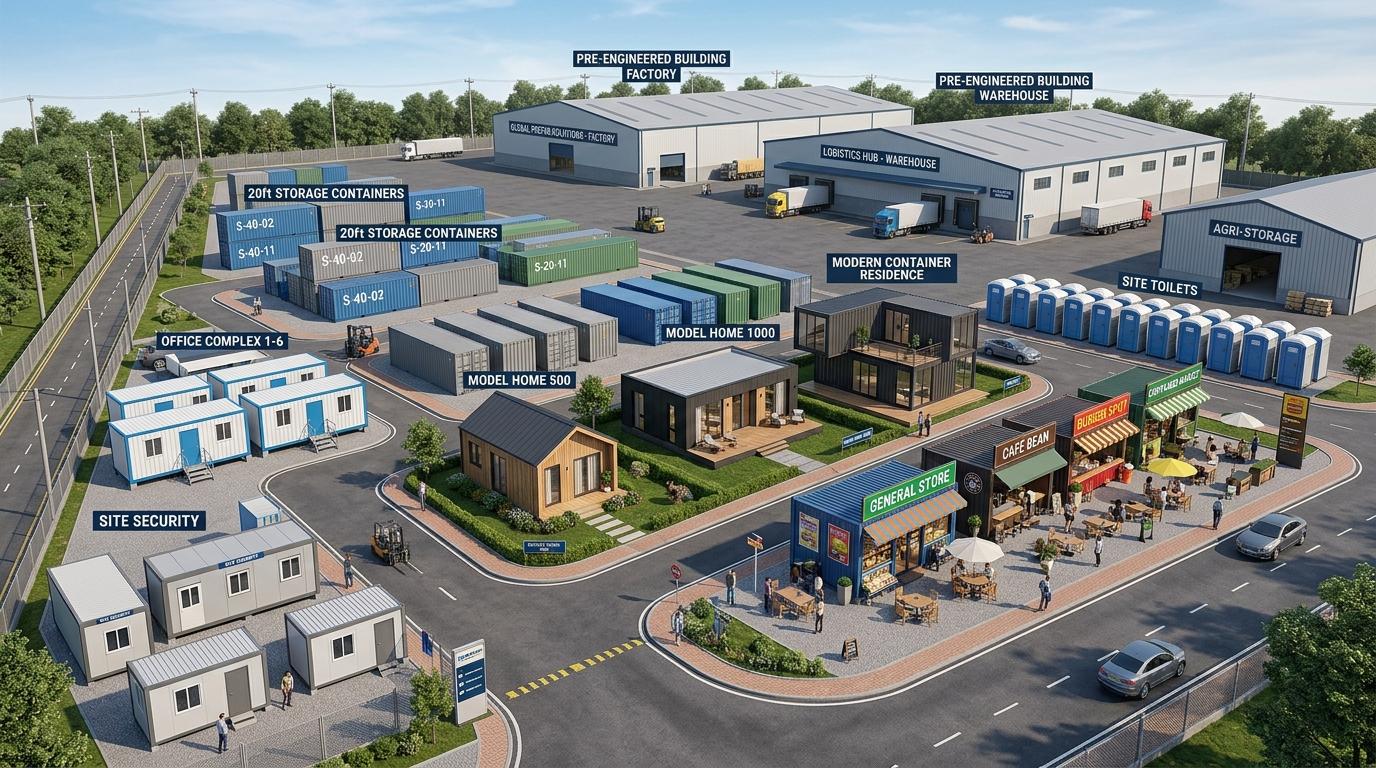
PEB Structures vs Conventional Steel Buildings: Which One Is Better?
Industrial construction has evolved significantly over the past decade. Businesses today are looking for buildings that can be completed quickly, remain durable for years, and keep construction costs under control. Whether you're planning a warehouse, factory, manufacturing facility, or logistics center, choosing the right structural system is one of the most important decisions you'll make.
Two common options are conventional steel buildings and Pre-Engineered Buildings (PEB). While both use steel as their primary material, they differ in design, manufacturing, installation, and overall efficiency.
Many businesses across Pakistan now prefer PortaKing Pakistan for modern industrial construction solutions because PEB structures deliver speed, flexibility, and excellent long-term value.
What Is a PEB Structure?
A Pre-Engineered Building (PEB) is a steel structure that is designed and manufactured in a factory before being transported to the construction site for assembly.
Unlike traditional steel buildings, every structural component is engineered to meet specific project requirements. This results in more efficient material usage, faster installation, and improved construction quality.
Businesses planning industrial projects can explore PEB structures that are designed for warehouses, factories, workshops, and commercial facilities.
What Is a Conventional Steel Building?
A conventional steel building is typically fabricated using standard steel sections that are assembled and modified during construction.
These buildings often require more on-site fabrication, welding, and adjustments, which can increase labor costs and extend project timelines.
Although conventional steel construction remains suitable for certain applications, many businesses are shifting toward PEB systems due to their efficiency.
Construction Speed
One of the biggest differences between the two systems is the construction timeline.
Traditional steel buildings often involve:
- Extensive on-site fabrication
- Longer installation periods
- Additional welding
- Higher labor requirements
PEB structures are manufactured before delivery, allowing site preparation and production to happen simultaneously.
Once delivered, installation is much faster because every component has already been engineered to fit together precisely.
For businesses working with tight project schedules, this time-saving advantage is significant.
Cost Efficiency
Budget is a major consideration for every construction project.
PEB structures generally offer better cost efficiency because:
- Less steel is required
- Manufacturing is optimized
- Labor costs are lower
- Construction time is shorter
- Material waste is reduced
Traditional steel buildings may require additional fabrication and modifications during construction, increasing both labor and material expenses.
For many industrial projects, PEB systems provide a better return on investment.
Design Flexibility
Modern industrial facilities require flexible layouts that can accommodate machinery, storage systems, and future expansion.
PEB structures support:
- Large clear spans
- High ceilings
- Wide open interiors
- Custom layouts
- Future extensions
These features allow businesses to maximize usable floor space without unnecessary structural columns.
Conventional steel buildings can also be customized, but they often require more engineering work and longer construction timelines.
Better Quality Control
Since PEB components are manufactured in controlled factory environments, quality control is more consistent.
Factory production helps ensure:
- Accurate dimensions
- Better finishing
- Reduced manufacturing errors
- Improved structural performance
By comparison, conventional steel buildings depend more heavily on on-site workmanship, where weather conditions and labor quality may affect the final result.
Reduced Construction Waste
Construction waste adds unnecessary costs and environmental impact to any project.
PEB systems are manufactured with precise engineering, reducing excess material and minimizing waste during installation.
This not only saves money but also supports more sustainable construction practices.
Easier Future Expansion
Industrial businesses often expand as production increases.
One of the biggest advantages of PEB structures is their modular design.
Additional sections can often be added with minimal disruption, making future expansion much simpler than modifying many conventional steel buildings.
This flexibility helps businesses plan for long-term growth.
Applications of PEB Structures
PEB systems are widely used across various industries, including:
- Manufacturing plants
- Warehouses
- Logistics centers
- Distribution hubs
- Aircraft hangars
- Agricultural facilities
- Commercial buildings
- Workshops
- Sports complexes
Their versatility makes them suitable for both small and large-scale industrial developments.
Lower Maintenance Requirements
Well-designed PEB structures require relatively little maintenance.
With quality protective coatings and durable steel components, businesses can reduce ongoing expenses related to repairs and structural upkeep.
Lower maintenance costs contribute to improved long-term profitability.
Why Businesses Prefer PEB Structures
More companies are choosing PEB structures because they provide a combination of speed, efficiency, and durability.
Some of the key advantages include:
- Faster project completion
- Lower overall construction costs
- High structural strength
- Flexible interior layouts
- Reduced maintenance
- Easier expansion
- Better quality control
- Environmentally responsible construction
These benefits make PEB systems one of the most practical solutions for modern industrial projects.
Conclusion
Both conventional steel buildings and PEB structures have their place in industrial construction, but for many businesses, PEB systems offer clear advantages in terms of cost, construction speed, flexibility, and long-term performance.
Whether you're developing a warehouse, factory, or commercial facility, choosing a professionally engineered PEB structure can help reduce project timelines while maximizing operational efficiency. With innovative industrial solutions from PortaKing Pakistan, businesses can invest in infrastructure that is built for today's demands and prepared for future growth.