
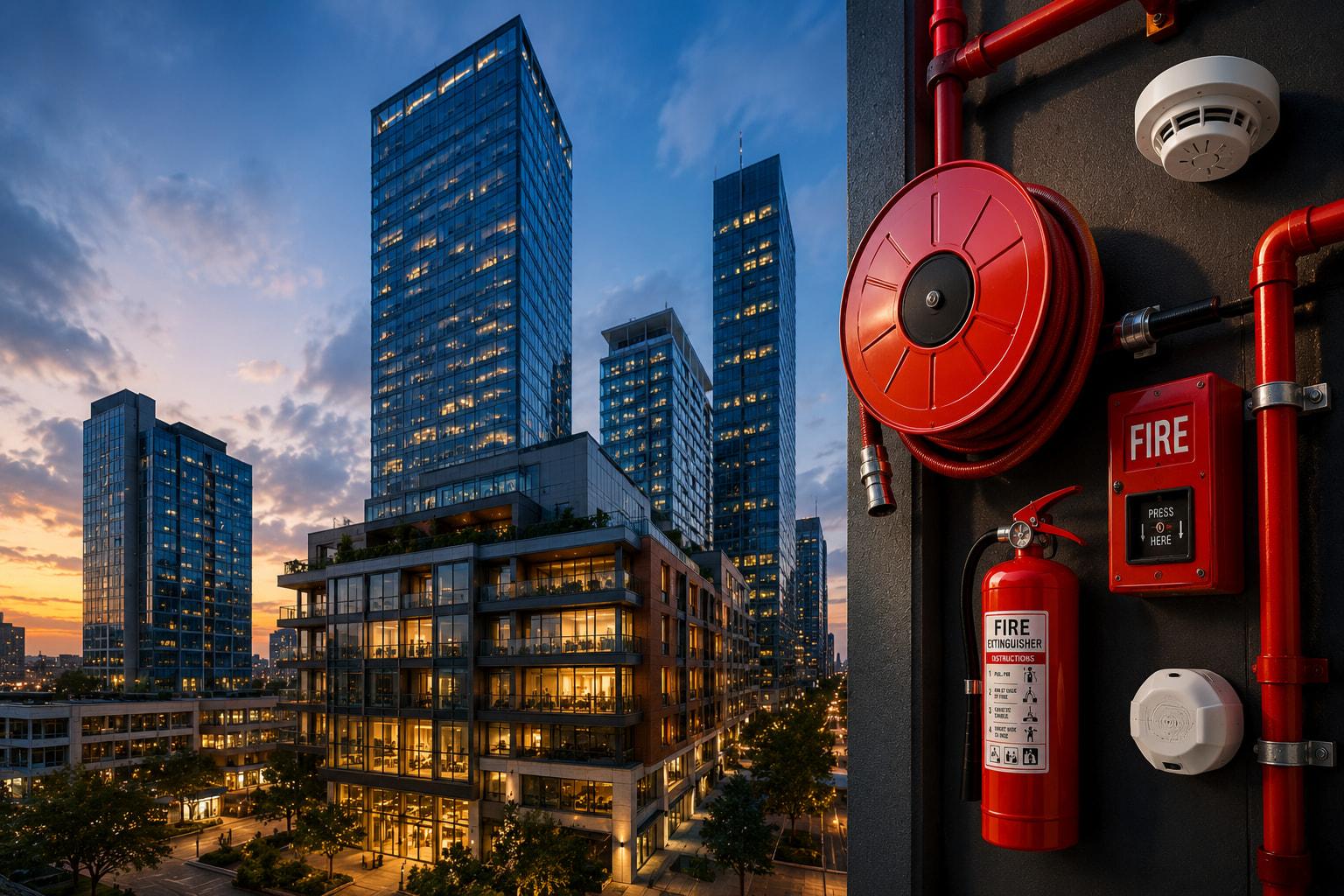
A warehouse storing flammable solvents in Toronto and a nearly identical facility in Sydney can end up following classification systems that do not fully agree with each other, which creates real headaches for companies operating across borders. Dangerous goods harmonization exists to close that gap, aligning how hazardous materials get classified, labelled, and stored so that fire and life safety planning does not have to start from scratch in every jurisdiction.
For facility owners, logistics operators, and the engineers who design their fire strategies, understanding where harmonization has succeeded and where it still falls short shapes everything from racking layout to sprinkler design.
What Dangerous Goods Harmonization Actually Covers
At its core, harmonization aligns classification systems like the UN Recommendations on the Transport of Dangerous Goods with national frameworks such as Canada's TDG Regulations and Australia's ADG Code. The goal is a shared language, so a Class 3 flammable liquid means roughly the same thing whether it ships out of Vancouver or Melbourne.
Storage and building code requirements sit on a separate, less harmonized layer. Fire codes reference these classification systems but apply their own thresholds for quantity, separation distance, and required suppression, which is where confusion still lives.
Why This Matters for Fire and Egress Modeling
When a facility stores classified dangerous goods, the fire strategy cannot be generic. Fire & egress modeling needs accurate inputs on fuel load, hazard class, and container configuration to predict realistic fire growth, smoke development, and the time available for safe evacuation.
Get the classification wrong, or apply the wrong jurisdiction's threshold, and the model becomes unreliable. This is common among operators who assume their dangerous goods documentation from one country translates cleanly to another.
Common Gaps Companies Run Into
- Applying transport classification directly to storage design without adjusting for local fire code thresholds
- Assuming a Safety Data Sheet from one country satisfies labelling in another
- Underestimating aggregate hazard when smaller quantities of dangerous goods are stored in the same fire compartment
- Overlooking incompatible goods separation, which differs more between jurisdictions than most people expect
These gaps rarely show up until an inspection, an insurance audit, or worse, an actual incident forces a closer look.
Building a Compliant, Harmonized Storage Strategy
A practical approach maps every hazard class on site against both the transport classification and local fire code storage limits, then works backwards to determine separation, containment, and suppression.
- Confirm classification against the destination jurisdiction's own hazardous materials framework, not just the country of origin
- Build fire & egress modeling around the actual hazard mix on site, including aggregate quantities
- Review incompatible materials segregation against the local fire code, since this varies more than global harmonization efforts have managed to close
- Document everything for the authority having jurisdiction in the format they expect, which is not always the same format the shipping paperwork uses
Where a Fire Safety Consultant Adds the Most Value
Vortex Fire works with facility operators to translate dangerous goods harmonization into an actual fire strategy: separation distances, fire-resistance ratings, suppression design, and egress modeling built around the real hazard on site rather than a generic warehouse assumption.
This matters most for companies operating in more than one country, where harmonization gets them part of the way there, but local fire code interpretation still needs local expertise.
Conclusion
Dangerous goods harmonization has made cross-border operations more manageable, but it is not a substitute for jurisdiction-specific fire strategy. Fire & egress modeling built on accurate hazard classification is what actually keeps a facility compliant and its occupants safe, not just a matching label on a shipping container.
If your facility stores classified hazardous materials across more than one region, it is worth having a fire safety consultant review the gap between your transport documentation and your local storage code before an inspector finds it for you.
Frequently Asked Questions
1. What is the difference between dangerous goods classification and fire code storage limits?
Classification tells you what hazard category a material falls into, based on frameworks like the UN Recommendations or a national transport code. Fire code storage limits set the actual quantity, separation, and suppression requirements for keeping that material on site, and the two do not always align neatly.
2. Does harmonization mean the same storage rules apply everywhere?
No. Harmonization aligns classification systems so hazard categories are recognized consistently, but local fire codes still set their own thresholds for storage quantity, separation distance, and required fire protection systems.
3. Why does fire and egress modeling need dangerous goods data specifically?
Fire growth and smoke behaviour depend heavily on fuel type and quantity. Modeling built on generic assumptions instead of the actual hazard class and volume on site can significantly understate how fast a fire develops or how much time occupants have to evacuate.
4. Who should review dangerous goods storage compliance for a multi-country operation?
A fire safety consultant familiar with both the transport classification framework and the local building and fire codes in each operating jurisdiction. Relying on documentation from one country to satisfy another is one of the most common compliance gaps.