
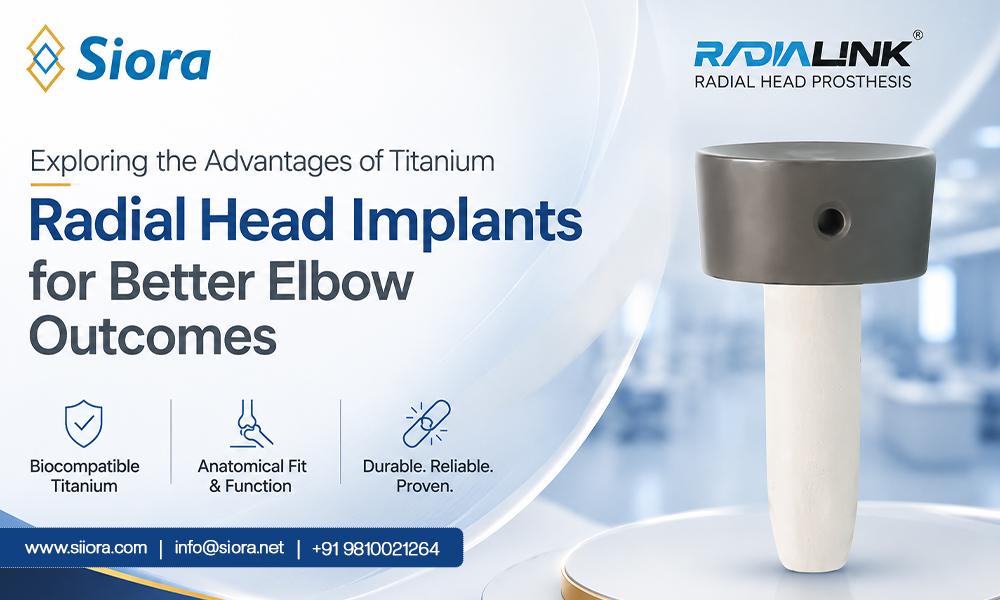
The elbow is one of the most complex joints in the human body, enabling smooth movement during everyday activities. When the radial head—the upper part of the radius bone near the elbow—is severely fractured, restoring normal elbow function becomes challenging. In cases where reconstruction is not feasible, radial head replacement often emerges as the most effective treatment option.
Over the years, advancements in orthopedic implant technology have significantly improved patient outcomes. Among the available materials, titanium radial head implants have gained widespread acceptance among orthopedic surgeons due to their strength, biocompatibility, and ability to support long-term elbow function.
Understanding Radial Head Replacement
Radial head fractures account for a considerable percentage of elbow injuries, particularly following falls or direct trauma. While many fractures can be managed using screws and plates, severely comminuted fractures may require replacement of the damaged radial head.
A radial head implant is designed to replicate the natural anatomy of the radial head, helping restore elbow stability, maintain joint alignment, and preserve motion. Selecting the appropriate implant material is crucial for achieving favorable clinical outcomes.
Why Titanium Has Become the Preferred Choice?
Titanium has established itself as a leading material in orthopedic surgery because of its unique mechanical and biological properties. Its use in radial head prostheses offers several advantages that directly benefit both surgeons and patients.
Excellent Biocompatibility
One of the primary reasons for choosing titanium is its exceptional biocompatibility. The human body generally tolerates titanium well, minimizing the likelihood of adverse tissue reactions.
Unlike some metallic materials, titanium is highly resistant to corrosion within the physiological environment. This characteristic contributes to reduced inflammatory responses and supports long-term implant acceptance.
Superior Strength with Reduced Weight
Titanium possesses an impressive strength-to-weight ratio. Despite being lightweight, it offers sufficient mechanical strength to withstand the forces transmitted through the elbow joint during daily activities.
The reduced weight of titanium implants can help create a more natural feel for patients while ensuring the implant remains durable enough to perform effectively over time.
Improved Elbow Stability and Function
The radial head plays an essential role in maintaining elbow stability, especially during rotational movements and when resisting valgus forces. Severe fractures can compromise this stability, resulting in pain, stiffness, and impaired function.
Titanium radial head implants are engineered to restore the native biomechanics of the elbow. By replicating the anatomical shape and dimensions of the original radial head, these implants help:
- Maintain joint congruency
- Preserve forearm rotation
- Improve elbow stability
- Support early functional rehabilitation
As a result, patients often experience better restoration of motion and improved functional outcomes following surgery.
Facilitates Early Mobilization
Early movement following elbow surgery is crucial for preventing stiffness, one of the most common complications associated with elbow injuries.
Radial head titanium implants provide reliable fixation and structural support, enabling surgeons to initiate rehabilitation protocols sooner. Early mobilization can significantly improve range of motion and contribute to faster recovery.
For active individuals and athletes, this advantage can be particularly beneficial in returning to routine activities more quickly.
Long-Term Durability
Orthopedic implants are expected to perform effectively for many years. Titanium's outstanding fatigue resistance makes it well-suited for long-term implantation.
Its resistance to wear and corrosion ensures that the implant maintains structural integrity even under repetitive loading conditions. This durability may reduce the likelihood of revision procedures and enhance overall patient satisfaction.
Enhanced Surgical Precision Through Modern Designs
Modern titanium radial head orthopedic implants are available in multiple sizes and configurations, allowing surgeons to select implants that closely match patient anatomy.
Conclusion
Titanium radial head implants have transformed the management of complex radial head fractures by offering an ideal combination of strength, biocompatibility, durability, and anatomical restoration. Their ability to improve elbow stability, facilitate early rehabilitation, and support long-term function has made them a preferred choice in modern orthopedic practice.