
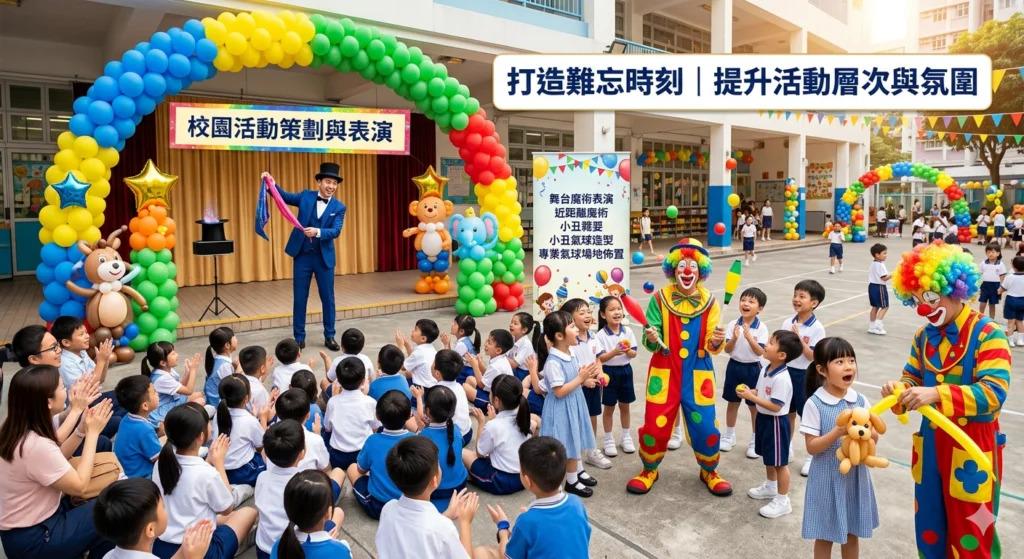
When most parents hear the term 「魔術班」 (magic class), they picture a few afternoons of card tricks and disappearing coins—a fun but frivolous activity to keep kids occupied during school breaks. However, a truly well-designed 魔術班 is anything but trivial. Beneath the surface of sleight of hand and misdirection lies a sophisticated curriculum that quietly builds confidence, sharpens critical thinking, and transforms shy children into compelling communicators.
The magic happens—literally—when a child steps in front of an audience for the first time. In a quality 魔術班, students aren't just memorizing secrets; they're learning the psychology of attention, the art of storytelling, and the grace of handling mistakes under pressure. These are the same skills that top executives and public speakers train years to master. What makes a 魔術班 truly unique is that children absorb these abilities through play, without even realizing they're developing life-long assets that no traditional classroom worksheet can replicate.
When most parents hear the term 「魔術班」, they picture a few afternoons of card tricks and disappearing coins—a fun but frivolous activity to keep kids occupied during school breaks. However, a truly well-designed 魔術班 is anything but trivial. Beneath the surface of sleight of hand and misdirection lies a sophisticated curriculum that quietly builds confidence, sharpens critical thinking, and transforms shy children into compelling communicators.
The magic happens—literally—when a child steps in front of an audience for the first time. In a quality 魔術班, students aren't just memorizing secrets; they're learning the psychology of attention, the art of storytelling, and the grace of handling mistakes under pressure. These are the same skills that top executives and public speakers train years to master. What makes a 魔術班 truly unique is that children absorb these abilities through play, without even realizing they're developing life-long assets that no traditional classroom worksheet can replicate .
為什麼頂尖教育者開始推薦魔術班?背後的心理學原理
Teachers and education experts are increasingly recommending 魔術班 for a very simple reason: it works on a psychological level that few other activities can match. When a child learns a magic trick, they aren't just following steps—they are understanding cause and effect, practicing sequence memory, and discovering how attention works. These are core cognitive skills that directly support learning in school subjects like math and science .
Many educators have observed that 魔術班 helps students who usually struggle to focus in class. The reason is simple: magic is exciting. When a teacher performs a quick trick during a lesson, students who were daydreaming suddenly pay full attention. This isn't just about entertainment—it's about creating a mental "hook" that makes information stick. One education group even started offering 魔術班 specifically for teachers, so they could use these techniques to make their classes more engaging and memorable .
Another powerful psychological benefit of 魔術班 is how it changes a child's relationship with failure. In a magic performance, tricks don't always work perfectly the first time. Children learn to handle mistakes gracefully, adapt on the spot, and keep going. This builds resilience and a growth mindset—the belief that abilities can improve with practice. In today's fast-changing world, these are exactly the skills children need to thrive .
從害羞到自信:魔術班如何重塑孩子的表達能力
One of the most dramatic changes parents notice in a 魔術班 is how their shy, quiet child transforms into a confident speaker. Magic forces children to communicate. They must introduce their trick, explain what the audience will see, guide participation, and react to gasps and laughter. This repeated practice in a safe, supportive environment slowly chips away at stage fright .
In a typical 魔術班, every session includes a performance segment. Children take turns standing in front of their classmates, showing what they've learned. At first, this feels terrifying. But with each small success, the fear shrinks and confidence grows. By the end of the course, many children who could barely speak above a whisper are performing with smiles and clear, strong voices. This is confidence that carries over into school presentations, group projects, and even family gatherings .
Beyond confidence, 魔術班 teaches children how to connect with people. A good magician reads their audience—when to pause for effect, when to speed up, how to make eye contact without feeling awkward. These are advanced social skills, yet children learn them naturally because the focus is on the fun of the trick. They aren't "studying communication"—they're simply learning to be better performers, and communication comes along as a happy bonus .
魔術班 vs. 其他興趣班:一張表看懂核心差異
Parents often ask: how is a 魔術班 different from drama, music, or sports classes? While all extracurriculars have value, magic offers a unique combination of benefits that you won't find anywhere else. The table below breaks it down clearly:
| Activity | Key Skill Developed | How 魔術班 Is Different |
|---|---|---|
| Sports | Physical fitness, teamwork | 魔術班 focuses on mental agility and solo performance, not competition |
| Music/Drama | Creative expression, memorization | 魔術班 adds a layer of mystery and real-time audience interaction |
| Tuition/STEM | Academic knowledge | 魔術班 applies knowledge practically—math and science become visible, exciting tools |
| Art/Craft | Fine motor skills | 魔術班 combines motor skills with storytelling and psychological trickery |
What makes a 魔術班 stand out is its interdisciplinary nature. In one hour, a child might practice finger dexterity for a coin trick, rehearse a script for their presentation, and calculate where the audience's attention will be. This cross-training of skills—physical, mental, and social—is rare. Also, unlike many competitive activities, 魔術班 is about personal growth, not beating others. The only person a child competes with is their past self, which creates a healthy, stress-free learning environment .
Additionally, 魔術班 is highly accessible. You don't need expensive instruments, special uniforms, or large playing fields. Many tricks can be performed with everyday objects like rubber bands, coins, or paper. This means children can practice anywhere and share their skills with friends and family immediately. The quick reward of learning a new trick keeps motivation high, making 魔術班 one of the most engaging extracurricular choices available .
家長最關心的3個問題:幾歲適合?學費值得嗎?如何挑選優質魔術班?
Q: What is the right age to start a 魔術班?
Most experts agree that children as young as 4 to 6 years old can begin learning simple magic . At this age, they have enough motor control to handle basic props like sponge balls or simple card tricks. However, the best age range for a 魔術班 is typically 7 to 12 years old. At this stage, children can understand instructions, practice independently, and manage the performance aspects like speaking and timing .
For teenagers and adults, 魔術班 are also highly beneficial. Advanced classes focus on stage presence, complex sleight of hand, and even professional performance skills. Some programs even offer certification and membership in international magic associations for older students, showing that 魔術班 can lead to serious hobbies or even careers .
Q: Is a 魔術班 worth the cost?
Like any quality educational program, the cost of a 魔術班 varies depending on the instructor's experience and the course length. But when you consider the skills children gain—confidence, public speaking, critical thinking, resilience—many parents find it to be excellent value . A good 魔術班 provides a structured learning path, professional guidance, and a safe space to practice performance, which is hard to replicate with online videos.
Think of it this way: you're not just paying for the "secrets" of the tricks. You're paying for the transformation. The child who leaves a 魔術班 is more articulate, more self-assured, and better at handling social situations. These benefits last a lifetime, making the investment worthwhile for most families .
Q: How do I choose a good 魔術班?
Choosing the right 魔術班 is crucial. Look for classes that:
-
Have a clear curriculum that goes beyond just teaching tricks. Good programs include performance practice and communication skills .
-
Offer small class sizes so each child gets individual attention. A student-to-teacher ratio of around 8:1 or less is ideal .
-
Provide a performance opportunity at the end of the course. This gives children a goal and a sense of achievement .
-
Are taught by experienced instructors who can explain concepts clearly and create a supportive atmosphere. Read reviews or ask for recommendations if possible.
專業魔術師給家長的真心話:選擇魔術班時千萬別踩的4個地雷
Mistake #1: Focusing only on the number of tricks taught
Many courses advertise "Learn 50 tricks in one day!" But this is a trap. A good 魔術班 is about quality, not quantity. Professionals advise that learning one trick well—with good timing, storytelling, and presentation—is far more valuable than memorizing dozens of secrets poorly . The goal is for a child to perform with confidence, not just to know how a trick works.
Mistake #2: Ignoring the performance aspect
Some 魔術班 are purely instructional, teaching the mechanics without any focus on performance. This is like learning the notes of a song but never playing it for anyone. Real growth happens when children practice in front of others and receive constructive feedback. Always ask if the 魔術班 includes opportunities for your child to perform in front of peers or family .
Mistake #3: Overlooking safety and age-appropriateness
Not all magic props are safe for young children. Some include small parts that are choking hazards or materials that require adult supervision. A reputable 魔術班 will use age-appropriate props. For example, younger children might use large, colorful sponge balls, while older students might handle playing cards and coins. Always check what materials will be used in the 魔術班 .
Mistake #4: Not checking the instructor's background
Teaching magic is a skill in itself. A great performer isn't always a great teacher. Before enrolling in a 魔術班, ask about the instructor's experience with children and their teaching philosophy. Do they create a positive, encouraging environment? Do they understand how to break down complex ideas into simple steps? The best 魔術班 instructors are patient, engaging, and passionate about helping each child succeed .
結語:魔術班送給孩子最珍貴的禮物,不是魔術本身
When you strip away the glitter, the props, and the secrets, a 魔術班 offers something far more precious: a child who believes in themselves. The courage to stand before others, the ability to tell a story with their hands and voice, the resilience to turn a mistake into a laugh—these are gifts that no amount of money can buy, and no screen can replace.
A 魔術班 is not just a class; it's a journey of self-discovery. It teaches children that they are capable of things they never thought possible. It shows them that with practice and patience, they can create wonder not just for others, but for themselves. That is a lesson that stays with them, not for a season, but for life.
So next time you consider an extracurricular activity for your child, look beyond the usual options. A 魔術班 might just be the most unexpected, yet most impactful, investment you can make in their future. Because in the end, the greatest trick a 魔術班 ever performs is turning a shy child into a confident, capable, and wonderfully unique individual .