
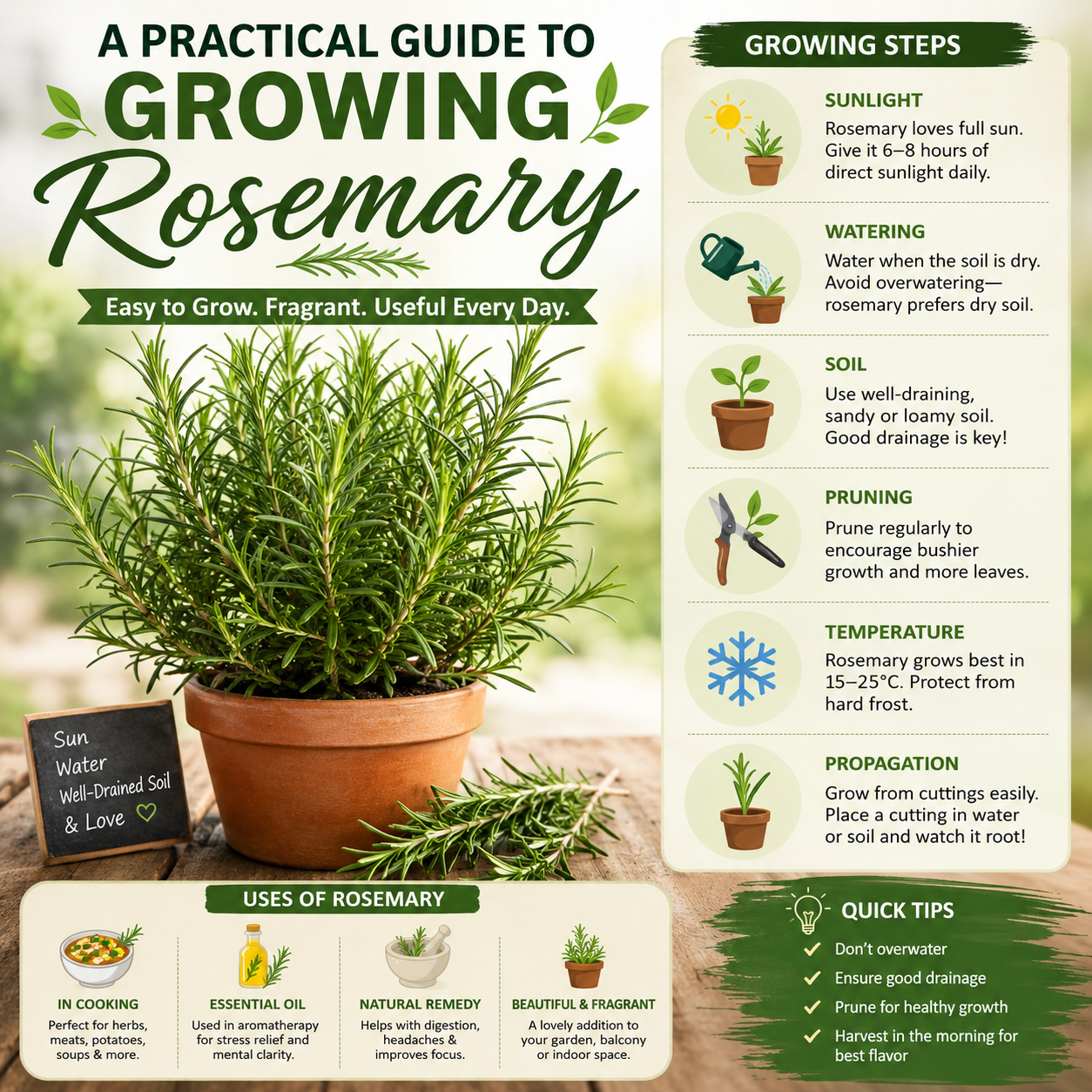
Rosemary is a highly useful herb that is used extensively by people. Along with cuisines, this herb also has numerous medical properties, which is another major reason why many people want to know how to grow rosemary. If you are also interested in having your own harvest of rosemary, then this guide will make sure that you have all the necessary instructions to grow this herb.
How can you plant Rosemary?
Rosemary grows well in the ground or in containers, but it really dislikes wet roots. So, if your soil is heavy or stays soggy, then plant it in a pot or use a raised bed. Also, rosemary doesn’t enjoy the move from ground to container, so if you want to bring it indoors later, start it in a pot first, especially if you live in a colder climate.
Before planting in the ground, mix in a few inches of organic matter, like compost, to help create a nutritious, fertile soil, kind of like a comfy bed for roots. For a pot, use a lighter container mix since rosemary tends to want drainage, and heavier mixes can hold too much moisture.
Space starter plants about 2 to 3 feet apart, because rosemary just does not like being crowded. If you are starting seeds or cuttings indoors, keep the soil evenly damp while seeds germinate and roots develop. Seeds can take a long time, sometimes 2 to 3 weeks, so don’t quit too early. Once the plant is around 4 inches tall, you can move it outside.
Growing Rosemary
Keep the soil uniformly moist at first, then let it dry out a bit between waterings. Stay consistent, and try not to overwater it. Rosemary shrubs planted in the ground usually don’t need fertilizer; however, a potted plant will run low on nutrients faster. Feed with an all-purpose balanced fertilizer after flowering, to help it along.
If mulch sits against the crown, it can encourage rotting, which nobody wants. Prune once a year before new growth begins in spring, and remove dead wood. Just don’t prune rosemary too aggressively; a little trimming is enough.
If you leave the plant alone for a long time, the plant can turn woody and leggy, which is not how you want your herb to be. After roughly 5 years, it’s often smarter to replace it, and make sure you plan ahead: take cuttings, or divide the plant, for next season if your area won’t protect it through winter.
During winter, bring potted rosemary inside; learn about overwintering rosemary indoors if you need a refresher.
Source: Abodelook