
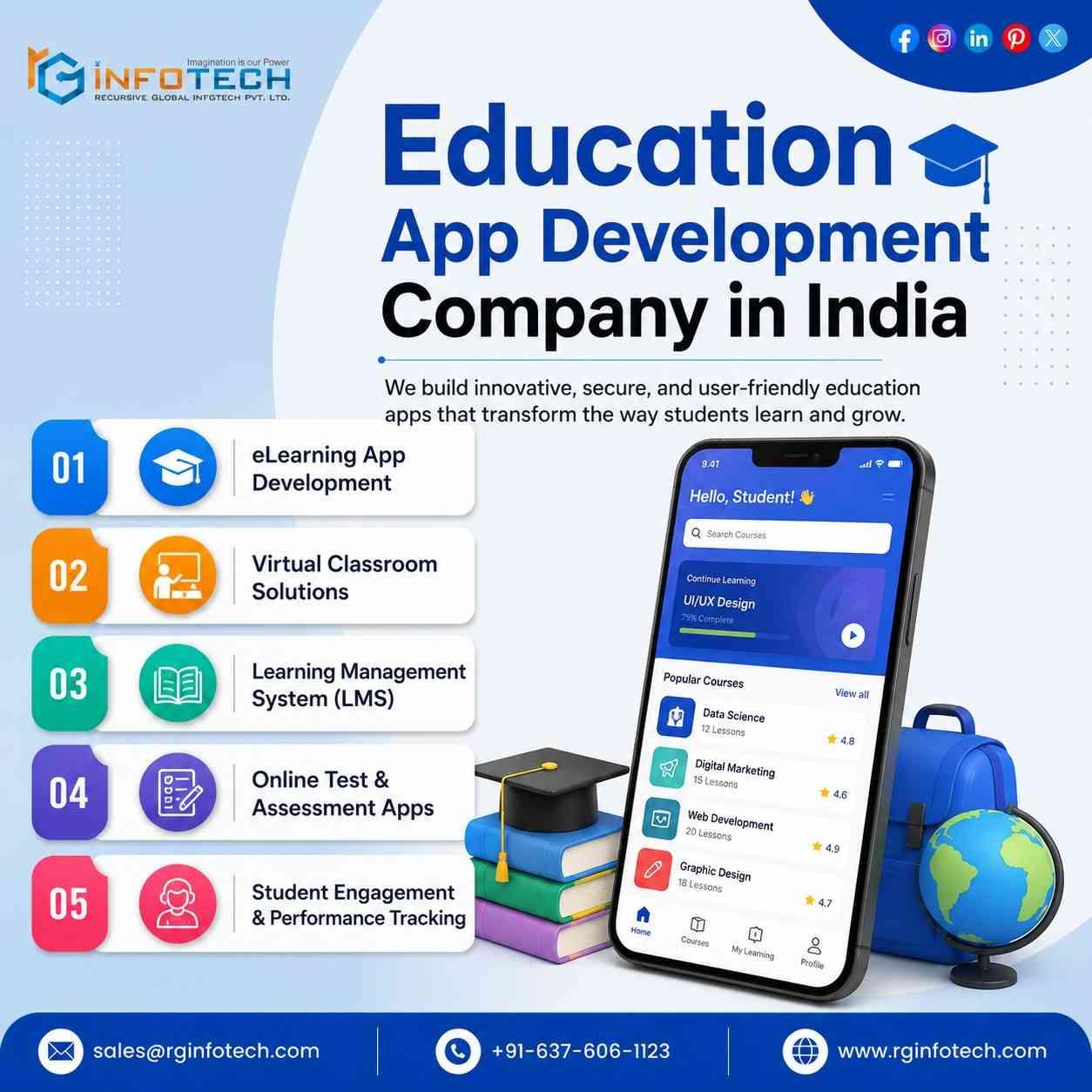
The education industry has changed significantly with the rise of smartphones, online learning, and digital classrooms. Students, teachers, parents, and educational institutions increasingly rely on mobile applications for learning, communication, assessments, and academic management. For startups, this creates a strong opportunity to build innovative education apps that solve specific learning challenges.
However, turning an education app idea into a successful product requires careful planning, the right technology, and a clear understanding of the target audience. Whether you want to build an e-learning platform, virtual classroom, language learning app, tutoring platform, or exam preparation solution, following a structured development process can reduce risks and improve your chances of success.
Here is a step-by-step guide to education app development for startups.
1. Define Your Education App Idea
The first step is to clearly define what your application will offer. The education market is broad, so startups should focus on solving a specific problem rather than trying to serve everyone.
Consider questions such as:
- Who are your target users?
- What learning problem will your app solve?
- What makes your solution different?
- Will the app serve students, teachers, parents, or institutions?
- What type of educational content will you provide?
For example, your startup could focus on language learning, professional courses, children's education, competitive exam preparation, or skill development.
A well-defined concept creates a strong foundation for the rest of the development process.
2. Conduct Market and Competitor Research
Before investing in development, research the existing market. Analyze competing education applications to understand their features, pricing, user experience, strengths, and weaknesses.
Pay attention to customer reviews because they can reveal problems users experience with existing platforms. You may discover opportunities to offer better personalization, simpler navigation, improved content quality, stronger communication, or more affordable subscription plans.
Market research can also help you identify your ideal audience and determine which features should be prioritized in your first version.
3. Choose the Right Business Model
Your monetization strategy should be considered before development begins. Education apps can generate revenue through several models.
Popular options include:
- Monthly or yearly subscriptions
- Paid courses
- Freemium features
- In-app purchases
- Advertisements
- Certification fees
- Institutional licensing
Startups should choose a model that matches their audience and content strategy. For example, a professional learning platform may work well with subscriptions, while a children's learning app could combine free educational content with premium courses.
4. Plan the Essential Features
Once your business model is clear, create a feature roadmap. Avoid adding too many features to the first version. Instead, focus on the functionality users genuinely need.
Common education app features include:
User Registration
Allow students, teachers, and parents to create accounts using email, phone numbers, or social login options.
Course Management
Students should be able to browse courses, view lessons, track completed content, and continue learning from where they stopped.
Video and Live Classes
Video lessons and live classrooms can provide an interactive learning experience. Features such as screen sharing, chat, and virtual sessions can make online education more engaging.
Quizzes and Assessments
Interactive quizzes, assignments, tests, and automated evaluations help students measure their understanding.
Progress Tracking
Students should be able to view course completion, test scores, learning streaks, and overall performance.
Push Notifications
Notifications can remind users about upcoming classes, assignments, exams, new lessons, and important announcements.
5. Design a Simple and Engaging UI/UX
Education applications should be easy to navigate, particularly when they serve younger students or users who may not be highly familiar with technology.
Create a clean interface with clear menus, readable typography, intuitive navigation, and visually engaging learning elements.
During the design stage, create wireframes and prototypes before moving into full development. Testing these designs with potential users can help identify usability issues early.
Accessibility should also be considered. Features such as adjustable text sizes, captions, audio support, and accessible navigation can make the learning experience more inclusive.
6. Select the Technology Stack
Technology selection depends on your application's features, target platforms, scalability requirements, and budget.
Startups may consider native development for Android and iOS or cross-platform frameworks when they want to launch across multiple platforms efficiently.
The backend may use technologies such as Node.js, Python, or other scalable frameworks, while databases can include PostgreSQL, MySQL, MongoDB, or similar solutions.
Cloud platforms can support storage, authentication, analytics, video content, and application scalability.
An experienced Education App Development Company in India can help startups select a technology stack based on their specific product requirements rather than simply following popular technology trends.
7. Develop an MVP
Building a Minimum Viable Product (MVP) is often a smart approach for startups. Instead of developing every planned feature immediately, launch a basic version containing the core functionality.
For example, an education MVP could include:
- User registration
- Course browsing
- Video lessons
- Quizzes
- Progress tracking
- Notifications
- Basic payment functionality
After launch, collect user feedback and analyze how people interact with the application. This information can guide future development and help prevent spending money on features that users do not need.
8. Focus on Security and Data Privacy
Education apps may handle personal information, academic records, payment details, and other sensitive data. Security should therefore be considered throughout development.
Implement secure authentication, encrypted data transmission, role-based access, secure payment processing, regular backups, and appropriate privacy controls.
If your application serves children, additional privacy and parental control considerations may also apply depending on the target market and applicable regulations.
9. Test the Application Thoroughly
Testing is essential before releasing the app publicly. A comprehensive testing process should cover functionality, performance, security, compatibility, usability, and network conditions.
Test the application across different devices and screen sizes. Also check how it performs under heavy traffic, slower internet connections, and other real-world conditions.
Beta testing with a small group of students or educators can provide valuable feedback before the full launch.
10. Launch, Analyze, and Improve
App development does not end when the product reaches the app stores. After launch, monitor downloads, engagement, retention, course completion, subscription conversions, and user feedback.
Analytics can help you understand which features are popular and where users drop off. Regular updates can then improve performance and introduce valuable functionality.
Future enhancements could include AI-powered tutoring, personalized learning paths, voice-based learning, gamification, recommendation engines, and intelligent assessments.
How Much Does Education App Development Cost?
The cost depends on factors such as app complexity, number of platforms, design requirements, backend architecture, third-party integrations, development team location, and advanced features.
A simple learning application may require a relatively modest investment, while an advanced platform with live classes, AI, video streaming, payment systems, analytics, and administrative dashboards will require a larger budget.
Working with an experienced development team can help startups prioritize features and create a realistic development roadmap.
An experienced Education App Development Company in India can also help startups balance functionality, development costs, scalability, and time to market while building a product that can evolve with growing user demand.
Final Thoughts
Education app development can be a promising opportunity for startups, but success depends on more than simply creating an attractive application. A strong concept, clear target audience, carefully selected features, intuitive design, secure technology, and continuous improvement are essential.
Start with a focused MVP, listen to your users, analyze performance, and gradually expand the application based on real market demand. With the right strategy and development partner, startups can create education platforms that make learning more accessible, interactive, and personalized.