
If you've ever stood in the detailing aisle staring at a dozen different bottles wondering which one is actually safe for your car, you're not alone. I've been there myself, and I learned the hard way that not every cleaner belongs on every surface — especially if your vehicle has a vinyl wrap. Picking the wrong wrap cleaner isn't just a wasted purchase; it can actually shorten the life of your wrap, dull the finish, or leave behind a residue that's a nightmare to fix later. So if you're trying to figure out which one is right for your car, here's what actually matters.
Why Regular Car Soap Doesn't Always Work
It's tempting to assume that anything labeled "car wash soap" is safe for a wrap, but that's not quite true. Vinyl is a different material than paint, and it reacts differently to chemicals. Some soaps are formulated with waxes or additives meant to bond with a clear coat, and those same ingredients can leave a hazy film on vinyl or interfere with how it looks under sunlight. Others are simply too harsh, stripping away the surface layer that keeps your wrap looking sharp. A cleaner made specifically for wraps is designed with a pH balance and ingredient list that respects the material instead of fighting against it.
Check the pH Before Anything Else
This is probably the single most important thing to look at. A wrap-safe cleaner should be pH neutral or very close to it. Anything too acidic or too alkaline can degrade the adhesive underneath the vinyl over time, which is how you end up with lifting edges or bubbling months down the road. If a product doesn't list its pH level anywhere on the bottle or the website, that's usually a sign to keep looking.
Avoid Anything With Solvents or Harsh Degreasers
Some heavy-duty cleaners marketed for engine bays or wheels contain solvents that are far too aggressive for vinyl. These can eat into the finish, especially on satin or matte wraps where the texture is more delicate. If you see ingredients like petroleum distillates or strong degreasers high on the label, that product probably isn't meant for your wrap, no matter how good the reviews look for other uses.
Think About Your Finish Type
Not all wraps behave the same way. Gloss finishes tend to be a bit more forgiving, but satin and matte finishes show streaking, spotting, and residue far more easily. If your wrap has any texture to it, look for a cleaner that specifically mentions being safe for satin or matte films, since some products that work fine on gloss can leave visible marks on textured surfaces.
Test Before You Commit
Even with a product labeled as wrap-safe, it's smart to test it on a small, inconspicuous panel first — somewhere like the inside of a door jamb or under the bumper. Let it sit for the recommended time, wipe it off, and check for any discoloration, streaking, or texture change before using it on the whole vehicle. It takes an extra five minutes but can save you from a much bigger headache.
Don't Skip the Right Tools
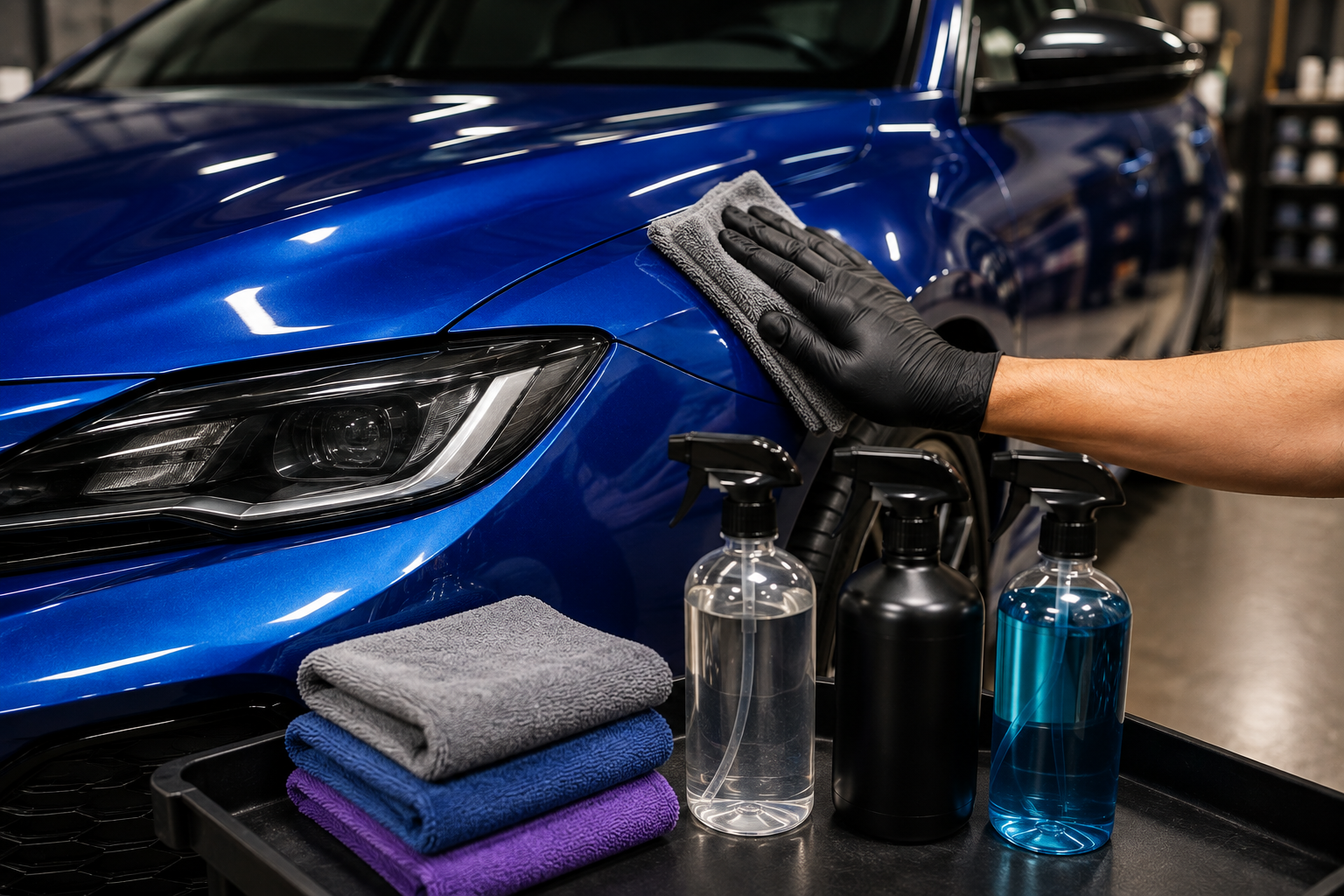
The cleaner itself is only half the equation. Pairing it with a rough sponge or an old towel with abrasive fibers can undo all the benefits of choosing a gentle formula. Stick with soft microfiber towels and a light touch, especially around seams and edges where vinyl is most vulnerable to lifting.
Conclusion
Choosing the right cleaner for your wrap isn't complicated once you know what to look for — a neutral pH, no harsh solvents, and a formula that matches your finish type, whether that's gloss, satin, or matte. A little extra care during washing goes a long way toward keeping colors vibrant and textures intact for years instead of months. This matters even more if you've gone with something bold, like a deep metallic gloss finish, where every scratch or streak is far more noticeable under direct light. Treat the surface the way it deserves to be treated, and that showroom shine will stick around a lot longer than you'd expect.
FAQ
Can I use dish soap on my wrap in a pinch?
It's better to avoid it. Dish soap is designed to cut through grease aggressively, which also means it can strip protective layers off vinyl over repeated use. It's fine for a true emergency, but it shouldn't become a regular habit.
How often should I wash a wrapped vehicle?
Most people find every one to two weeks works well, though it depends on your environment. Vehicles exposed to more dust, pollen, or road salt may need more frequent washing to prevent buildup from settling into the film.
Is a wrap cleaner different from a regular car wash soap?
Yes, generally. Wrap-specific cleaners are formulated to be gentler, often pH neutral, and free of the waxes or additives found in standard car soaps that are meant to interact with clear coat rather than vinyl.
Can pressure washing damage a wrap?
It can, if used incorrectly. High pressure aimed directly at seams or edges can cause lifting. If you use a pressure washer, keep a safe distance and avoid concentrating the spray on any one spot for too long.