
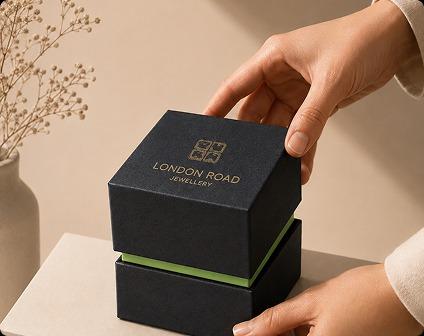
Packaging is often the first physical interaction a customer has with a product, making its structure and presentation important to the overall brand experience. Luxury Rigid boxes can help brands create a more controlled presentation through custom structures, materials, finishes, and interior layouts, while Elite rigid boxes provides rigid packaging options for products across categories such as jewelry, watches, cosmetics, fragrance, apparel, gifts, and accessories. A well-planned package does not replace product quality or customer service, but it can support the visual identity and positioning that a brand has already established.
Why Packaging Influences Brand Perception
Customers interact with packaging at several points in the buying process.
In a retail environment, the package may be visible before the product is handled. In e-commerce, the packaging becomes part of the delivery and unboxing experience. In both situations, the box communicates information about the product through its appearance, construction, and organization.
Packaging can reflect a brand's approach to design.
A simple structure with restrained printing may suit a minimalist brand. A textured surface with carefully selected finishing may work better for a heritage or gift-oriented product. The important factor is consistency between the packaging and the identity of the product inside.
Brand perception is built through many elements, including the product itself, customer service, website, advertising, and packaging. The box is one part of that wider experience.
What Makes Luxury Rigid Packaging Different?
Rigid boxes are constructed around a firm board structure that helps the package maintain its shape.
This creates a stable foundation for exterior wrapping, printing, finishing, and interior inserts. Unlike folding cartons, rigid boxes are generally supplied as a structured package rather than being folded into shape by the customer.
Different formats can be selected according to the product.
Common options include magnetic closure boxes, two-piece boxes, drawer boxes, shoulder-neck boxes, book-style boxes, hinged-lid boxes, and custom-shaped rigid boxes.
Each structure creates a different interaction.
A magnetic box can provide a controlled closing action. A drawer box creates a sliding opening, while a two-piece box offers a straightforward lift-off reveal.
The structure should support the product instead of becoming an unnecessary design feature.
How Luxury Rigid Boxes Influence Product Presentation
Product presentation depends heavily on fit and organization.
A generic box may leave too much empty space around a product or require additional filling to keep it stable. Custom rigid packaging allows brands to consider the product's dimensions when planning the box.
This can include the length, width, height, accessories, inserts, and clearance required for opening and closing.
Luxury Rigid boxes can also provide a defined interior space where the product is positioned deliberately.
For example, a watch can sit inside a fitted holder, while jewelry can be arranged in separate sections. A cosmetic gift set can use dividers to separate individual products.
The result is a more controlled presentation from the outside of the package to the product itself.
The Connection Between Packaging and Brand Identity
A strong brand identity depends on consistency.
Packaging can carry the same visual elements used across other brand touchpoints, including:
- Logo
- Brand colors
- Typography
- Patterns
- Graphic elements
- Product imagery
- Finishing details
A brand does not need to use the same box for every product.
Instead, it can establish packaging guidelines that allow different structures while maintaining common visual elements.
For instance, a jewelry collection may require small ring, necklace, and bracelet boxes with different dimensions. The structures can vary while the logo placement, colors, typography, and surface treatment remain consistent.
This creates a recognizable packaging system without forcing every product into the same format.
How Materials Affect Brand Perception
The materials used on a box influence both appearance and touch.
Rigid board provides the structural foundation, while the outer wrap determines much of the surface experience.
Textured and linen-style papers can provide a tactile surface. Felt or suede-effect materials can create a softer interaction. Soft-touch coatings provide a smooth, velvety finish, while smooth coated papers can provide a cleaner surface for detailed printing.
The right material depends on the brand and product.
A skincare brand may prefer a soft-touch surface with minimal graphics. A jewelry brand may choose a textured wrap and a fitted interior.
Material selection should therefore be connected to the intended product experience rather than based only on appearance.
The Role of Finishing in Brand Presentation
Finishing can emphasize selected parts of a packaging design.
Common techniques include:
- Hot foil stamping
- Embossing
- Debossing
- Matte lamination
- Gloss lamination
- Soft-touch coating
- Spot UV
- Textured finishes
Foil can draw attention to a logo or product name. Embossing can create raised detail, while debossing creates a recessed effect.
A matte surface can provide a quieter visual appearance, while selective gloss can create contrast.
However, more finishing does not necessarily create a stronger brand image.
Using too many effects can make packaging difficult to read. A restrained combination of one or two finishing techniques can often keep the design focused.
Product Protection and Customer Confidence
Brand perception is also affected by how well packaging performs its basic functions.
A product that arrives damaged, displaced, or poorly organized can create a different impression from the one intended by the brand.
Rigid construction can provide a stable outer structure, while internal inserts can help keep the product in place.
Different products require different levels of support.
Jewelry may need fitted holders. Watches may require dedicated supports. Electronics can benefit from separate sections for the main device and accessories. Fragile glass containers may require cushioning or fitted inserts.
The packaging should therefore be designed around the actual product rather than treating protection as a secondary concern.
Custom Inserts and Interior Presentation
The inside of a box can have as much influence on presentation as the exterior.
A bare interior may provide little support or visual organization. A fitted insert can create a defined position for the product and accessories.
Available insert approaches can include velvet-wrapped structures, flocked trays, foam or EVA, molded pulp, and cardboard inserts.
The choice depends on the product.
Velvet or flocked interiors can suit jewelry and watches. Foam can provide cushioning for electronics and fragile products. Molded pulp or cardboard can be considered when recyclable interior materials are important.
Interior design should also consider how easily the customer can remove the product.
A package should protect the product without making access unnecessarily difficult.
Luxury Rigid Boxes and the Unboxing Experience
Unboxing is another point where Elite Rigid Boxes packaging can influence customer perception.
The opening mechanism determines how the customer first interacts with the package.
A magnetic closure can create a controlled opening and closing movement. A drawer structure provides a sliding reveal, while a hinged-lid box creates a slower, deliberate opening. A two-piece box offers a simple lift-off experience.
The goal should not be to make the process complicated.
A good opening experience is easy to understand and appropriate for the product. The product should be positioned clearly, accessories should be organized, and unnecessary packaging layers should be avoided.
The interior can also include useful materials such as care instructions, product information, thank-you cards, or loyalty materials.
Consistency Across a Product Range
Growing brands often have several products that require different packaging sizes.
A perfume bottle, watch, shirt, and gift set cannot all use the same box structure.
A packaging system allows brands to adapt the dimensions while keeping selected visual elements consistent.
For example, the same brand color, logo treatment, typography, and finishing style can be used across several box formats.
This creates continuity without sacrificing product-specific packaging.
Consistency is especially important when products are sold through multiple channels. Customers may encounter the same brand through a website, social media, retail store, and delivery package.
Packaging can become another recognizable part of that identity.
Luxury Packaging in Retail Environments
In retail, packaging often has to work within a crowded visual environment.
Products may be placed next to competing brands, making clear branding and appropriate proportions important.
The package should allow customers to identify the brand and product without excessive visual clutter.
A structured box can also support organized shelf presentation.
Different products can use different box sizes while maintaining a consistent visual language.
For gift-oriented products, the packaging itself may also be part of the perceived value of the purchase because the customer may present the item directly in its original box.
Luxury Rigid Boxes for E-Commerce
E-commerce adds another layer to packaging requirements.
The presentation box may pass through fulfillment centers and delivery networks before reaching the customer.
For this reason, presentation packaging and shipping packaging do not always need to perform exactly the same role.
A rigid product box can provide the presentation and interior organization, while an outer mailer or shipping carton can provide additional protection during transportation.
Brands should also consider storage and package dimensions.
Large or heavy boxes can require more warehouse and shipping space. A collapsible rigid structure may be considered when freight volume is an important concern.
The final packaging solution should balance customer experience with operational requirements.
Choosing the Right Box Style for Brand Positioning
The box style can influence how the product is introduced to the customer.
Two-Piece Boxes
A separate lid and base create a classic opening and can work well for jewelry, apparel, shoes, chocolates, and gifts.
Magnetic Closure Boxes
These boxes provide a controlled closing action and can suit watches, electronics, PR kits, and premium gift sets.
Drawer Boxes
The sliding structure creates an interactive opening and can work well for cosmetics, tea, chocolates, and smaller accessories.
Shoulder-Neck Boxes
This structure creates a layered fit between the lid and base and can be suitable for fragrance, candles, cosmetics, and similar products.
Hinged-Lid Boxes
A hinged lid provides a deliberate opening and can suit stationery, keepsakes, corporate gifts, and selected premium products.
The correct choice depends on the product, dimensions, weight, protection requirements, and customer interaction.
Luxury Packaging for Different Product Categories
Packaging requirements change according to the product.
Jewelry
Small jewelry pieces need accurate positioning and dedicated spaces.
Watches
Watch boxes can use fitted holders to keep the product stable.
Cosmetics
Cosmetic collections can use dividers to organize bottles, jars, tubes, and accessories.
Fragrance
Perfume bottles may require structured inserts to prevent movement.
Fashion Accessories
Belts, wallets, shoes, shirts, and handbags require different dimensions and structural approaches.
Gift Sets
Multiple products can be arranged through compartments and inserts so that each item has a defined position.
This product-specific approach helps brands maintain presentation standards without relying on one universal box.
Common Packaging Choices That Can Weaken Brand Perception
Several packaging problems can work against a carefully developed brand image.
Poor product fit is one example. Excessive empty space can make the package appear less precise, while insufficient space can make the product difficult to insert or remove.
Weak internal support can also create problems during transportation.
Another issue is excessive decoration. Too many colors, finishes, graphics, or fonts can make the brand identity difficult to recognize.
Packaging should also avoid unnecessarily complicated opening mechanisms.
Finally, brands should not approve packaging based only on a digital rendering. A physical sample loaded with the actual product can reveal issues with closure tolerance, fit, board weight, wrap texture, and interior arrangement.
How to Use Packaging to Support a Stronger Brand Image
Brands can approach packaging development through a clear process.
Start by defining the visual identity and understanding the product.
Measure the product accurately and identify protection requirements. Decide whether the package needs a fitted insert, divider, holder, or cushioning.
Then select the box structure and opening mechanism.
Choose the exterior material and finishing according to the brand's visual direction. Keep the interior consistent with the quality and style established on the outside.
Before production, create and evaluate a physical sample.
The sample should be tested with the actual product inside. Check the closure, dimensions, fit, surface, interior, and overall handling experience.
This practical stage can identify problems before a larger production order is approved.
Conclusion
Packaging can influence brand perception because it is a physical expression of the product and the company behind it. Structure, materials, visual identity, product fit, protection, interior organization, and opening experience all contribute to how the package is experienced.
Luxury Rigid boxes give brands flexibility to develop these elements around individual products while maintaining a consistent visual direction. The most effective approach is not to add every available decorative feature but to make thoughtful decisions about structure, materials, finishing, and usability.
When packaging is designed around the actual product and aligned with the brand's identity, it can support a more consistent customer experience across retail, gifting, and e-commerce.