
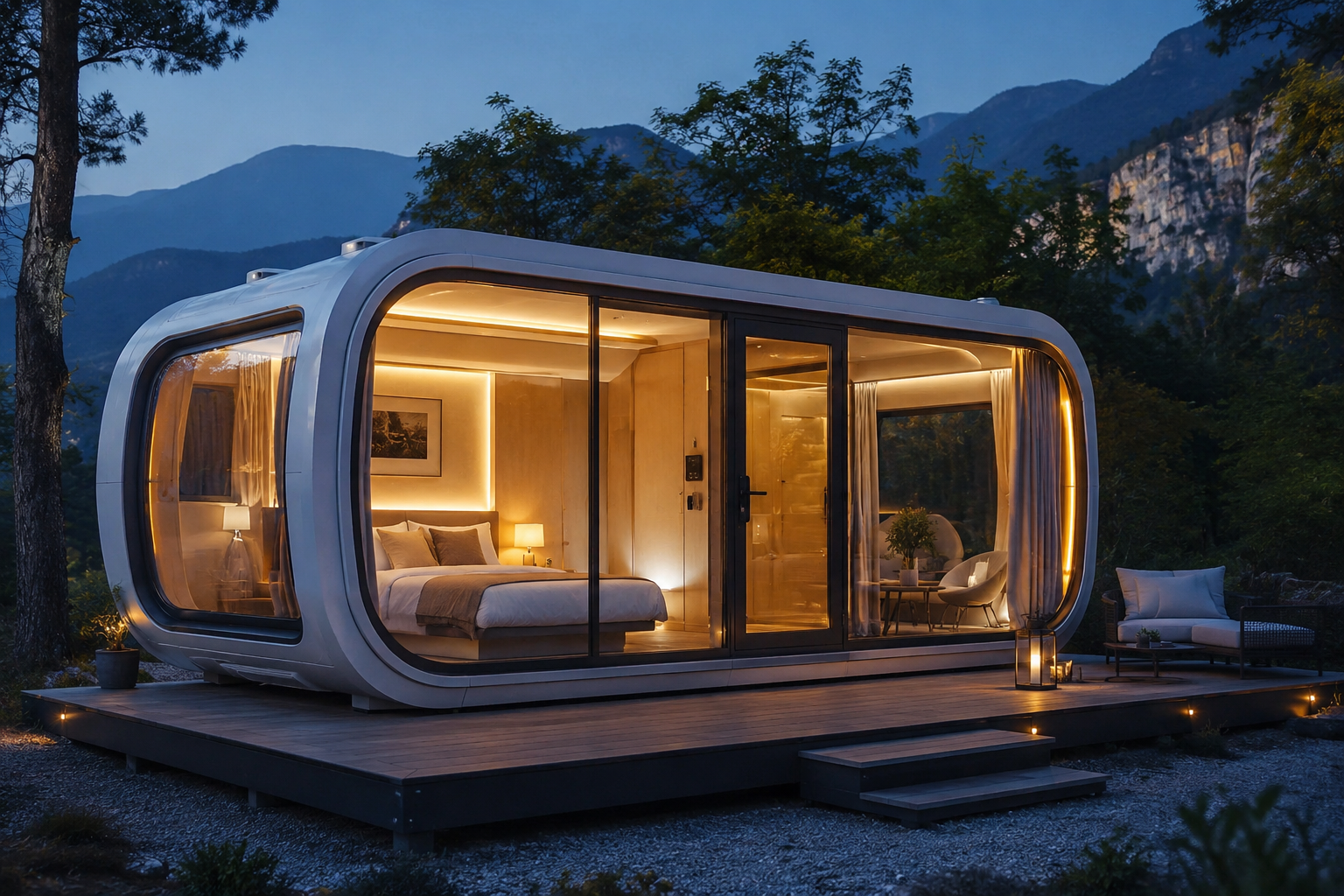
When people start researching a capsule home, most of the attention goes to size and price. But there’s a question that matters just as much, if not more: what is it actually made of? A capsule cabin sitting out in Mumbai’s monsoon or a remote worksite’s heat needs to be built with the right materials, or it simply won’t last. In this blog, we’re breaking down exactly what goes into a well-built capsule home, layer by layer, so you know what to look for before you buy.
Why Materials Matter More Than People Realise
A cabin capsule might look similar from the outside whether it’s a good one or a poor one — sleek panels, a curved profile, a clean finish. But the real difference shows up after a year or two of actual use. Cheap insulation lets heat in during summer. Poor-quality steel frames rust in humid conditions. Low-grade flooring wears out fast under daily foot traffic. The materials used are what decide whether your capsule home lasts 15 years or starts falling apart in three.
This is also where a capsule home differs meaningfully from a basic capsule container, which is often just a converted shipping box without the same attention to insulation and interior finishing.
The Roof: Your First Line of Defence
The roof takes the most direct hit from sun, rain, and heat, so it needs to be engineered properly.
— Outer sheet: Pre-painted galvanized (PPGI/GI) steel sheet, shaped into a curved or formed profile that helps rainwater run off instead of pooling
— Insulation layer: PUF (polyurethane foam) or PIR insulation, which keeps interior temperatures stable through both summer heat and winter cold
— Inner finish: Either a pre-painted galvanized sheet or a decorative interior panel, depending on the finish level you choose
— Structure: An MS (mild steel) frame built specifically to follow the capsule’s curved roof profile
Without proper insulation at this stage, a capsule home can turn into an oven during Indian summers — this is one area where it genuinely doesn’t pay to cut corners.
The Walls: Strength Meets Insulation
The wall construction of a capsule cabin is where structural strength and comfort come together.
— Outer finish: Pre-painted galvanized (PPGI/GI) sheet, or an architectural exterior cladding for a more premium look
— Insulation: PUF or PIR insulated sandwich panel, sealed between the outer and inner layers
— Inner finish: A pre-painted galvanized sheet or a decorative interior panel, matching the roof’s finish
— Structure: MS steel frame, built with a curved pod-profile for that distinctive capsule shape
The Floor: Built to Handle Daily Use
Flooring might not seem as exciting as the shell, but it takes a beating every single day, so the build quality here matters just as much.
— Walking surface: Vinyl, PVC, or SPC flooring, chosen based on budget and finish level
— Base layer:Cement board or another suitable structural floor board
— Insulation:Rockwool, PUF, or XPS insulation underneath, which also helps with sound dampening
— Floor joists: MS steel frame for structural support
— Base support: An MS steel platform or skid-mounted support, which is what allows the entire capsule home to be relocated without damage later on
This layered approach is also why a capsule home in India can be moved from one site to another without cracking or structural issues — the steel platform underneath is doing a lot of the heavy lifting.
Comparing Material Options: What Should You Actually Choose?
Different projects call for different material choices. Here’s a simple way to think about it:
Shell material
— *Insulated MS with composite panel* — durable, cost-effective, and a solid choice for standard deployments like guard posts or basic guest pods
— ACP premium panel — a sleek, modern exterior finish, ideal for hotel or resort settings where appearance matters
— PUF sandwich panel (upgrade) — adds extra thermal insulation, worth considering for extreme climate zones
Flooring
— Anti-skid vinyl — economical and easy to clean, suited for everyday, high-traffic use
— Wooden laminate — a warmer, more premium feel for guest-facing capsules
— Vitrified tile— a high-end, near-permanent-building finish, generally reserved for premium suites
Not sure which material combination suits your site and budget? [Talk to our team and get expert guidance on the right build for your capsule home]
How Material Choice Affects Capsule Home Lifespan
A well-built capsule home, using the right combination of insulated MS steel, PUF/PIR insulation, and proper flooring, typically lasts between 12 and 18 years with normal use. That’s a meaningful number when you’re comparing it against permanent construction, especially since a capsule cabin achieves this lifespan while remaining fully relocatable.
Poor material choices, on the other hand, show up fast — rusting frames, peeling panels, cracked flooring, and insulation that stops doing its job within a couple of monsoons. This is exactly why it’s worth asking your manufacturer detailed questions about material specifications before signing off on an order, rather than just comparing surface-level photos.
Capsule Dome House vs Standard Capsule Home: Does Material Change?
You may have come across the term “capsule dome house” while researching. The good news is the core materials stay the same — insulated MS steel shell, composite or ACP outer panel, and PUF or EPS insulation. The only real difference is the shape: a capsule dome house uses a rounded, dome-style profile, while a standard capsule home typically uses a more modular rectangular or gently curved shell. Structurally and materially, both are built on the same foundation.
Questions Worth Asking Your Manufacturer
Before you finalise your capsule home order, it’s worth getting clear answers on:
1. What gauge and grade of MS steel is used in the frame?
2. Is the insulation PUF, PIR, or a lower-grade alternative?
3. What’s the wall panel thickness, and does it change based on configuration?
4. Is the flooring base cement board, or a cheaper substitute?
5. What warranty is offered against rust, panel damage, or insulation failure?
A manufacturer confident in their build quality should have no hesitation walking you through these specifics in detail.
Summary
The materials inside a capsule home — the insulated MS steel frame, PUF or PIR insulation, composite or ACP wall panels, and the vinyl or laminate flooring over a cement board base — are what actually determine how long your cabin capsule lasts and how comfortable it stays through Indian summers and monsoons. A properly built capsule home can last 12–18 years while remaining fully relocatable, but that’s only true if the right materials go into it from the start. Whether you’re comparing a capsule container, a standard capsule home, or a capsule dome house, understanding the build quality behind each option helps you make a far more informed decision than judging by looks alone.
Ready to build a capsule home with the right materials for your site and budget? [Get a free consultation and custom quote from our team today →]