
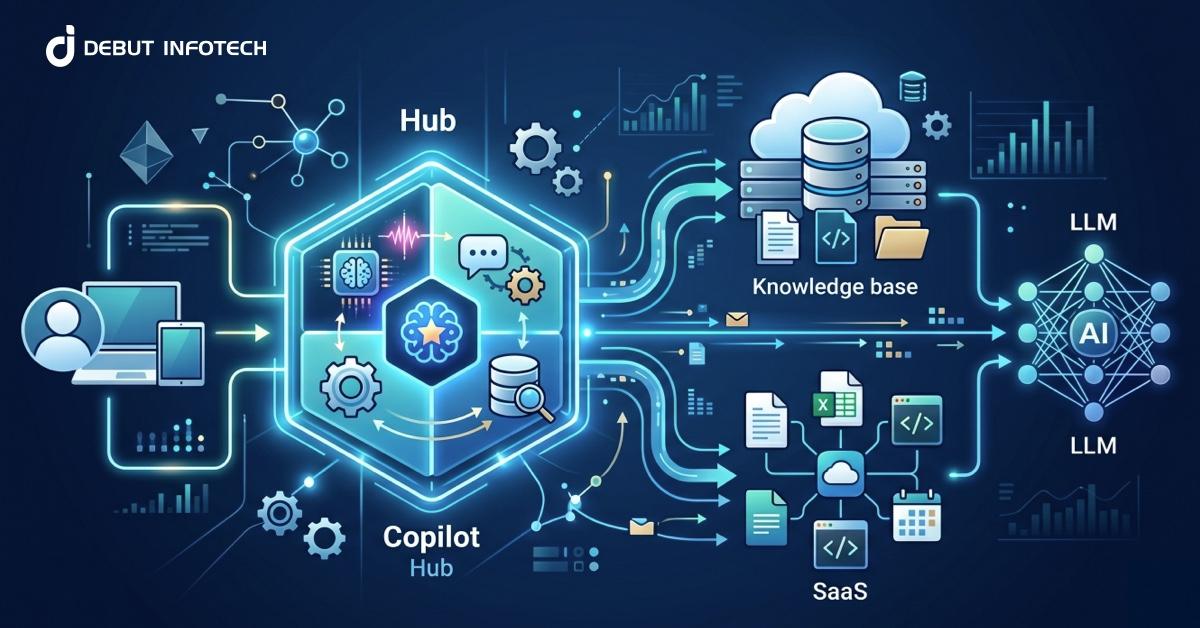
Building an enterprise AI copilot in 2026 involves more than integrating an LLM into a business application. Enterprise AI copilot development requires a combination of business process analysis, secure data access, AI model selection, integrations, workflow automation, and continuous evaluation to create a reliable assistant for employees or customers.
1. Define the Copilot’s Business Use Cases
Start by identifying the specific tasks the copilot should support. Common enterprise use cases include:
- Searching internal knowledge and documents
- Summarizing reports, meetings, and conversations
- Generating business content
- Supporting customer service teams
- Assisting sales and marketing teams
- Analyzing business data
- Automating repetitive workflows
- Helping employees access information from multiple systems
Clearly defining these use cases helps determine the required AI capabilities and integrations.
2. Identify the Target Users
Determine who will use the copilot and what information or actions they need access to. An HR copilot, for example, may need access to employee policies, while a sales copilot may require CRM data, customer records, and sales documentation.
User roles should be mapped before development so that the system can enforce appropriate permissions.
3. Choose the Right AI Model
Select an AI model based on the copilot’s requirements rather than choosing a model solely on popularity. Consider factors such as:
- Response quality
- Context-window requirements
- Latency
- Multimodal capabilities
- Tool-calling support
- Cost per request
- Data-handling requirements
- Hosting and deployment options
Depending on the use case, an existing foundation model may be sufficient, while specialized applications may benefit from fine-tuning or other customization approaches.
4. Connect Enterprise Data
An enterprise copilot needs access to relevant business knowledge to provide useful responses. Connect approved data sources such as:
- Internal documents
- Knowledge bases
- Databases
- CRM systems
- ERP platforms
- Project management tools
- Customer-support platforms
- Business APIs
Data should be structured and governed before it is made available to the AI system.