
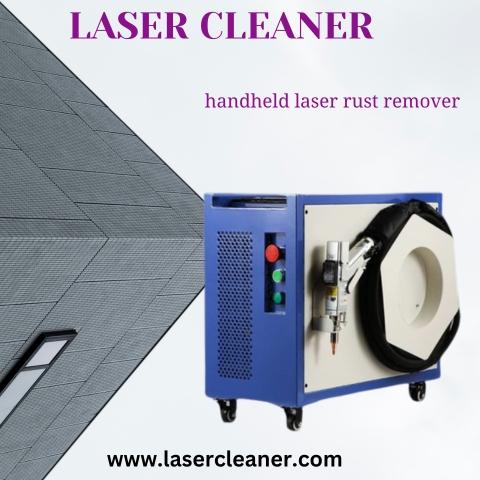
Rust is one of the most common problems affecting metal surfaces in workshops, factories, restoration facilities, construction sites, and maintenance operations. Over time, exposure to moisture, oxygen, chemicals, and harsh environments can create layers of oxidation that change the appearance and condition of metal components. Removing this contamination properly is an important part of maintaining equipment and preparing surfaces for further processing.
A handheld laser rust remover provides a modern approach to dealing with rust and surface contamination. Instead of relying on abrasive materials or chemical treatments, laser cleaning technology uses a controlled laser beam to interact with unwanted material on the surface. This technology is becoming increasingly relevant for businesses looking for precise and efficient methods of preparing metal parts.
What Is a Handheld Laser Rust Remover?
A handheld laser rust remover is a portable laser cleaning system designed to remove rust, oxidation, paint residues, dirt, oil, and other contaminants from metal surfaces. The operator guides the laser cleaning head across the affected area, allowing the concentrated laser energy to interact with the unwanted layer.
The process is based on controlled laser energy. When the laser reaches the contaminated surface, the rust or other material absorbs the energy and is separated from the underlying substrate. The system can be adjusted according to the material, contamination level, and cleaning requirements.
How Does Laser Rust Removal Work?
Laser rust removal depends on the interaction between laser energy and the material being removed. Rust and the underlying metal have different physical properties, allowing the laser cleaning process to target the unwanted layer under controlled conditions.
During operation, the laser beam is directed toward the rusty surface. The energy interacts with the oxidation layer, causing it to detach from the metal. Depending on the equipment and settings, the removed material may be converted into fine particles or vaporized during the cleaning process.
The scanning pattern can also be adjusted to cover the required working area. Operators can control parameters such as laser power, scanning speed, frequency, and beam characteristics to suit different applications.
Proper parameter selection is important because different metals and contamination layers require different cleaning conditions. Professional operators generally begin with suitable settings and make adjustments according to the surface response.
Where Can a Handheld Laser Rust Remover Be Used?
A handheld laser rust remover can be used across many industrial and maintenance applications. Metal fabrication workshops may use laser cleaning equipment before welding, coating, painting, or other manufacturing processes.
In automotive environments, laser cleaning can be used for components, tools, molds, mechanical parts, and restoration projects. It can also be applied to industrial machinery where rust and accumulated contamination need to be removed before maintenance.
Metal restoration is another important area. Historical objects, structural components, tools, and decorative metal surfaces may require controlled cleaning rather than aggressive mechanical treatment. With appropriate settings, laser technology can provide a more controlled cleaning process for these applications.
Preparing Metal Surfaces Before Welding
Surface preparation is an important stage of welding. Rust, oxidation, paint, oil, and other contaminants can interfere with the welding process and affect the quality of the prepared area.
A handheld laser rust remover can be used to clean selected sections before welding. By removing unwanted surface contamination, the operator can prepare the metal for subsequent processing.
This makes laser cleaning particularly relevant to workshops that regularly perform welding, fabrication, repair, and maintenance operations. Instead of treating an entire component unnecessarily, the operator can focus the cleaning process on the required area.
Laser Cleaning for Industrial Maintenance
Industrial machinery often operates in demanding environments where dust, oxidation, oil, and other contaminants accumulate over time. Regular surface maintenance can help prepare equipment for inspection, repair, painting, or refurbishment.
A handheld laser cleaning system can be moved between different areas of a facility and used on various metal components. Its portable design is useful when the equipment being cleaned cannot easily be transported to a dedicated cleaning area.
For maintenance teams, this can make laser cleaning relevant to routine servicing and refurbishment tasks. The exact cleaning process depends on the condition of the component, type of contamination, and material being treated.
Removing Rust From Different Metal Surfaces
Different metals react differently to laser energy, so cleaning parameters need to be selected carefully. Steel, stainless steel, aluminum, iron, and other metal surfaces may require different operating conditions.
Heavy rust may require a different approach from light surface oxidation. Similarly, thin metal components may need more careful parameter control than thick industrial structures.
Before beginning a larger cleaning project, operators should understand the material and test the selected settings on an appropriate area. This helps establish a suitable working method while reducing the possibility of unwanted surface effects.
Handheld Laser Cleaning in Workshops
The workshop environment is one of the practical areas for portable laser cleaning equipment. A single workshop may handle metal parts of different sizes, shapes, and conditions throughout the day.
The handheld format allows operators to position the cleaning head according to the shape of the component. It can be used for maintenance work, restoration, surface preparation, and rust removal without requiring every part to be moved through a fixed cleaning system.
Choosing the Right Laser Rust Removal Equipment
Selecting a suitable handheld laser rust remover requires consideration of the intended application. Laser power is an important factor because different contamination levels and materials can require different energy levels.
The cleaning method, scanning system, operating controls, cooling arrangement, portability, and available service support should also be considered when evaluating equipment.
Businesses should first identify the types of metal they commonly process and the contaminants they need to remove. A supplier can then help determine the appropriate laser configuration for those requirements.
It is also important to consider operator training and workplace safety. Laser cleaning equipment should be used according to the manufacturer's instructions, with appropriate protective measures and a controlled working environment.
Maintaining Consistent Cleaning Results
Consistent results depend on correct machine settings and proper operating technique. Operators should maintain an appropriate distance between the cleaning head and surface while following the recommended scanning pattern.
Cleaning speed also influences the amount of laser energy delivered to a specific area. Moving too quickly or too slowly can change the cleaning result, so operators should follow suitable working parameters.
The Growing Role of Laser Rust Removal
As manufacturing and maintenance operations continue to adopt more precise surface treatment methods, laser cleaning is becoming an increasingly recognized option for industrial applications. Businesses are looking beyond traditional cleaning processes and considering technologies that can provide greater control over specific surface-treatment tasks.
A handheld laser rust remover fits this changing environment by combining laser cleaning technology with a portable operating format. From workshop maintenance to industrial restoration and metal preparation, it can be adapted to many different applications when the correct equipment and settings are used.
Final Thoughts
Rust removal is an essential part of maintaining, restoring, and preparing metal surfaces. A handheld laser rust remover offers a modern method for treating rust and other surface contaminants through controlled laser energy.