
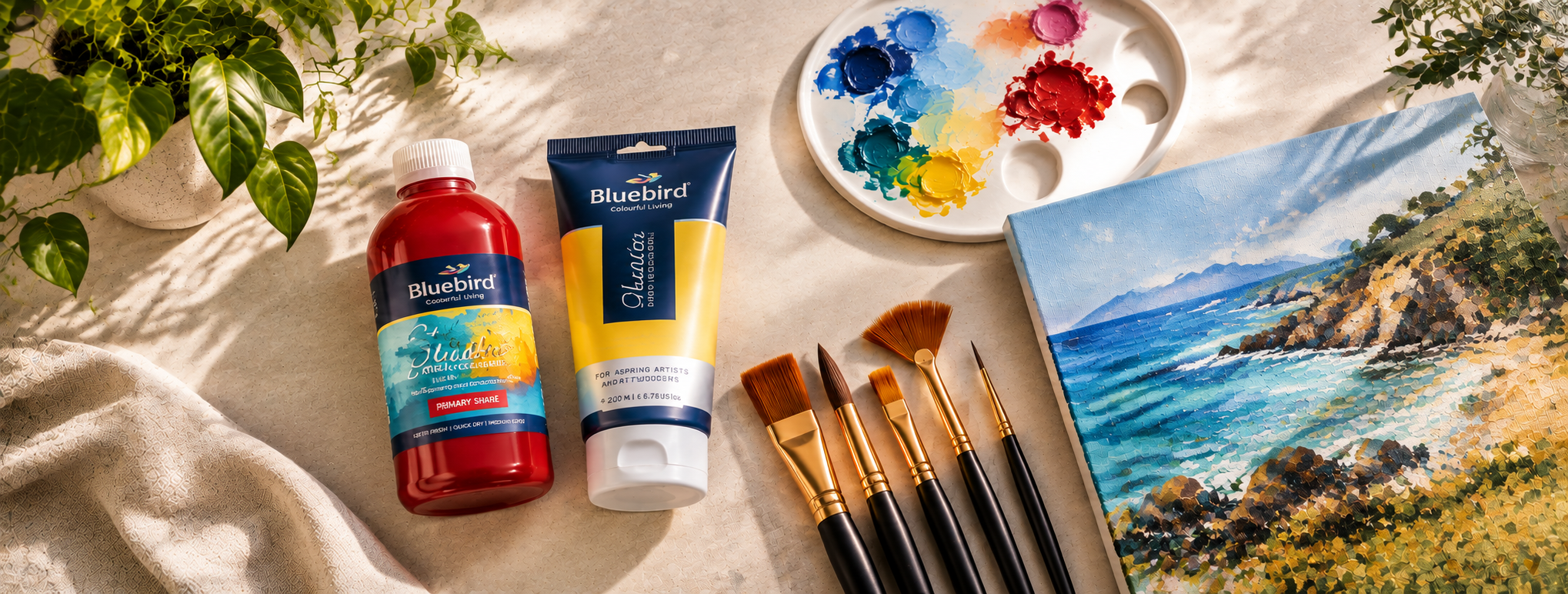
Painting is a fun way for children to explore colours, practise creativity, and make something they can be proud of. From simple drawings to school projects and handmade decorations, there are many ways kids can enjoy painting at home or in the classroom.
However, choosing the right paint can sometimes be confusing. There are many types of paint available, and not every type is suitable for every project.
Here are some simple things to consider when choosing paint for kids' art projects.
1. Consider the Child's Age
The child's age is one of the first things to think about when choosing art supplies.
Younger children usually benefit from simple projects that use easy-to-handle materials. Finger painting and basic brush painting can be enjoyable because children can focus on exploring colours rather than trying to create detailed artwork.
Older children may be ready to experiment with brushes, colour mixing, and more detailed designs.
Always supervise young children during art activities and follow the safety instructions on the paint packaging.
2. Choose Paint for the Right Surface
Think about what your child will be painting before choosing the paint.
For paper and cardboard projects, poster paint can be a simple choice. It works well for drawings, school posters, and many basic crafts.
Acrylic paint can be useful for projects involving suitable surfaces such as canvas, wood, and some craft materials.
If your child wants to decorate fabric, look for paint made specifically for fabric. For glass projects, use a suitable glass paint.
Choosing paint that matches the surface can make the project easier and help the finished artwork look better.
3. Think About How Easy the Paint Is to Use
Kids' art projects should be enjoyable rather than frustrating.
Choose paints that are easy to spread and work well with the brushes or tools your child is using. Paint that is too difficult to control can make a simple project feel harder than it needs to be.
Water-based paints are often convenient for children's activities because brushes can be cleaned with water while the paint is still wet.
It is also helpful to keep a container of water and some old cloths nearby when children are painting.
4. Pick Colours That Encourage Creativity
Children can learn a lot by experimenting with different colours.
You do not necessarily need to buy every colour available. A small collection of basic colours can give children plenty of opportunities to experiment.
For example, children can mix blue and yellow to make green or combine red and yellow to make orange. This turns painting into both a creative activity and a simple way to learn about colours.
You can also let children choose their own colour combinations instead of always telling them which colours to use.
5. Choose the Right Brushes
The paint is only one part of the project. The right brush can also make a difference.
Larger brushes are useful for painting backgrounds and covering bigger areas. Smaller brushes are better for details, lines, and small shapes.
For younger children, thicker handles may be easier to hold. As children grow and develop their skills, they can try different brush sizes and shapes.
You can also let them experiment with sponges and other simple tools to create different textures.
6. Consider the Type of Project
The type of artwork your child wants to create should guide your choice of paint.
For example:
-
Paper drawings: Poster paint can work well for simple projects.
-
Canvas paintings: Acrylic paint can be a useful option.
-
Fabric crafts: Choose a suitable fabric paint.
-
Wooden crafts: Acrylic paint can work well on suitable prepared surfaces.
-
Finger painting: Use a paint specifically suitable for this type of activity.
-
School posters: Poster paint is a simple option for many projects.
Choosing the paint based on the project can save time and make the activity more enjoyable.
7. Check the Product Information
Before giving any paint to a child, read the information provided on the packaging.
Check the recommended age and instructions for use. Follow any warnings and supervision recommendations, especially for younger children.
It is also important to make sure children do not put paint, brushes, or other art materials in their mouths.
Keeping art supplies stored safely when they are not being used is another simple way to keep the activity organised.
8. Make Cleaning Easier
Painting can get messy, especially when children are involved.
Before starting, cover the table or floor with newspaper, an old sheet, or a protective covering. Encourage children to wear old clothes or an apron.
Keep water and cloths nearby so that brushes can be cleaned during the activity.
It is also easier to clean up when you deal with spills while the paint is still wet.
9. Give Children Room to Experiment
Children do not need to create perfect paintings. The main purpose of a kids' art project is to let them explore and enjoy the process.
Let them try different colours, brush strokes, shapes, and ideas. A painting may not look exactly as expected, but that does not mean the project was unsuccessful.
You can also ask children questions about their artwork. Asking why they chose certain colours or what they were trying to create can make the activity more engaging.
10. Start With Simple Projects
If your child is new to painting, start with easy activities. Simple flowers, animals, shapes, rainbows, landscapes, and abstract patterns are good places to begin.
Once children become more comfortable holding brushes and mixing colours, they can move on to more detailed projects.
Bluebird Arts offers a range of paints for children's art and craft projects, including poster paints, acrylic paints, finger and face paints, and other options. Choosing the right paint for each activity can help children enjoy painting while giving them the freedom to explore their own ideas.