
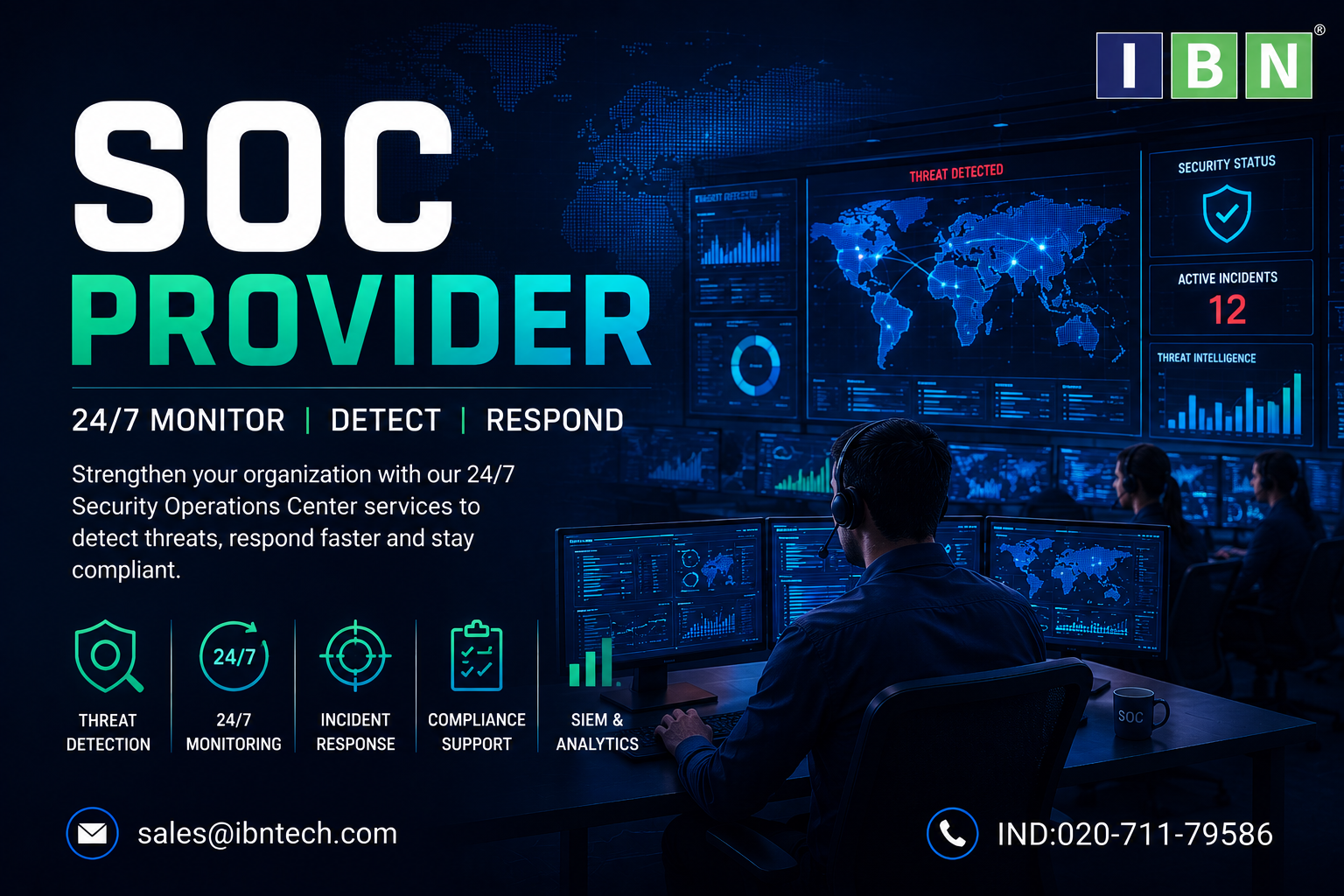
How Indian BFSI Organizations Can Build Stronger Security Operations with SOC Providers
Banks, insurers, lending companies, fintech businesses, and other financial organizations operate in an environment where security incidents can affect customers, transactions, applications, and business continuity. With digital banking, cloud infrastructure, APIs, remote access, and third-party integrations expanding, security teams need visibility beyond occasional reviews.
This is where soc providers can become part of a structured security operating model. Rather than simply adding another security tool, an external SOC can help organizations continuously monitor events, investigate alerts, identify potential threats, and coordinate response activities.
For BFSI organizations, the challenge is not only detecting suspicious activity. It is understanding what happened, determining its significance, and ensuring that the right people can act on it quickly.
Why SOC Providers Matter for Indian BFSI Security Operations
SOC providers help financial organizations bring continuous security monitoring, SIEM-based event analysis, alert investigation, threat detection, and incident response into a coordinated operational process. This can help security teams connect events across users, endpoints, networks, applications, and cloud environments instead of reviewing each security signal separately.
A single unusual login may not immediately indicate a security incident. However, when that login is followed by suspicious endpoint activity, unusual application access, and privileged-account behavior, the combined pattern can warrant investigation.
For BFSI organizations, this correlation is important because their environments generate large amounts of security telemetry. Without an organized monitoring and investigation process, important alerts can become difficult to prioritize.
What Security Challenges Are BFSI Organizations Facing?
Modern financial businesses have multiple security layers operating simultaneously. Employees access business applications, customers use digital platforms, applications communicate through APIs, workloads operate across cloud and on-premises environments, and third parties may connect to business systems.
Each layer can generate security events.
The challenge is turning these events into useful security intelligence.
Internal teams may have access to firewalls, endpoint protection, identity systems, cloud security controls, and SIEM platforms. Yet managing these technologies continuously requires people, processes, expertise, and clearly defined response procedures.
A SOC operating model can help connect those elements into a repeatable workflow.
How Managed SOC Solutions Fit Into BFSI Security Architecture
managed soc solutions provide an operational layer that connects security technologies with analysts and response processes. Instead of treating SIEM monitoring, endpoint alerts, network events, and incident response as separate functions, the model brings them together around defined security workflows.
For a BFSI organization, this can involve:
- Collecting relevant security events from infrastructure, applications, endpoints, and cloud environments
- Correlating events to identify suspicious activity
- Prioritizing alerts according to severity and business relevance
- Investigating potentially malicious activity
- Supporting defined containment and remediation processes
- Maintaining security reports and incident records
- Providing visibility into recurring security events and trends
The objective is not to create more alerts. The objective is to make security events more actionable.
A financial organization may already have significant investments in security technology. The operational question becomes: Are those tools being monitored consistently, and can their alerts be connected into a meaningful investigation?
This is where a managed SOC model can complement existing security infrastructure.
What Does a Managed SOC Actually Do for a BFSI Company?
A managed SOC provides ongoing security monitoring and analysis based on an organization's defined requirements. Security analysts review alerts, investigate suspicious events, correlate relevant information, and escalate incidents according to agreed procedures.
For a BFSI company, the service can be structured around the organization's existing technology environment rather than requiring every security function to be rebuilt from scratch.
For example, monitoring can incorporate relevant information from:
- SIEM platforms
- Network security controls
- Endpoint security tools
- Identity and authentication systems
- Cloud environments
- Business applications
- Security logs
The exact monitoring scope depends on the organization's infrastructure and service requirements.
The important distinction is between technology deployment and security operations. Installing a SIEM can centralize data, but analysts and processes are still required to determine what the data means and what action should follow.
Where Can SOC Providers Add Value Across BFSI Environments?
BFSI organizations typically have several security-sensitive technology areas. Each can generate valuable signals for security monitoring.
Identity and Access
Authentication failures, unusual login activity, privilege changes, and suspicious account behavior can provide indicators for investigation.
Monitoring identity events alongside endpoint and application activity can provide additional context when assessing potentially compromised accounts.
Customer-Facing Applications
Digital banking, insurance portals, lending applications, and other customer-facing systems can generate significant security telemetry.
Unusual access patterns or application events may require investigation, particularly when correlated with identity or network activity.
APIs and Integrations
APIs connect financial applications and services with internal systems, partners, and third parties. Monitoring relevant API and application events can help security teams identify unusual behavior.
Endpoints and Networks
Employee endpoints and network infrastructure remain important sources of security information. Endpoint alerts can become more meaningful when correlated with authentication, network, and application events.
Cloud and Hybrid Infrastructure
Many organizations operate across cloud and traditional environments. Security monitoring therefore needs to account for relevant events across both environments rather than focusing exclusively on on-premises infrastructure.
How Can SIEM and SOC Operations Work Together?
SIEM technology can collect and correlate security events from multiple sources, while SOC analysts provide the investigation and operational decision-making around those events.
A typical workflow can look like:
Event collection → Correlation → Alert generation → Analyst investigation → Threat validation → Escalation → Response → Reporting
This process helps separate raw security telemetry from incidents that require human attention.
For example, thousands of authentication events may be normal. A sequence involving unusual authentication, privilege escalation, and suspicious endpoint activity may require much closer examination.
soc providers can help organizations establish processes for reviewing these patterns and determining which events require escalation.
The value comes from combining technology with repeatable operational procedures.
What Does a BFSI SOC Investigation Look Like?
Imagine an employee account generates an unusual authentication event. Shortly afterward, the same account accesses a sensitive application and the associated endpoint produces a security alert.
Looking at each event individually may provide limited context.
A SOC investigation can correlate the events and examine:
- Authentication activity
- Account privileges
- Endpoint alerts
- Application access
- Network connections
- Historical activity
- Related security events
If the activity appears suspicious, the incident can be escalated according to the organization's defined response process.
This approach helps security teams move from isolated alerts toward a broader understanding of an event.
The same model can be applied to other BFSI scenarios, including suspicious administrative activity, unusual access patterns, malware alerts, or unexpected cloud activity.
What Should BFSI Teams Check Before Selecting Managed SOC Solutions?
Selecting a SOC model requires more than checking whether a provider offers SIEM monitoring.
The organization should first understand its own security environment and then determine where external monitoring can provide operational support.
Important areas include:
- Critical applications and infrastructure requiring monitoring
- Existing SIEM and security-tool investments
- Required log sources and integrations
- Alert severity and escalation procedures
- Internal security-team responsibilities
- Incident response processes
- Reporting requirements
- Monitoring coverage across cloud, endpoint, network, identity, and applications
- Service scalability
- Processes for reviewing and improving detection quality
A clear division of responsibilities is especially important.
The internal team should know which incidents require its involvement, what information will be provided by the SOC, and which response actions require organizational approval.
Frequently Asked Questions
What are SOC providers?
SOC providers are organizations that deliver security operations services such as continuous monitoring, security-event analysis, alert investigation, threat detection, and incident response support.
Are managed SOC solutions suitable for BFSI organizations?
They can support BFSI organizations that need ongoing security monitoring and investigation while extending the capabilities of their internal security teams.
Can a managed SOC work with an existing SIEM?
Yes. A managed SOC can operate around an organization's existing SIEM and security technologies, subject to the provider's supported integrations and the organization's service requirements.
Does a managed SOC replace an internal cybersecurity team?
Not necessarily. A managed SOC can complement internal teams by providing additional monitoring capacity, security expertise, investigation support, or continuous operational coverage.
Contact Us:
IND- 02067680404
IBN Technologies Ltd.
E-mail: - sales@ibntech.com