
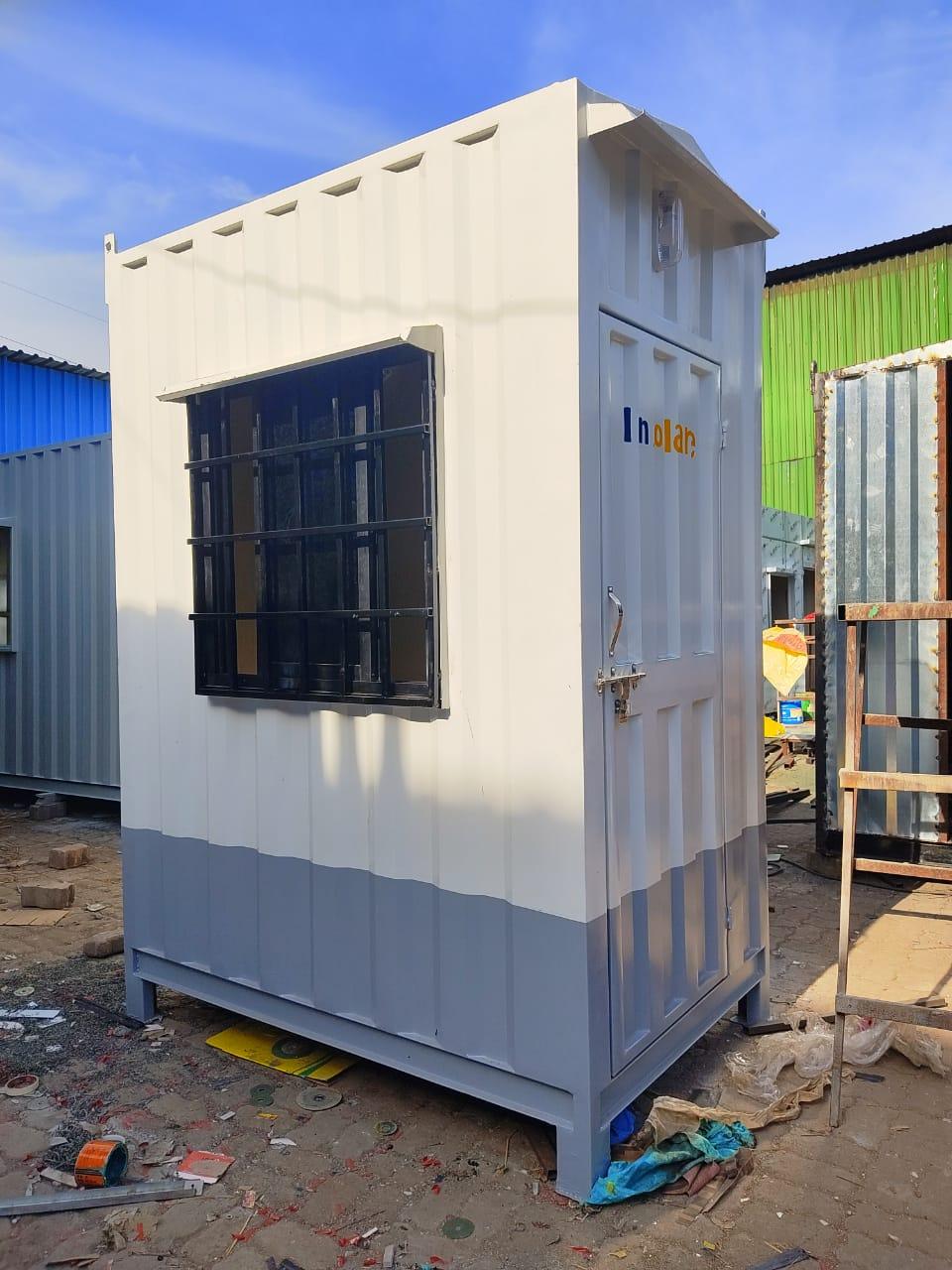
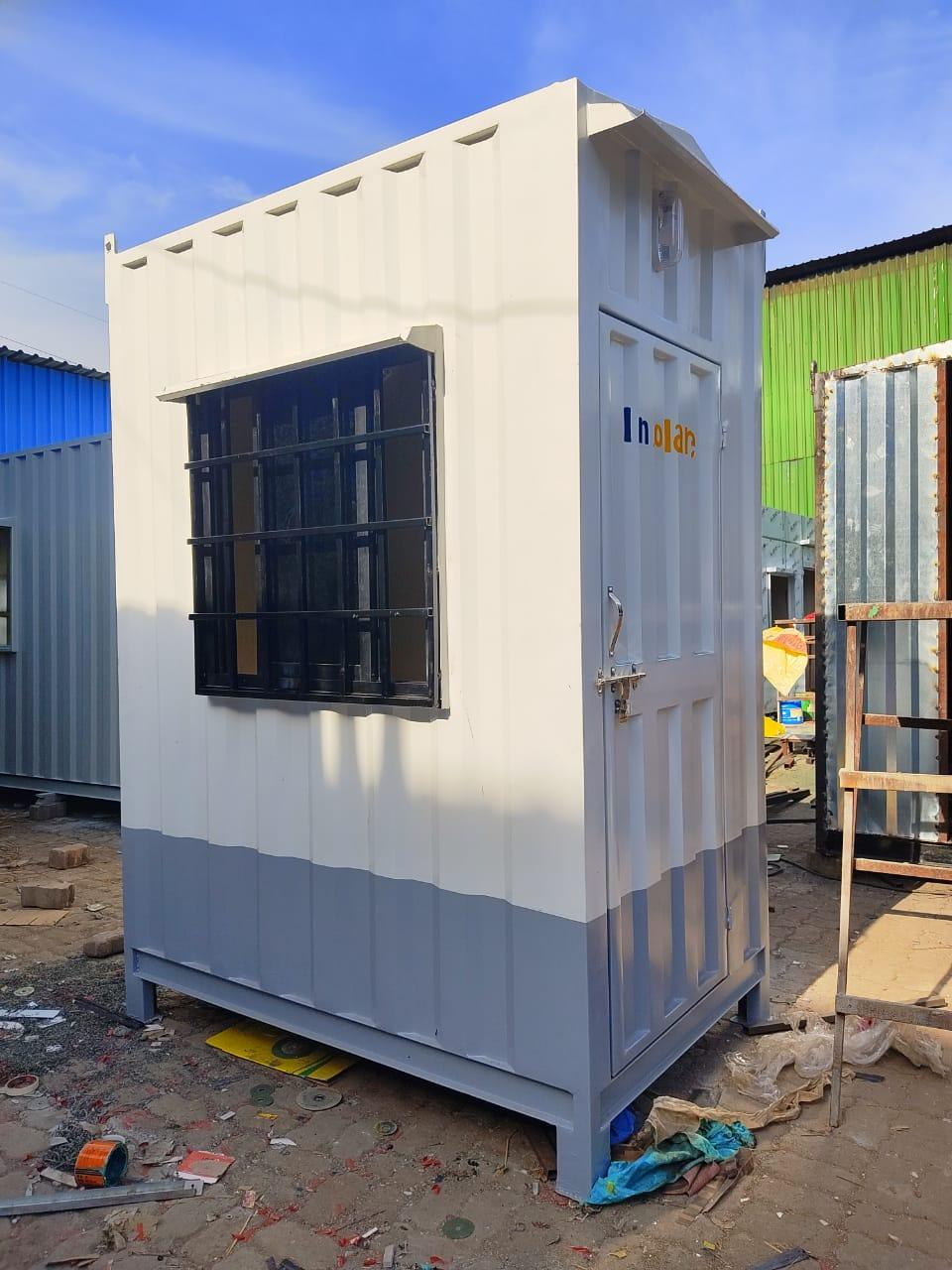
If you're guarding a gate, a construction site, a factory entrance, or a housing society, you already know the old way of doing things — call a mason, lay bricks, wait three weeks, and hope the guard room is usable before the monsoon hits. A security cabin skips all of that. It's a factory-built structure that arrives ready to use, and it's quickly become the default choice for anyone who needs a secure, weatherproof post without the wait or the mess of on-site construction.
In this guide, we'll walk through what a security cabin actually is, what goes into building one, the different types available, and how to pick the right one for your site. Whether you call it a security guard cabin, a portable security cabin, or a security porta cabin, the idea is the same — a compact, tough, relocatable structure built for one job: keeping your guard protected while giving them a clear line of sight.
What Exactly Is a Security Cabin?
Think of a security cabin as a guard room that shows up ready-made. Instead of laying bricks and waiting weeks for a structure to cure, you get a fully finished MS-steel-framed cabin — insulated, wired, and fitted with viewing windows — delivered straight to your gate and operational the same week.
You'll hear this same structure called a guard hut, a gatehouse cabin, a watchman cabin, or a security guard cabin depending on who you're talking to. Construction companies, housing societies, and factories each tend to use their own term, but the function never changes: a small, tough, movable post that keeps your security staff protected from weather while giving them full visibility of whatever they're guarding.
What's Inside a Good Security Cabin
Not every cabin on the market is built the same way, so it helps to know what should actually be inside one before you order.
- Frame: A heavy-gauge mild steel (MS) frame, usually 2–4mm thick, is what lets a cabin survive being moved from site to site without warping or sagging.
- Wall Panels: Insulated cores — PUF, EPS, or Rockwool — sandwiched between sheets keep the inside comfortable through a Mumbai summer or a north-Indian winter without demanding constant air conditioning. Some buyers upgrade to an ACP security cabin finish, where aluminium composite panel cladding gives the exterior a sleek, modern look that suits corporate gates and premium residential entrances.
- Flooring: PVC vinyl for light foot traffic, or a cement board and vinyl combination for busier checkpoints that see guards, visitors, and deliveries passing through all day.
- Roof: A galvanized sheet designed to shrug off monsoon rain for years without leaking.
- Doors and Windows: Tamper-resistant steel doors and multi-side viewing windows so the guard on duty has visibility in every direction, not just straight ahead.
Every one of these components matters more once the cabin has been in the field for a year or two — that's when a weak frame or thin insulation starts to show.
Types of Security Cabins by Size:-
Most portable security cabin buyers fall into one of three categories, and manufacturers typically build around these three configurations:
Compact Cabin (around 4×4 ft): Built for a single checkpoint — an apartment gate, a small society entrance, or a boundary post where one guard is stationed at a time. It's the most economical option and the fastest to deliver.
Standard Cabin (around 6×4.5 ft): The most commonly ordered size. It comfortably fits one to two guards on full-shift duty, with enough room for a stool and a logbook table. Factory gates, construction site entrances, and society gates typically use this size.
Premium Cabin (around 8×6 ft): Designed for supervisor duty or CCTV monitoring posts, where two to three people might need to work from the same cabin. Premium cabins often come with four-side viewing windows and can include an attached toilet for guards on long, isolated shifts.
Why Businesses Are Moving Away from Brick Guard Rooms
Speed. A brick structure takes weeks to build and cure. A factory-built security cabin is manufactured off-site and delivered ready to install, cutting your setup time down to days instead of weeks.
Cost. A portable cabin typically costs significantly less than permanent construction — often up to 60% less — because you're not paying for masonry labor, curing time, or site wastage.
Relocation. This is the one advantage brick simply cannot match. If your project site shifts, or your society redraws its gate layout, a security guard cabin can be picked up and moved to the new location without any structural damage. Try doing that with a brick guard room.
Consistency.Because every unit is built in a controlled factory environment rather than on-site, quality doesn't vary from one guard post to the next the way it might with local masonry work.
Where Security Cabins Are Used
Security cabins aren't limited to one type of site. In practice, you'll find them at:
- Apartment and housing society gates
- Factory and industrial checkpoints
- Construction site entrances
- Mining and remote project locations
- Educational campuses
- Corporate office entrances
- Hospital and healthcare facility gates
- Malls and retail parking entrances
- Government and infrastructure projects
- Warehouses and logistics dispatch yards
Each of these sites has slightly different needs — a mall entrance might prioritize a sleek ACP security cabin finish for visual appeal, while a remote mining checkpoint prioritizes ruggedness and insulation over looks.
Thinking about which size and finish suits your site?[Get a free, no-obligation quote from our team ]
Choosing the Right Security Cabin for Your Site
A few practical questions can help narrow down your decision:
1. How many guards will use it at once? One guard on a short shift needs far less than a supervisor cabin housing CCTV equipment.
2. What's the site's climate?Extreme heat or cold calls for thicker insulation panels; a mild, covered location may not need as much.
3. Will it need to move later? If your project is temporary or your layout might change, prioritize a lightweight, easily relocatable design.
4. Do you need an attached toilet? For remote or unaccompanied posts, this single feature can matter more than anything else on the spec sheet.
5. What's your budget? A basic MS-sheet finish will cost less than a premium ACP-clad unit — decide where you actually need to spend more.
Working through these questions before you contact a manufacturer will save you time and get you a far more accurate quote.
A Word on Quality
Because a security cabin is meant to last for years and survive repeated relocation, it's worth being a little skeptical of unusually cheap offers. A thin frame, low-grade insulation, or a poorly sealed roof might save you money upfront but will cost far more in repairs, discomfort for your guards, and early replacement. Ask any manufacturer directly about frame thickness, panel material, and how many years of structural life they're willing to stand behind.
Summary
A security cabin gives you a secure, weatherproof, factory-built guard post without the delays and cost of brick-and-mortar construction. Built around a steel frame with insulated wall panels, a durable roof, and multi-side viewing windows, these cabins come in compact, standard, and premium sizes to suit everything from a single apartment gate to a full supervisor and CCTV monitoring post. Whether your priority is speed, budget, relocation flexibility, or a premium ACP-clad finish, there's a configuration built for your checkpoint — and because every unit is factory-finished, you get consistent quality no matter which site it's headed to.
Ready to secure your gate the smart way? [Talk to our team today and get your custom security cabin quote within 24 hours ]